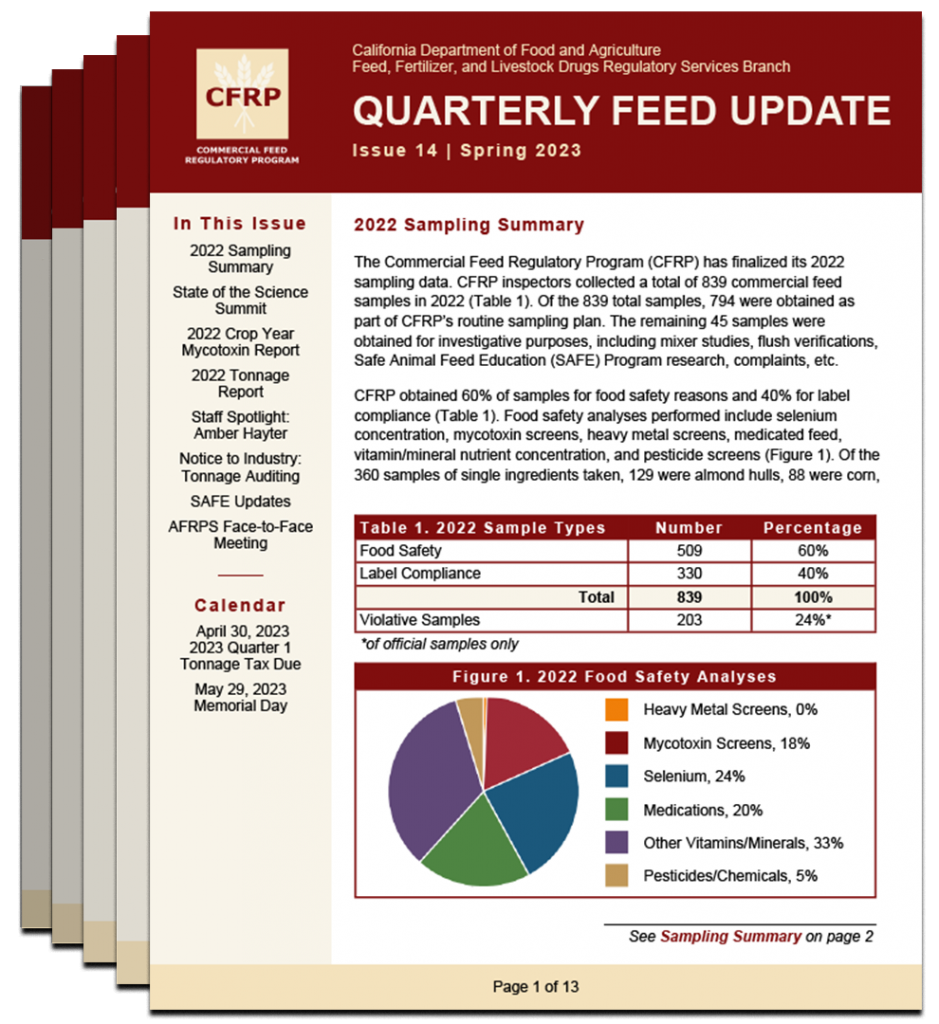

Click here to view the Winter 2023 Quarterly Feed Update newsletter.
The Commercial Feed Regulatory Program is part of the Feed, Fertilizer and Livestock Drugs Regulatory Services Branch of the CDFA Inspection Services Division.

Click here to view the Winter 2023 Quarterly Feed Update newsletter.
The Commercial Feed Regulatory Program is part of the Feed, Fertilizer and Livestock Drugs Regulatory Services Branch of the CDFA Inspection Services Division.

NAME: Dinesh Chand
YEARS AT CDFA: 9
PROGRAM: Center for Analytical Chemistry Environmental Safety Laboratory
TITLE: Environmental Scientist
USUAL DAILY ACTIVITIES ON THE JOB? I use state-of-the-art equipment and processes to analyze environmental and regulatory samples. I am involved in projects from different clients; therefore, my assignments vary. My work is fascinating and challenging because each project has unique regulations requiring a different skill level, technical expertise and instrumentation technique. In the absence of an approved method, I conduct research and method development studies.
HOW DO YOU WORK FOR THE CALIFORNIA FOOD SUPPLY? I provide accurate and legally defensible analytical data to various programs so that these enforcement and regulatory agencies can effectively carry out their function of protecting the California environment and food supply. I think the work we do in the lab is very crucial to the health and safety of California residents and the products they rely on day in and day out.
THOUGHTS OF WORKING AT INSPECTION SERVICES? The work that I do is indeed a big deal in protecting the health and safety of the public, farmworkers and farm animals. The opportunity to work in this laboratory using the most advanced and state-of-the-art technology that is currently available in the market allows me to overcome many challenges and makes me feel proud.
MEMORABLE MOMENT ON THE JOB? I looked forward to the State Scientist Day at the State Capitol every year before the pandemic. It used to be an annual event that included a science fair for students from many local schools. Together with my colleagues we demonstrated fascinating, hands-on experiments to future scientist. The memorable events included kick-off meetings, preparations and showcasing “How cool it is to be a scientist!”
PHILOSOPHY OF LIFE? Have patience and it is worth improving yourself first. I love this quote from Maya Angelou, “People will forget what you said, people will forget what you did, but will never forget how you made them feel.”
ANYTHING ELSE YOU’D LIKE TO SAY? I come from a small town – Tavua in Fiji. Growing up in agriculture farmland isn’t surprising at all if you are in Fiji. However, working as a scientist with CDFA and continuing a fun-loving scientific career and still being part of the food and agricultural community is unimaginable and breathtaking.

Click here to view the California Farm to School Network January newsletter.
The California Farm to School Network includes farm to school practitioners and enthusiasts statewide. Visit the CDFA Farm to School Program webpage to subscribe to these monthly updates that include information about grants, resources, research, webinars, events and news from the National Farm to School Network. The California Farm to School Program is part of the California Department of Food and Agriculture Office of Farm to Fork (CDFA-F2F) in the Division of Inspection Services.

The California Department of Food and Agriculture (CDFA) Fertilizer Research and Education Program (FREP) has released another installment of its Research Update series that highlights projects funded by the FREP annual Grant Program.
Project Title: Efficient Water and Nitrogen Management Practices for Mixed Leafy Baby Green Vegetables in the Desert
Project Leaders: Charles A. Sanchez (The University of Arizona); Andrew N French (United States Department of Agriculture, Agricultural Research Service, US Arid-Land Agricultural Research Center)
Project Status: Complete
Overview: This FREP-funded project evaluates various nitrogen (N) and water management practices for mixed baby leafy greens production systems in the Low Desert region.
Conclusion: Overall, these studies showed that water application efficiencies are generally high in the research sites as well as growers’ fields and poor irrigation management is not the reason for poor nitrogen (N) utilization efficiencies. Data collected show that current N fertilizer practices result in N fertilizer rates far exceeding N removal by the crops and high residual inorganic N after harvest. Results from N rate studies showed that baby spinach and spring mix yields were maximized at much lower N rates than previously observed, showing that the efficient fertigation strategies potentially reduced N rates for maximum yield that more consistently match the California Water Quality Control Boards targets. This project has generated a database for continued efficient water management using “CropManage” or other irrigation management models.
Click here to visit the FREP blog post and view the full summary of this research project, which includes its background, approach, findings and data tables.
FREP is a CDFA program that funds and facilitates research to advance the environmentally safe and agronomically sound use and handling of fertilizing materials. It is part of the Feed, Fertilizer and Livestock Drugs Regulatory Services branch of CDFA’s Division of Inspection Services.
Click here to view the FREP Research & Project Database, which aims to make the wealth of information contained in the FREP research projects available, understandable and convenient for growers to implement.

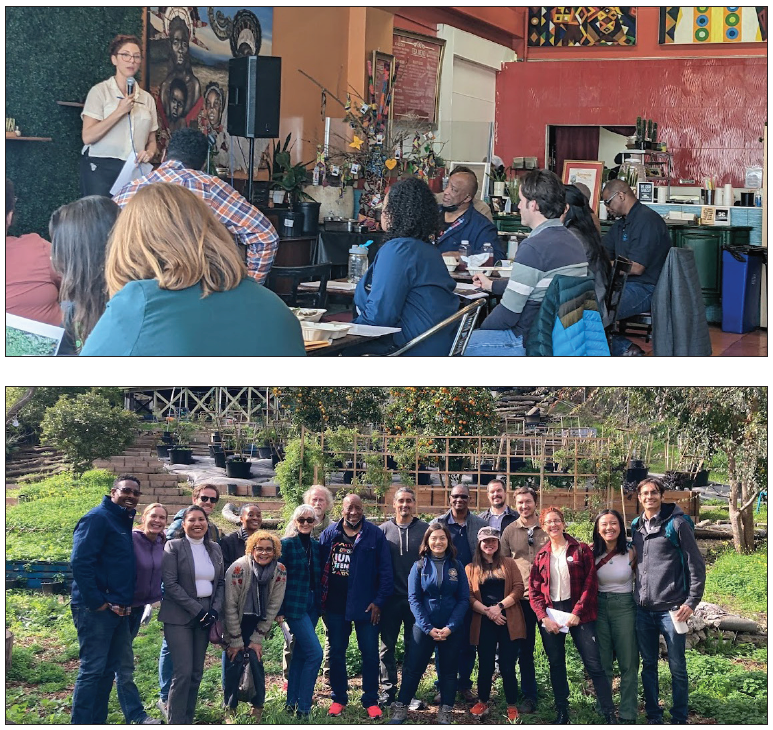
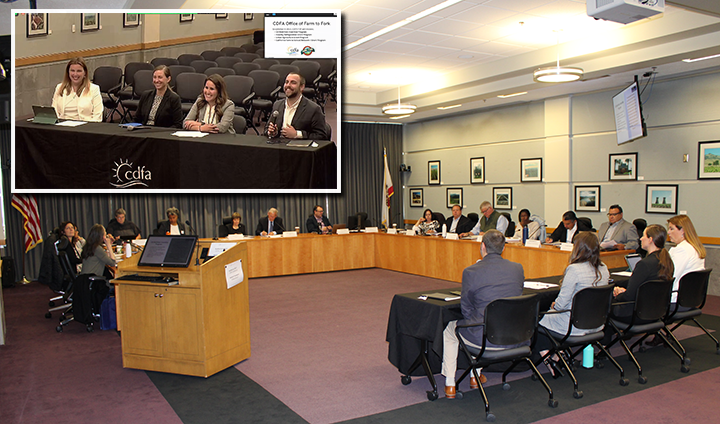
CDFA Secretary Karen Ross and U.S. Food and Drug Administration Commissioner Robert Califf met to take a tour of Gotham Greens in Davis (top photo) before attending a roundtable discussion at the University of California Agriculture and Natural Resources (UCANR) to identify opportunities to coordinate and advance a comprehensive prevention strategy to enhance food safety in California.
Partners in the discussion included CDFA, the FDA, UC Davis, UCANR, California State University, the office of Congressman Mike Thompson, Western Growers Association, D’Arrigo California, the California Leafy Greens Marketing Agreement, the Monterey County Farm Bureau, the Grower-Shipper Association of Central California, and the Center for Produce Safety.
The roundtable was a continuation of the California Agricultural Neighbors Initiative promoting collaboration and open communication toward advanced food safety in California.
Secretary Ross: “We deeply appreciate the collaborative working relationship with FDA on all aspects of food safety and the implementation of the Food Safety Modernization Act. This was a very constructive discussion with leaders across the produce sector, and I want to thank CDFA Inspection Services Director Natalie Krout-Greenberg for organizing the day and Commissioner Califf for spending time with us and participating in some excellent discussions.”
Click here to view this original post on the CDFA Planting Seeds blog.

The California Department of Food and Agriculture (CDFA) is announcing three vacancies on the Feed Inspection Advisory Board (FIAB). This board makes regulatory and enforcement recommendations to CDFA to help ensure that commercial feed inspections contribute to a clean and wholesome supply of milk, meat and eggs.
The FIAB vacancies are for two commercial feed industry representatives and one public member. Applicants must hold a current California Commercial Feed License. The term of office for board members is three years. Members receive no compensation, but are entitled to payment of necessary travel expenses in accordance with the rules of the California Department of Human Resources.
Individuals interested in a board appointment must submit a resume and a completed Prospective Member Appointment Questionnaire (PMAQ), available on the CDFA website at: http://www.cdfa.ca.gov/is/ffldrs/pdfs/PMAQ_Feed_IAB.pdf, by March 13, 2023.
Send resume and PMAQ via email to Brittnie.Williams@cdfa.ca.gov or by mail to:
CDFA
Feed, Fertilizer and Livestock Drugs Regulatory Service Branch
Attn: Brittnie Williams
1220 N Street
Sacramento, CA 95814
For further information, please contact Brittnie Williams at (916) 862-4014 or Brittnie.Williams@cdfa.ca.gov.
Click here to view this original CDFA news release.
The California Department of Food and Agriculture (CDFA) Fertilizer Research and Education Program (FREP) is announcing $653,067 in grant funding for three projects to advance California growers’ understanding and implementation of improved nitrogen and irrigation management practices.
This funding is a result of the 2022 cycle of the competitive FREP Grant Program.

Summary of Funded Projects:
Developing Tools and Information on Irrigation and Nitrogen Best Management Practices in California’s Low Desert Lettuce Production Systems
Ali Montazar, Ph.D., University of California Agriculture and Natural Resources
The objectives of this project are to fill knowledge gaps for nitrogen and irrigation management in low desert lettuce production systems. This project was awarded $224,921 to conduct experimental trials at the University of California Desert Research and Extension Center and in eight commercial fields in the Imperial and Coachella valleys. These trials will be used to develop strategies to reduce nitrogen losses and optimize irrigation water use in iceberg, romaine and leaf lettuce.
The Role of Irrigation Management for Improving Nitrogen Use Efficiency for Broccoli Grown with Nitrate-Contaminated Irrigation Water
Charlotte Decock, Ph.D., California Polytechnic University, San Luis Obispo
Central Coast broccoli growers need help reducing nitrogen inputs and losses, made possible through the efficient use of nitrate-contaminated irrigation water. This project was awarded $203,526 to investigate the barriers to adoption of the “pump and fertilize” practice and to provide outreach and demonstration of this important farming practice.
Development of Precision Yield Monitor for Almonds and Pistachios
Patrick Brown, Ph.D., University of California, Davis
This project was awarded $224,620 to build an integrated yield monitoring system for off-ground harvesting. Developing a monitoring system that will read the yield of each individual tree, at full commercial harvest speed, will make it possible to determine yield variability across the field. This is the first step in providing targeted management to underperforming zones and increasing nitrogen use efficiency.
Since 1990, FREP has funded research on many of California’s important and environmentally sensitive cropping systems. Click here to view the FREP Research & Project Database that aims to make the wealth of information contained in FREP research projects available, understandable and convenient for growers to implement. See the Crop Fertilization Guidelines for tips on how to improve nutrient management, based on information gleaned from research.
Click here to view this original CDFA press release.

The California Department of Food and Agriculture (CDFA) has announced that a USDA Gus Schumacher Nutrition Incentive Program (GusNIP) grant of $12.9 million will fund nutrition incentives at Certified Farmers’ Markets and small retailers throughout California. The grant will help CDFA’s California Nutrition Incentive Program (CNIP) offer nutrition incentives to CalFresh Shoppers at participating Certified Farmers’ Markets, mobile market sites, farm stands and neighborhood retail markets throughout California. Click here to read the USDA award announcement.
“This grant is a triple win for California,” said CDFA Secretary Karen Ross. “It supports the health of our low-income shoppers, our farmers and the local economy.”
For every CalFresh benefit dollar spent at participating locations, CalFresh shoppers will receive an additional dollar that can be spent on fruits and vegetables at the market, within set parameters. The CNIP incentive is intended to empower CalFresh shoppers to increase their consumption of healthy fruits and vegetables while expanding markets for California farmers. CNIP is administered by CDFA’s Office of Farm to Fork, which leads CDFA’s food access work.
Funding from the 2021 state budget provided matching funds that enabled CDFA to apply for the GusNIP grant. CDFA will work with the following seven partner organizations, chosen through a competitive process, to implement grants: the Alameda County Deputy Sheriffs’ Activities League –ALL IN Eats Nutrition Incentives; Aspire Health’s Double Up Food Bucks in Monterey County; the Chico Natural Foods Co-op’s Matching On Regional Eats: MORE; the Ecology Center’s 2022-24 Market Match: Meeting California’s Growing Food Security Needs; the Los Angeles Food Policy Council’s Farm Fresh LA; Mandela Partners’ Celebrating and Resourcing Food Sovereignty in East Bay Neighborhoods; and The Food Trust’s San Jose Healthy Corner Store Program – Food Bucks.
Please visit the California Nutrition Incentive Program webpage for more information.
Click here to view this original CDFA press release.

Friends and colleagues at CDFA and throughout the state’s agricultural community are joining in congratulating Inspection and Compliance Branch Chief Steve Patton on his retirement last month. He put in 45 years of dedicated and loyal service at CDFA.
Steve began his career in 1977 as a seasonal cling peach inspector with the department’s Processed Products Branch, which covered peaches, pears, garlic and onions, tomatoes, olives and wine grapes. From there, he steadily gained experience, respect and promotions on the way to his culminating post as branch chief.
Steve’s career path at CDFA involved a great deal of field work and thousands of hours spent on farms, in fields, and at processing plants, as well as his time in the office. He also logged a lot of miles getting to and from all of the state’s far-flung agricultural regions.
“Working for CDFA has given me the opportunity to see hundreds of farmers’ markets, thousands of farms and dozens of processing facilities,” Patton said. “And almost all of that was driving; at six-foot-five, flying was never really my favorite way to travel.”
Congratulations, Steve, and thank you on behalf of a grateful department, industry and state.
Click here to view this original post on the CDFA Planting Seeds blog.

The U.S. Department of Agriculture (USDA) has presented a certificate of appreciation to retiring CDFA Analytical Chemistry (CAC) Food Safety Program Environmental Program Manager Tiffany Tu. The award reads, in part, “This certificate of appreciation is presented to you with gratitude and admiration for your many years of public service and your dedication to the Pesticide Data Program. We thank you for your leadership and expertise you have shared with the program.”
Tu is retiring after 33 years of public service, all with Center for Analytical Chemistry. Through her work, Tu partnered with the USDA Pesticide Data Program (USDA-PDP), a national pesticide residue monitoring program comprised of seven state laboratories that sample, test and report pesticide residues on agricultural commodities in the U.S. food supply.
USDA-PDP data is primarily used by the U.S. Environmental Protection Agency as the essential dietary exposure component of risk assessment that is part of the pesticide registration review and tolerance reassessment process mandated by the Food Quality Protection Act. The data also is used for worldwide marketing of U.S-grown produce.
“Being a part of the USDA-PDP team gave me the opportunity to connect to policymakers, enforcement agencies, and national and international lab partners,” Tu said. “The knowledge and experience helped shape the CAC Food Safety Program’s quality system framework – one that generates the highest quality data for food surveillance and monitoring – and created a culture of innovation and creativity.”
“A total of 126 commodities, fresh and processed, have been tested by PDP lab participants since USDA-PDP began,” Tu said. “PDP data are well regarded as the gold standard and used by many food safety organizations worldwide.”
“The USDA certificate of appreciation is an affirmation of the entire CAC Food Safety team’s important contribution toward the USDA-PDP over the years,” she added. “It’s always been the workforce behind the program that truly made it a transformative success. This significant award recognizes our valuable input to the USDA-PDP and it encourages the team to maintain a culture with an innovative mindset that enables our team to grow. I am so proud of the team and our achievement. It has been such a privilege to work alongside a smart and talented group of people.”
The Center for Analytical Chemistry is a branch of CDFA’s Division of Inspection Services.
Click here to view this original post on CDFA’s Planting Seeds blog.