Inspection Services Blog

CDFA Inspection Services #CelebratingResilience this #CaAgDay2021 through release of annual report

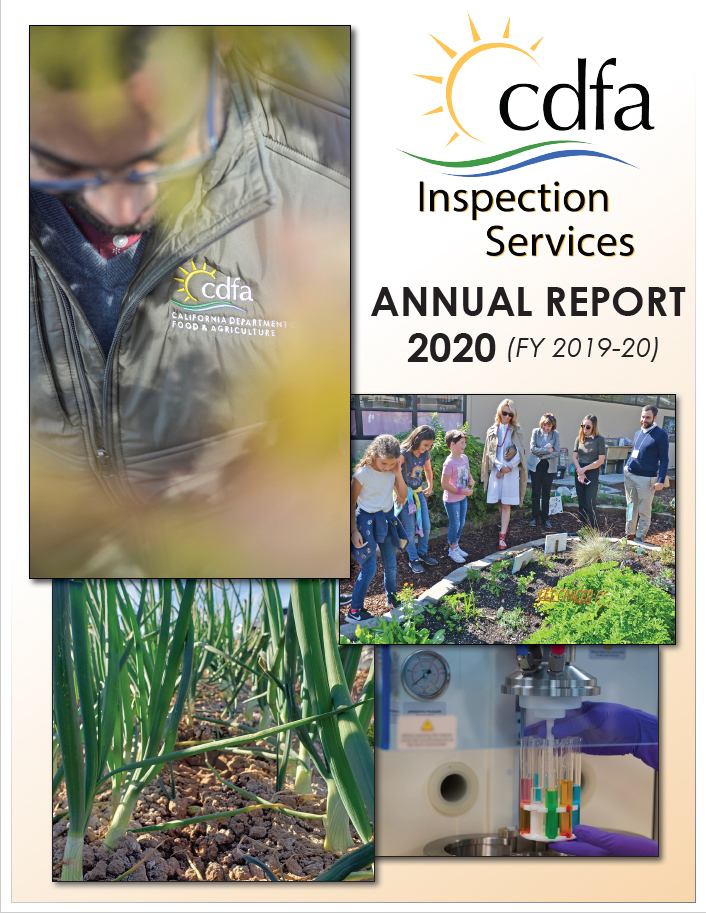
Annual Report Cover

Today’s California Agriculture Day theme of “Celebrating Resilience” recognizes the agricultural industry’s ability to adapt to change, especially considering the events of last year.

Many examples of this, and how California Department of Food and Agriculture (CDFA) Inspection Services Division staff continued to provide services to our resilient California Ag, can be found in the Inspection Services Annual Report 2020 (FY2019-2020).

Examples include:

  • Shipping Point Inspection inspected 114,280 lots / 2.55 billion pounds of almonds (setting a new seasonal record for CA almond production)
  • Center for Analytical Chemistry developed 20 new scientific methods while satisfying the regulatory and monitoring needs of 33 public agencies
  • Fertilizing Materials Inspection Program reviewed and registered 3,032 organic input and 9,658 conventional fertilizer labels
  • California Nutrition Incentive Program distributed $2.85 million in incentives to low-income shoppers by providing a dollar-for-dollar match of nutrition benefits spent on California-grown fruits and vegetables at participating Certified Farmers’ Markets and small retail stores
  • Critical food safety inspections continued for both produce safety and animal feed

We invite you to further inspect our Annual Report 2020 to learn how Inspection Services fulfills our mission of providing professional services that support and contribute to a safe, abundant, quality food supply; environmentally sound agricultural practices; and an equitable marketplace for California agriculture.
Posted in CDFA Center for Analytical Chemistry, CDFA Feed, Fertilizer and Livestock Drugs Regulatory Services Branch, CDFA Inspection & Compliance Branch, CDFA Inspection Services Division, CDFA Office of Farm to Fork, Inspection Services Division Administration Unit | Leave a comment

Anaheim Food Safety Lab remodeling project fosters optimal operation

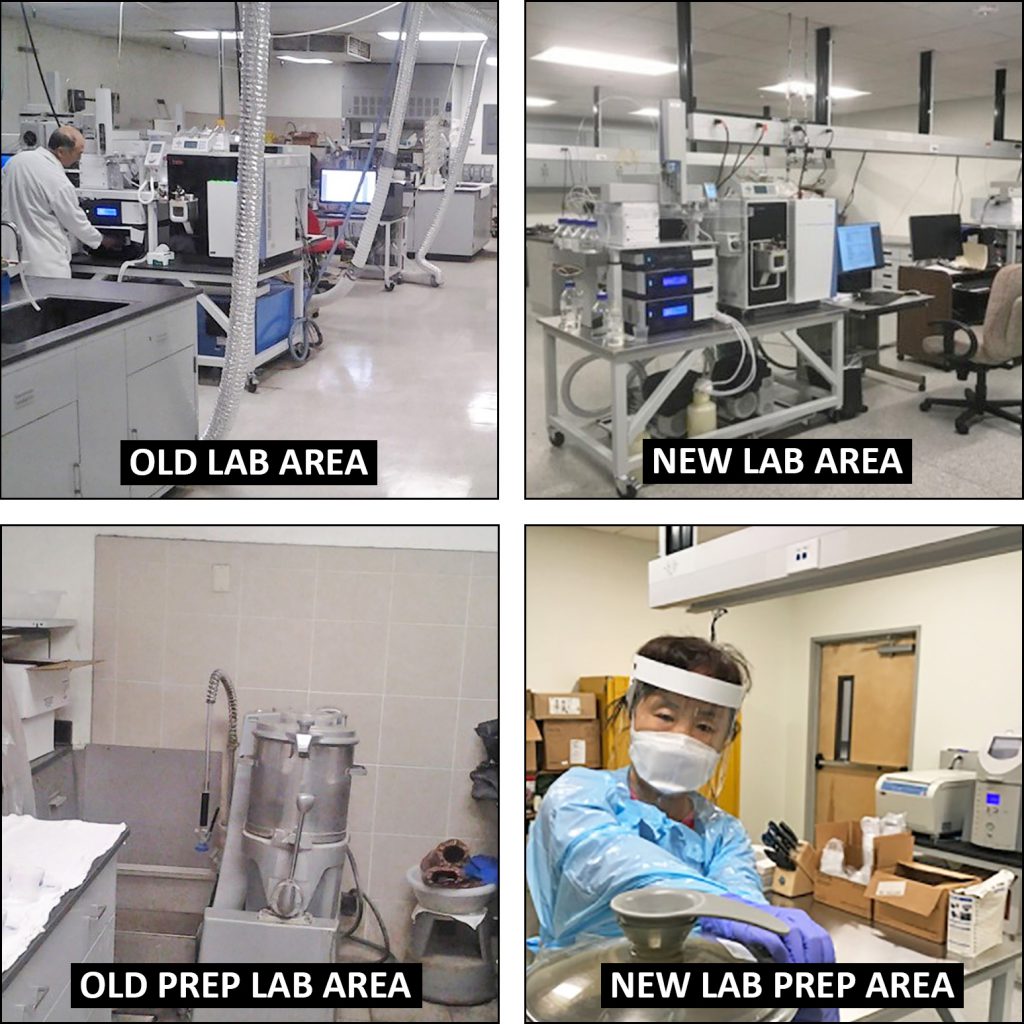
The California Department of Food and Agriculture (CDFA) announces its Center for Analytical Chemistry (CAC) Anaheim Food Safety Laboratory remodeling project is complete.

The remodeling included complete reconfiguration, updating infrastructure and adding electrical power to the CAC laboratory at the site in Anaheim, California. The work was completed in stages to allow operations to continue at a reduced capacity during construction. The new heating, ventilation and air conditioning (HVAC) systems and advanced lab equipment are essential for the optimal operation of sensitive instruments and allow for flexible work configurations.

CAC is a branch of CDFA’s Division of Inspection Services. CAC scientists utilize state-of-the-art equipment and processes to conduct agrochemical analyses to ensure a safe, abundant and quality supply of food and fiber in California.

Posted in CDFA Center for Analytical Chemistry, CDFA Food Safety Laboratory, CDFA Inspection Services Division | Tagged , | Leave a comment

California First Partner Jennifer Siebel Newsom and CDFA Secretary Karen Ross headline state Farm to School Conference

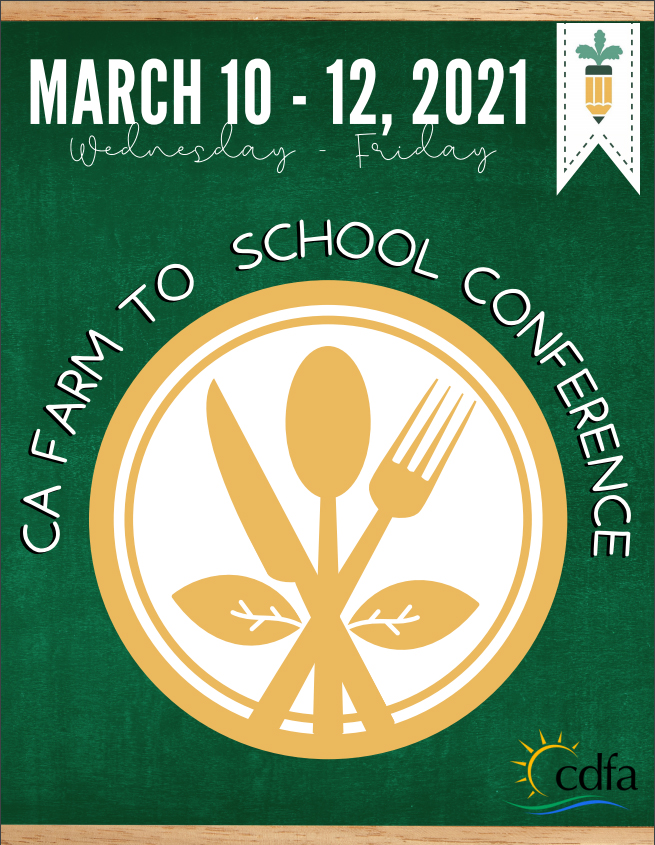
The California Department of Food and Agriculture Office of Farm to Fork (CDFA-F2F) will conclude its bi-annual, three-day California Farm to School Virtual Conference today.

Featured conference speakers include California First Partner Jennifer Siebel Newsom and CDFA Secretary Karen Ross, co-chairs of the newly formed California Farm to School Working Group, a committee of experts focused on expanding farm to school programming in California.

Click here to read a CDFA press release that includes details of the conference and the California Farm to School Working Group.

Posted in CDFA Farm to School Network, CDFA Farm to School Program, CDFA Inspection Services Division, CDFA Office of Farm to Fork | Tagged , | Leave a comment

Produce Safety Program Supervisor Phillips published in academic journal about survival of foodborne pathogens on dried apricots

Shelley Phillips

California Department of Food and Agriculture (CDFA) Produce Safety Program Manager Shelley Phillips is published in the March 2021 issue of Food Control as a co-author of “Survival of common foodborne pathogens on dried apricots made with and without sulfur dioxide treatment.”

Abstract

To fill the current knowledge gap in the survival of foodborne pathogens on dried fruits, this study monitored the survival of three common pathogens on dried apricots. Sun-dried apricots made with (DAS) and without sulfur dioxide (DANS) treatments were used and were inoculated using a dry (sand) or a wet (phosphate-buffered saline, PBS) carrier. The survival of Shiga-toxin-producing Escherichia coli (STEC), Salmonella spp. and Listeria monocytogenes (LM) on inoculated dried apricots was monitored for three months during ambient temperature storage. When dried apricots were inoculated with the wet carrier, all three pathogens survived the 48- hour drying period. After drying and during ambient temperature storage, the number of culturable pathogen cells decreased as the storage time increased. Among all three pathogens, STEC survived with higher culturable numbers for a longer period of time than the other two pathogens on DANS over the 90-day storage period. When pathogens were inoculated via the dry carrier, Salmonella survived with higher culturable numbers among three pathogens on DANS, indicating its enhanced survivability after being dried on sand and exposed to stress conditions before inoculation. In addition, regardless of the inoculation carriers, pathogens survived for longer periods of time or with higher levels on DANS, indicating the antimicrobial properties of free SO2 contained in DAS. In summary, based on the results of this study, pathogens can survive on dried fruits; factors affecting pathogen survival include the types of test pathogens, inoculation methods, and the use of sulfur dioxide.

Citation

Zhuosheng Liu, Chao Liao, Kayla Golson, Shelley Phillips, Luxin Wang. “Survival of common foodborne pathogens on dried apricots made with and without sulfur dioxide treatment,” Food Control, Volume 121, March 2021, http://www.sciencedirect.com/science/article/pii/S0956713520304850.

Posted in CDFA Inspection & Compliance Branch, CDFA Inspection Services Division, CDFA Produce Safety Program | Leave a comment

CDFA’s State Organic Program inspects organic products coming into California at border

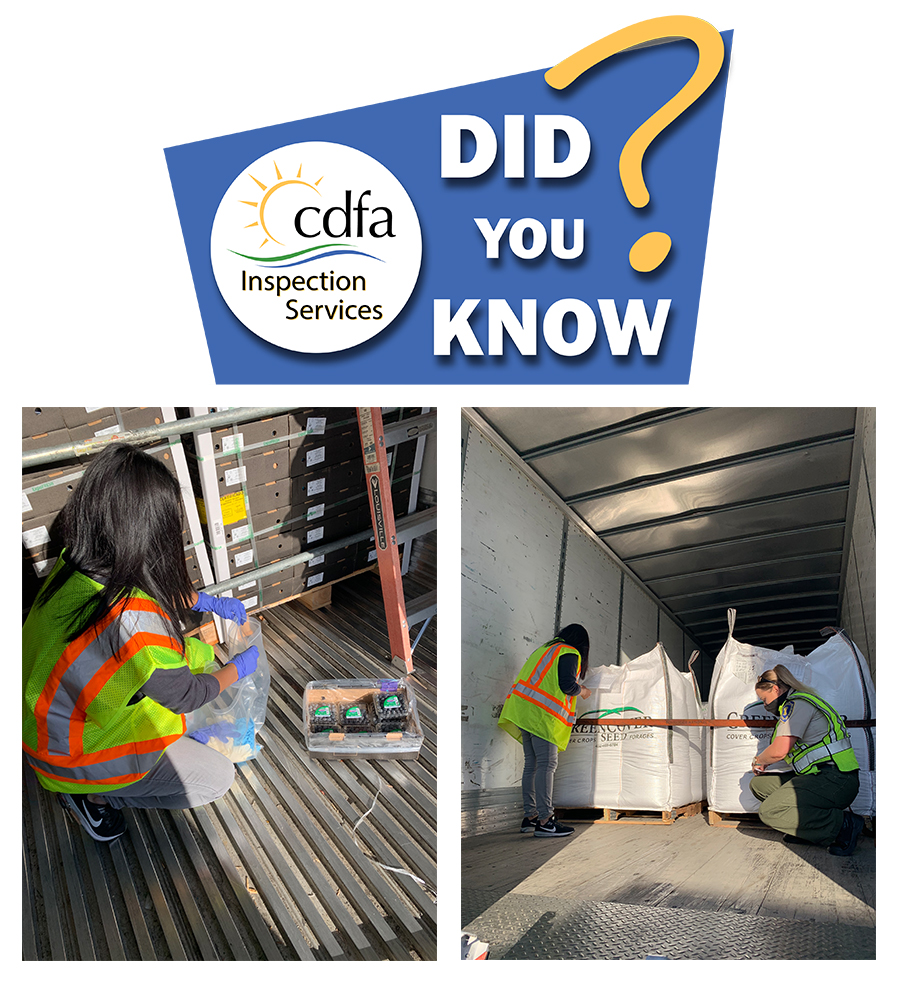
California State Organic Program Special Investigator Leslie Fernandez collaborates with CDFA Needles Border Station staff to inspect organic blueberries and organic seeds entering California.

Did you know the California Department of Food and Agriculture (CDFA) State Organic Program (SOP) collaborates with CDFA’s Border Protection Stations to inspect organic products coming into California?

SOP and border station staff recently inspected organic blueberries and organic seeds entering California at the Needle Border Inspection Station. The organic inspection included verifying proper paperwork and checking that packages follow labeling requirements.

This is part of SOP’s increased efforts to conduct inspections through different stages of the food chain to ensure the integrity of organic products being grown and sold in California.

The California State Organic Program is part of the Inspection & Compliance branch in CDFA’s Division of Inspection Services.

Posted in CDFA California State Organic Program, CDFA Inspection & Compliance Branch, CDFA Inspection Services Division, CDFA Inspection Services: Did You Know? | Tagged , , , , | Leave a comment

Apply now to fill vacancies on CDFA Feed Inspection Advisory Board

The California Department of Food and Agriculture (CDFA) is announcing three vacancies on the Feed Inspection Advisory Board. The board makes regulatory and enforcement recommendations to the department to help ensure commercial feed inspections contribute to a clean and wholesome supply of milk, meat and eggs.

The vacancies are for three commercial feed industry representatives. Click here to read a CDFA press release that includes further details and directions on how to apply to be a member of the Feed Inspection Advisory Board.

Posted in CDFA Commercial Feed Regulatory Program, CDFA Feed Inspection Advisory Board, CDFA Feed, Fertilizer and Livestock Drugs Regulatory Services Branch, CDFA Inspection Services Division | Tagged , | Leave a comment

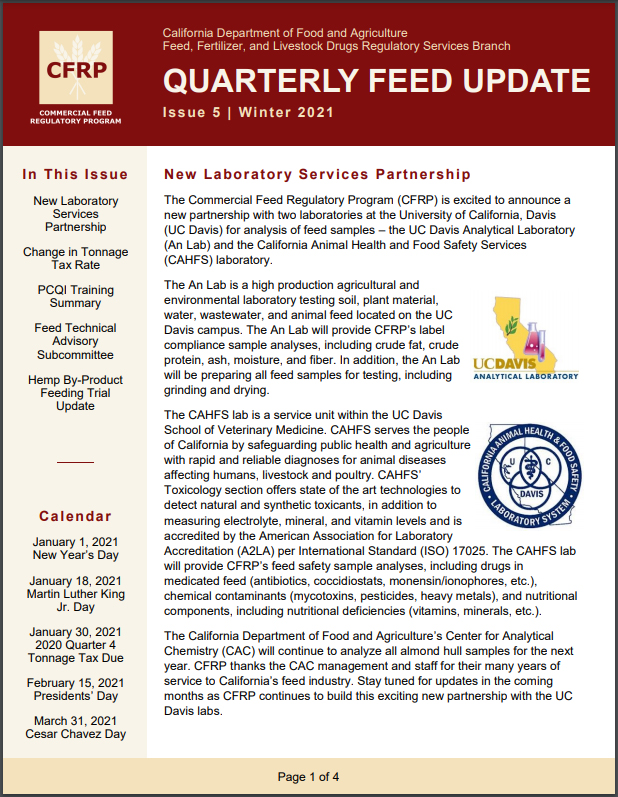
Commercial Feed Regulatory Program releases winter Quarterly Feed Update

Click here to view the Commercial Feed Regulatory Program’s Quarterly Feed Update for winter 2021.

Topics include:

  • New laboratory services partnerships
  • Change in feed inspection tonnage tax rate
  • Evaluating the efficacy of Asparagopsis seaweed for commercial feed
  • UC Davis research trial evaluating potential livestock feed components

The Commercial Feed Regulatory Program is part of the Feed, Fertilizer and Livestock Drugs Regulatory Services branch of CDFA’s Inspection Services Division.

Posted in CDFA Commercial Feed Regulatory Program, CDFA Feed, Fertilizer and Livestock Drugs Regulatory Services Branch, CDFA Inspection Services Division, CDFA Safe Animal Feed Education (SAFE) | Tagged , , , , , | Leave a comment

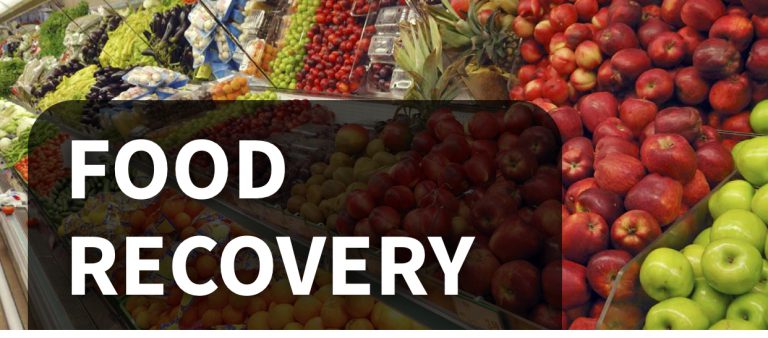
CDFA webpage offers resources to increase food recovery and reduce food waste

U.S. food waste is estimated to be 30-40 percent of the food supply and Californians throw away approximately 6 million tons of food waste annually. To help reduce food waste and increase food recovery, the California Department of Food and Agriculture (CDFA) is announcing a Food Recovery webpage.

“California’s agricultural industries already are doing so much for food recovery for animal feed, industrial uses and composting,” said CDFA Secretary Karen Ross. “This webpage highlights the significance of that work and offers tools to help consumers understand how they can join the effort.”

One section examines the U.S. Environmental Protection Agency’s Food Recovery Hierarchy, which prioritizes actions to prevent and divert food waste.

The Food Date Labeling section outlines best practices the industry is advancing to reduce food waste due to confusion over date labeling, such as favoring a “best if used by” date over a “sell by” date.

The Resources section offers infographic fact sheets, food donation resources, helpful links to state and federal partners.

There is also an Understanding Food Recovery and Food Upcycling educational video full of consumer tips.

Posted in CDFA Food Recovery, CDFA Inspection Services Division | Tagged , | Leave a comment

February Farm to School Network newsletter highlights upcoming F2S conference, network survey, celebrating Black history

The California Farm to School Network’s February newsletter was just released.

Newsletter highlights include:

  • Register now for the virtual California Farm to School Conference March 10-12.
  • Take a 5-minute network member survey to help the California Farm to School Network understand how to better facilitate connection and collaboration among California’s farm to school leaders.
  • The Edible Schoolyard Project celebrates Black History Month.
  • Farm to school success of Westminster High School FFA and Orange County Food Bank partnership.
  • Farm to school and school garden resources, funding and events.

The California Farm to School Network is composed of farm to school practitioners and enthusiasts statewide. Click on the newsletter subscribe button to also receive these monthly updates that include information about grants, resources, research, webinars, events and news from the National Farm to School Network. The California Farm to School Program is part of the California Department of Food and Agriculture Office of Farm to Fork (CDFA-F2F) in the Division of Inspection Services.

Posted in CDFA Farm to School Network, CDFA Farm to School Program, CDFA Inspection Services Division, CDFA Office of Farm to Fork | Tagged , | Leave a comment

CDFA presents helpful resources at Latino Farmer Conference

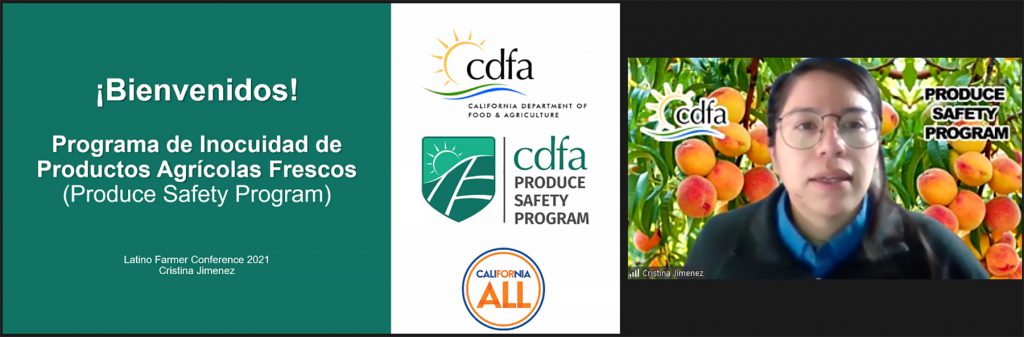
Environmental Scientist Cristina Jimenez speaks about the CDFA Produce Safety Program during the sixth annual Latino Farmer Conference.

The California Department of Food and Agriculture (CDFA) co-sponsored, attended and presented at the sixth annual Latino Farmer Conference on February 11. The virtual conference presented in Spanish was held to facilitate the creation of networks and provide pertinent information and resources to the Latino farming community. It was hosted by the National Center for Appropriate Technology in partnership with the USDA Natural Resources Conservation Service.

CDFA Farmer Equity Advisor Thea Rittenhouse gave a presentation about the CDFA Farmer Resource Portal, which is designed to help farmers and ranchers learn about CDFA grant programs, regulations that affect farmers, CDFA boards and commissions, and resources CDFA offers for farmers and ranchers in multiple languages.

“I specifically mentioned our Climate Smart Agriculture programs and how to find a technical assistance provider to apply and implement the projects, as well as the prioritization of small-scale farmers, Latino farmers and other socially disadvantaged farmers and ranchers,” said Rittenhouse.

CDFA Environmental Scientist Cristina Jimenez gave a presentation about inspections in CDFA’s Produce Safety Program, including what to expect during an inspection, record requirements, and a farmer questionnaire available in Spanish that farmers may complete to find out if they are subject to compliance with the federal Produce Safety Rule.

“I think it was received very well,” Jimenez said of her presentation. “It also was a good learning experience to hear points of view from other sides of the agricultural world.”

Posted in CDFA Inspection & Compliance Branch, CDFA Inspection Services Division, CDFA Produce Safety Program | Tagged , | Leave a comment