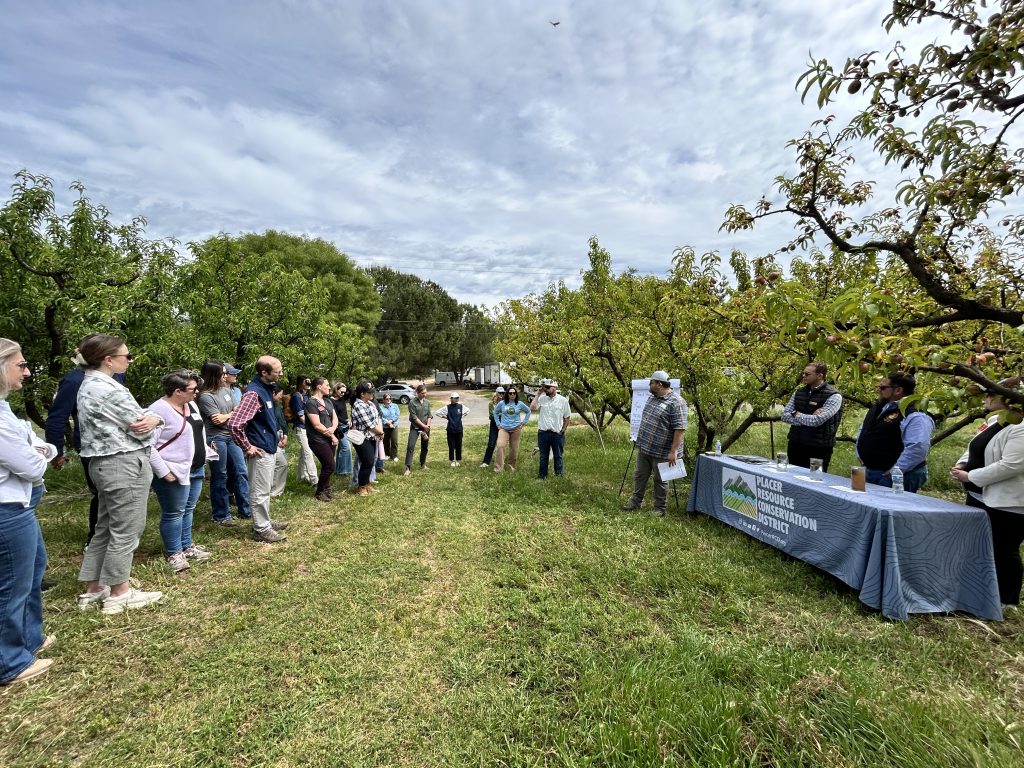
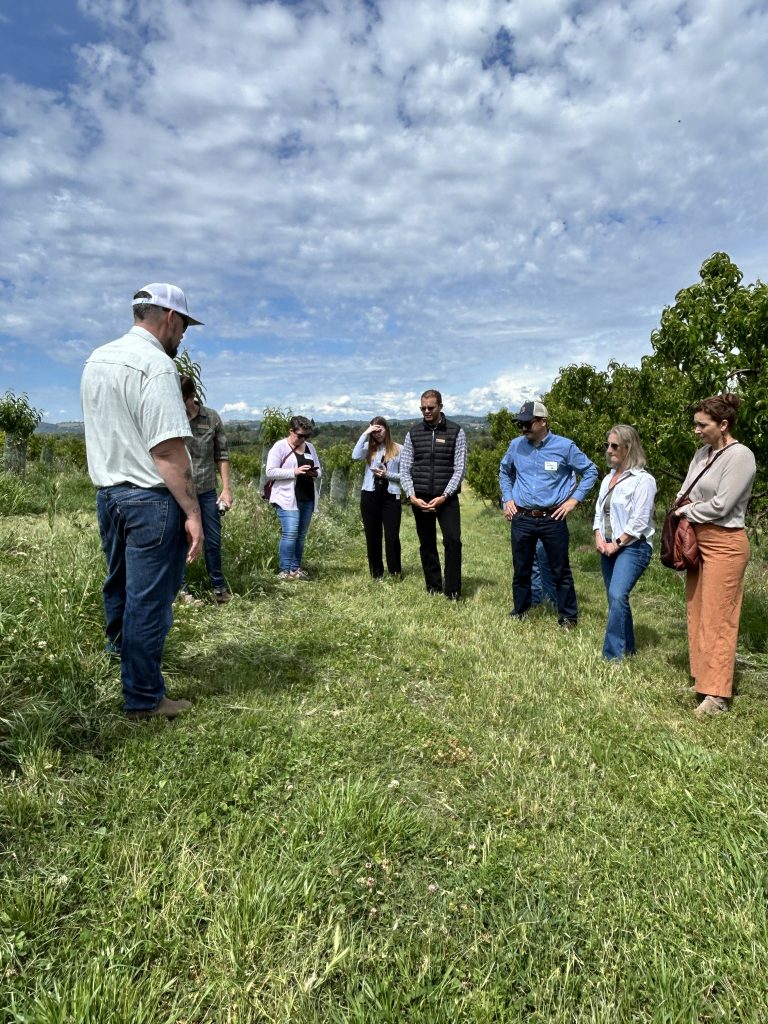
On April 9, Healthy Soils Week was marked with a memorable tour of Twin Peaks Orchards in Newcastle, offering a firsthand look at how state investments in soil health are supporting resilient farms and sustainable food systems across California. The Office of Agricultural Resilience and Sustainability (OARS) partnered with the Community Alliance of Family Farmers (CAFF) to bring together legislative staffers, CDFA personnel, and a Cal Recycle team led by the agency Director, Zoe Heller, to see how climate-smart practices are improving soil function while contributing to a circular economy.
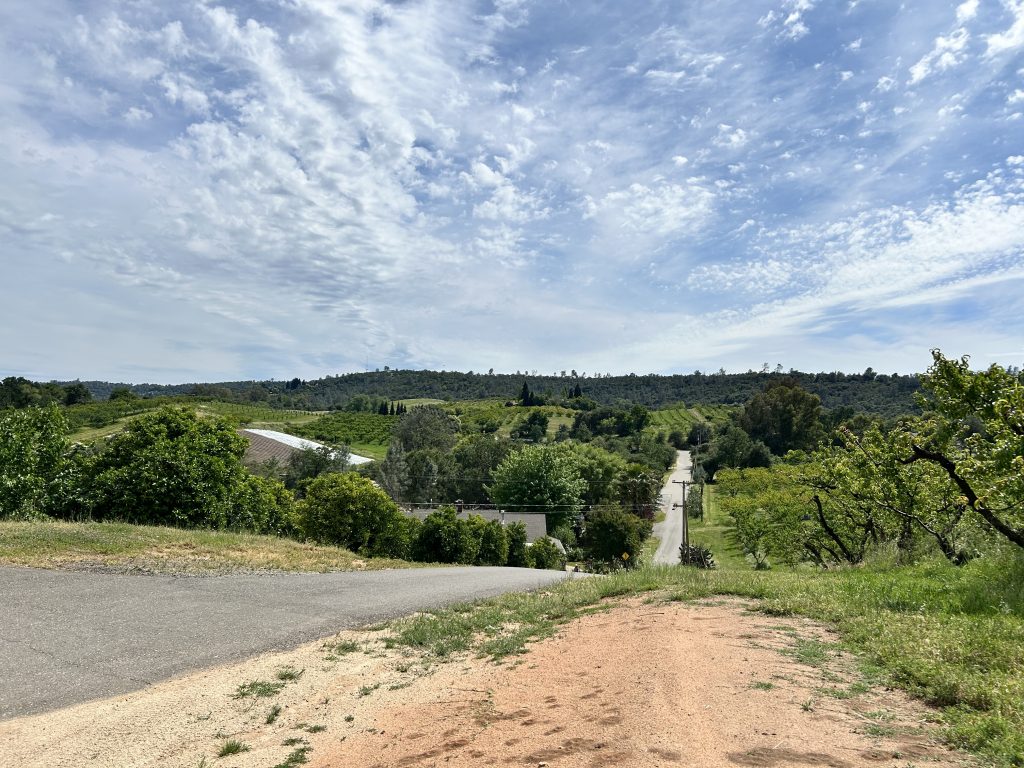
Twin Peaks Orchards, a Healthy Soils Program (HSP) awardee led by Justin Miller, provided a compelling example of how these investments translate on the ground. During an in-orchard demonstration, Placer RCD Agricultural Program Manager Brian Pimentel used a “slake test” to illustrate how adding organic matter improves soil structure and reduces erosion — benefits that are especially critical in this cultivated hilly region. In the demonstration, only soil clods from fields which had received organic additions for several years were shown to remain intact when they were submerged in water.
Miller emphasized that soil health practices get better with time, often requiring several years to fully realize benefits. However, he noted that practices like cover cropping ultimately pay off—improving water retention, increasing resilience to heat, and reducing the impacts of extreme weather. These outcomes align directly with the goals of the Healthy Soils Program: to build climate resilience while supporting agricultural productivity.
Miller highlighted that maintenance of practices without ongoing financial support is a key challenge. While programs like HSP play a critical role in helping farmers initiate new practices, farmers that continue the investment realize much greater environmental and economic benefits. Essentially, the more experience that a producer has with soil health practices, the more they value them. This may help explain why, among awardees of HSP’s first funding rounds responding to a survey, practice persistence rates were higher for those that had experience with the practice prior to their HSP project.
- Cover-cropping: 77% with previous experience persisted vs. 67% first-time adopters
- Composting: 82% with previous experience persisted vs. 51% first time adopters
- Edge of field practices: 73% with previous experience persisted vs 58% first-time adopters. (Babin et al., 2025)
Healthy Soils Week serves as a reminder that soil health investments go beyond benefits at individual farms. They support broader climate goals, strengthen local food systems, and help preserve California’s agricultural legacy. At Twin Peaks Orchards, where a multigenerational story rooted in perseverance continues to evolve, those benefits are visible in every row of trees and every handful of soil.