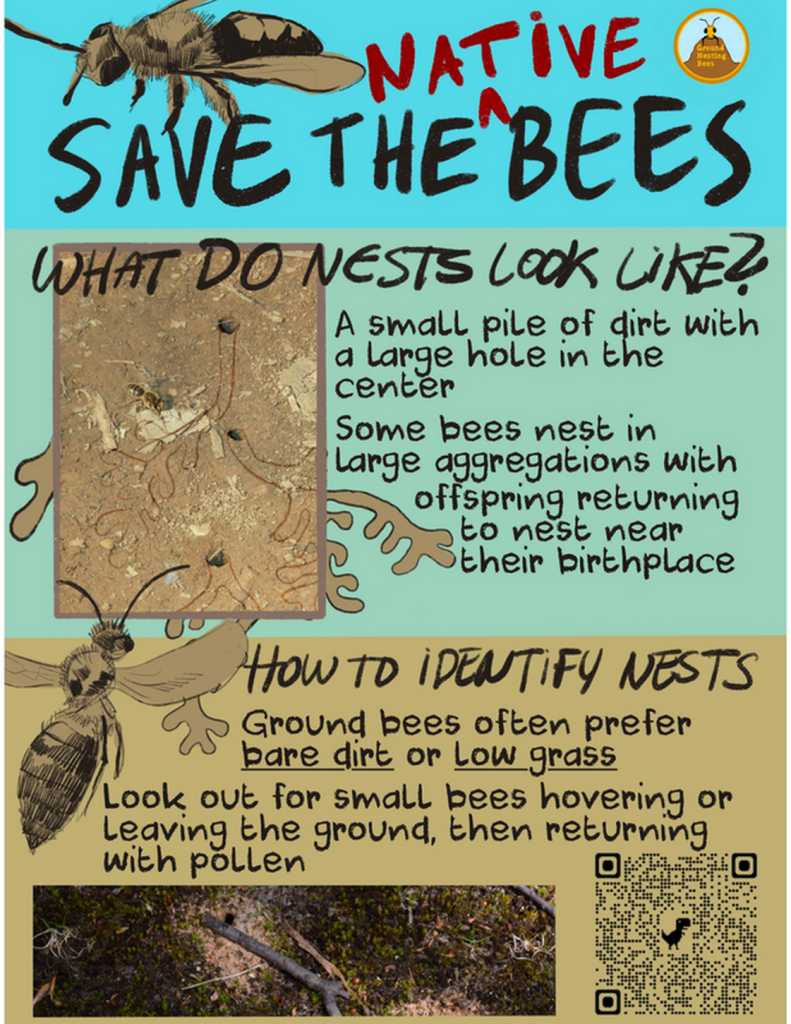
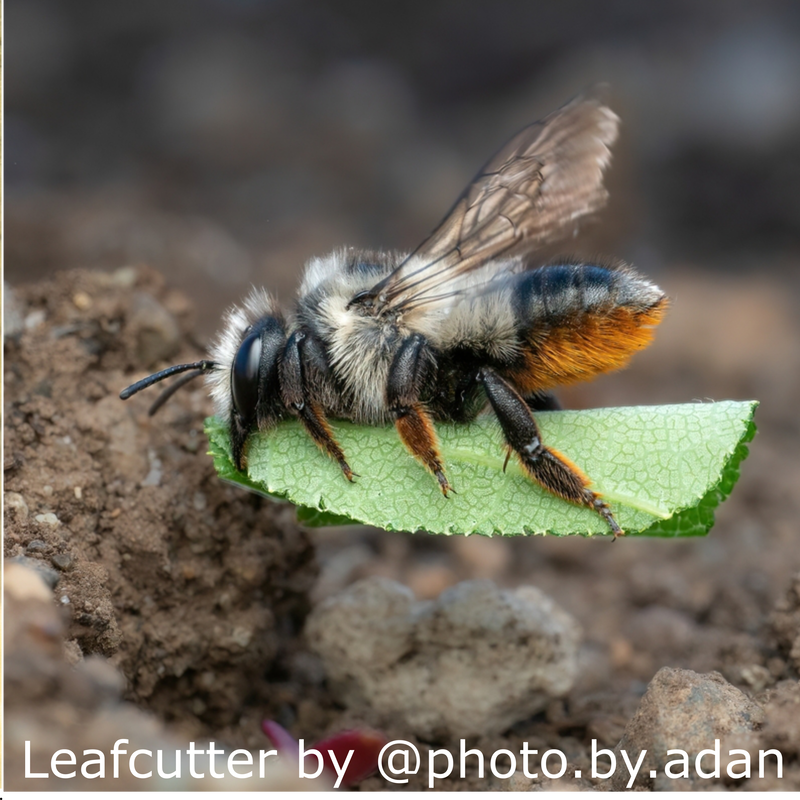
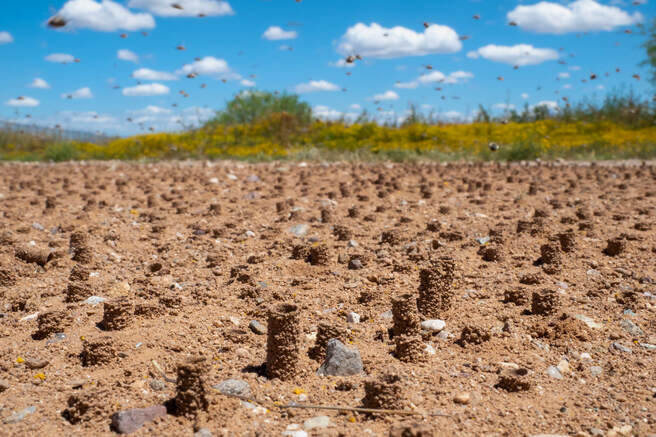
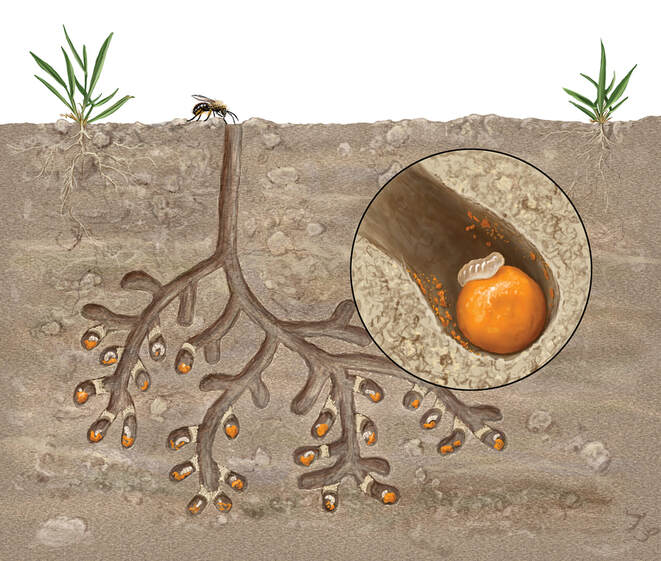
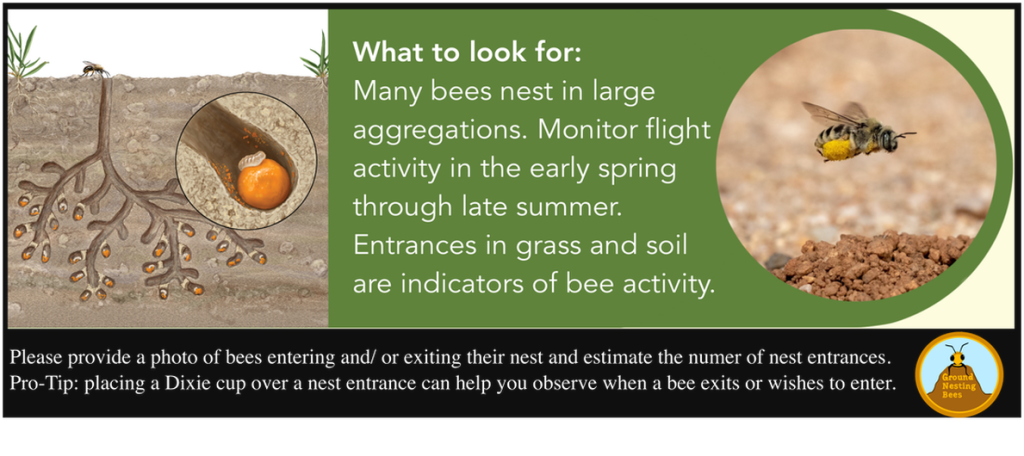
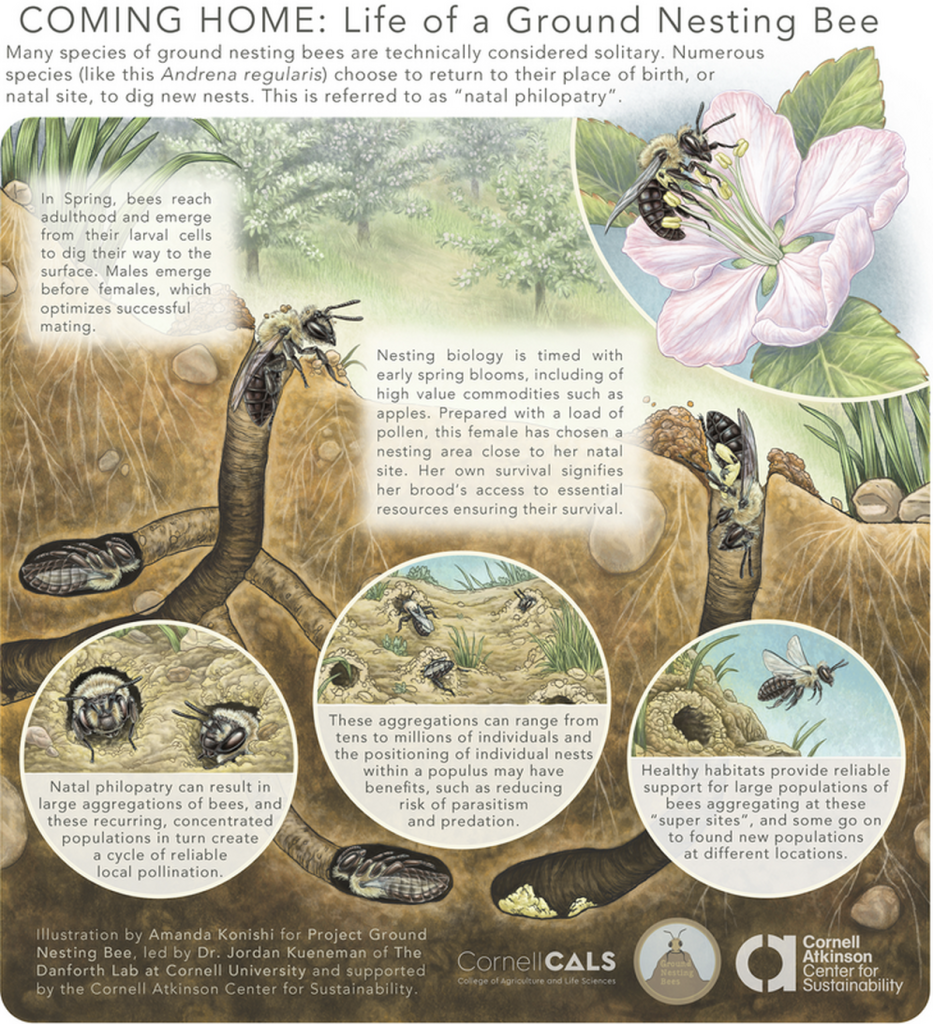
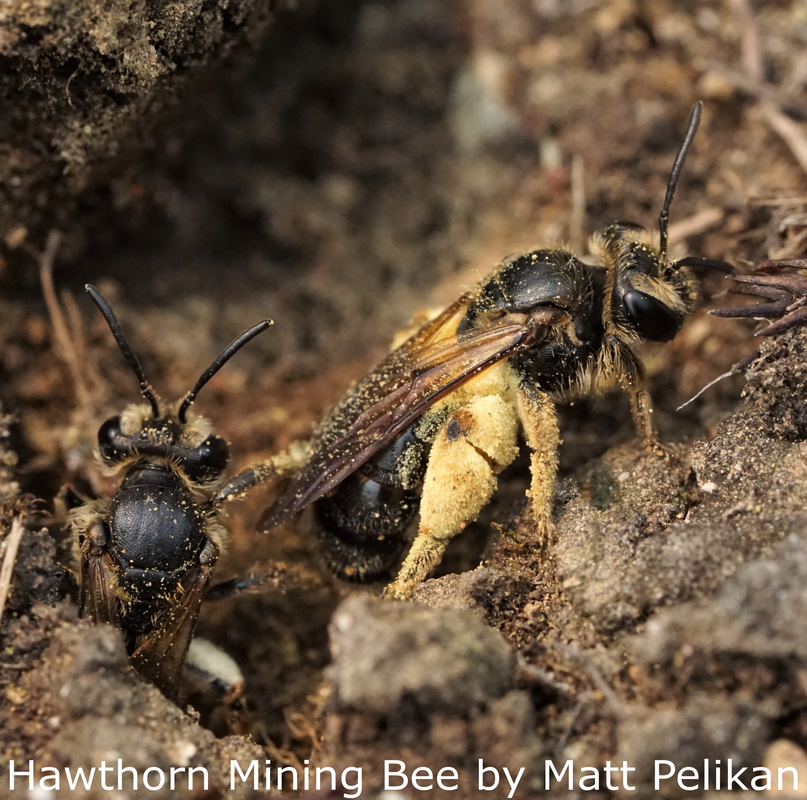
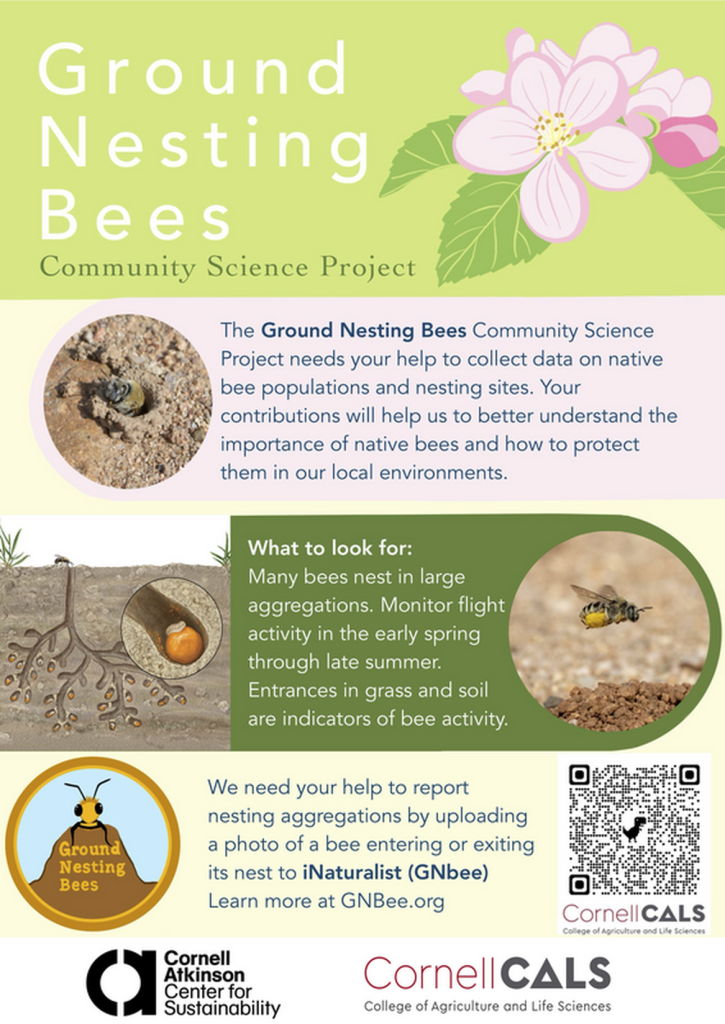
Bee pollination contributes hundreds of billions of dollars annually to the global economy. Wild bees provide free pollination services to farmers, which significantly improve both the quality and quantity of crop yields. Seventy percent of wild bees nest in the ground and some species form large, long-standing nesting sites while others are more solitary. Our knowledge on the ~20,000 global bee species is lacking despite their importance to supporting ecosystem resilience, agricultural sustainability, and food security. Conservation efforts have historically focused on plants, leaving critical gaps in our understanding of bee nesting biology.
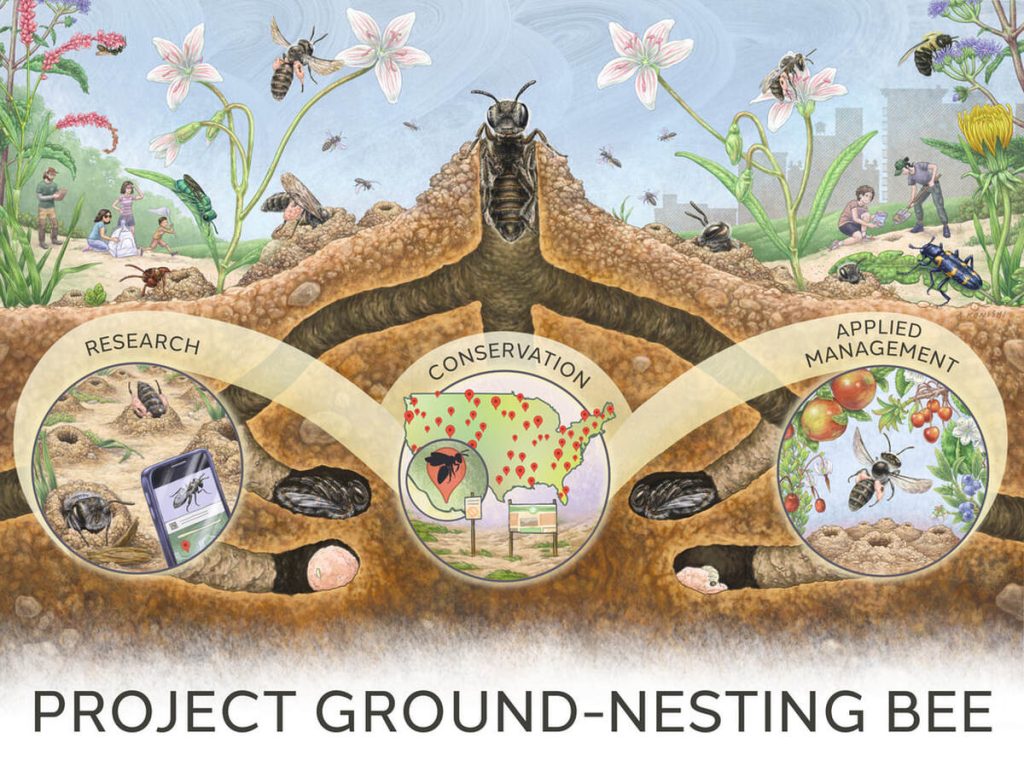
Launched in June 2023, Project GNBee brings together a broad coalition of community scientists, researchers, and institutions to establish a national monitoring program for ground-nesting bees. The project has three primary goals to address the lack of understanding of native bee nesting biology. 1) Discover, document, and study the nesting requirements of ground-nesting bee sites; 2) protect nesting sites and assess associated health risks to bees; and 3) develop multiple management strategies for agriculture.
Project GNBee is progressing our knowledge of native bee nesting behavior. This effort will help pollinator biodiversity and promote a resilient, diverse pollinator community, vital for the health of ecosystems and agricultural economies.
Learn more about the project here.
You can help contribute to this project and advance our knowledge of native bees by uploading photos to the iNaturalist project. Here’s how to upload photos to iNaturalist.
If you take videos of ground nesting bees, please send them to groundnestingbees@gmail.com.