In December, Steph Jamis and Guihua Chen, scientists in the Office of Agricultural Resilience and Sustainability (OARS), attended the 2025 Intertribal Agriculture Council (IAC) Annual Conference in Las Vegas, Nevada. The Intertribal Agriculture Council is an organization that represents Tribes and individual tribal producers across the nation, supporting culturally appropriate outreach. Attending the conference gives OARS an opportunity to learn about the issues that tribal agricultural producers face and consider ways that our programs can be accessible and supportive of Tribal food systems. Steph and Guihua went prepared to share information about the OARS climate-smart agriculture programs and promote the upcoming block grant solicitations for the State Water Efficiency and Enhancement Program (SWEEP) and the Healthy Soils Program (HSP).
OARS is actively identifying ways to increase the inclusion of Tribes in incentive programing. In 2024 CDFA’s Farm Equity Office published a recommendations report based upon a series of listening sessions with Tribes. One of the top recommendations was that CDFA develop tribal-specific grant application tracks within our programs. In the near future, the Healthy Soils Program team plans, through engagement and coordination with Tribes, to integrate Cultural Burning on tribal land as an HSP-incentivized practice. The IAC Annual Conference was a great place to make some initial connections related to this project.
Conference attendees enjoyed presentations on a wide variety of topics including food sovereignty and Tribal prosperity, farm to school programs, USDA financial assistance programs, enhancing Tribal water and food systems, technical assistance delivery, soil health and practical applications, women in agriculture, Tribal Ecological Knowledge in NRCS Programs, prescribed burning as a tool for Tribal land and resource management, and many more. IAC hosted Tribal regional caucuses for Tribal members to meet and discuss regional issues.
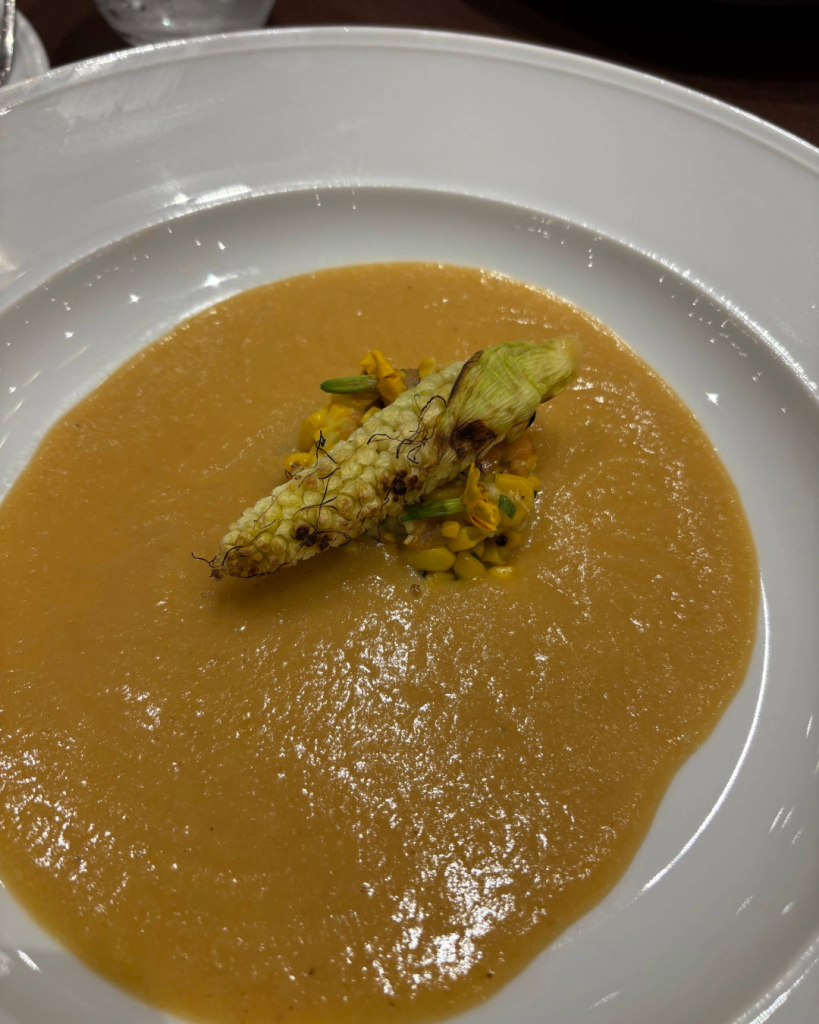
A highlight of the trip was the American Indian Foods luncheon, which featured a menu that showcased a variety of flavorful Indigenous ingredients. The menu was crafted by Chef Nephi Craig, the Founder and Director of Culinary Development at the Native American Culinary Association and Executive Chef at Café Gozhóó, in Arizona. Our team loved learning about the importance of Indigenous foods and returned from the Conference excited about future engagement with Tribes.
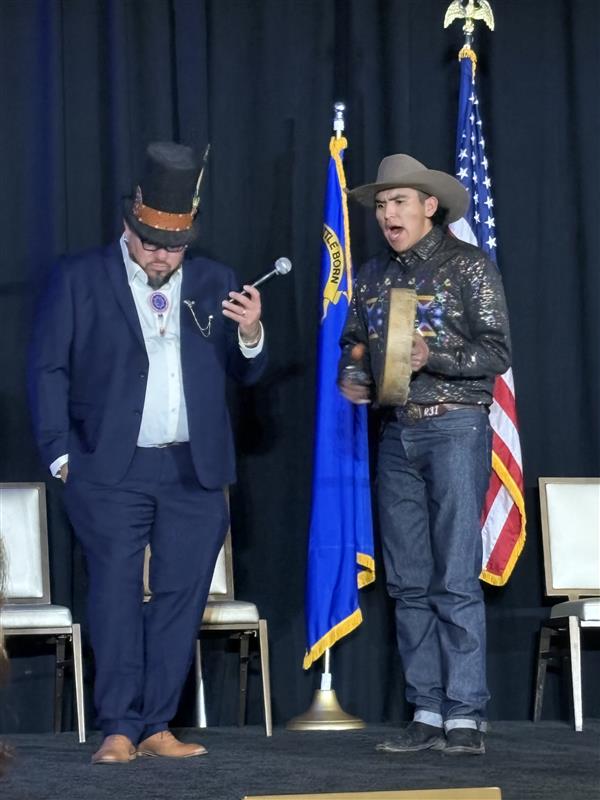
The Conference Opening Ceremony begins with a drum performance. One of the courses at the luncheon featured the three sisters soup; a mix of roasted corn, beans, squash, topped with a smoked salmon relish, tomatoes, and chives and drizzled with olive oil.
Over the last year and a half, CDFA has been hard at work on our first ever Climate Resilience Strategy for California Agriculture (RSA) led by Deputy Secretary for Climate and Working Lands Virginia Jameson. The RSA lays out the climate change challenges affecting our agricultural system and what the state is already doing—including investing in tools and innovations, developing and administering programs, offering technical assistance—and highlights where there are opportunities for the state to do more.
State agency staff, including staff from the Office of Agriculture Resilience and Sustainability (OARS), utilized their expertise in agriculture and climate impacts to prepare a draft of the RSA for public comment that was available October 7, 2025 – November 21, 2025. CDFA received 30 letters by email and more than 250 comments through the online commenting system. CDFA is very grateful to all of you who took the time to provide thoughtful and detailed comments.
Generally, stakeholders were supportive of the RSA and were happy to see its comprehensive approach. Many commenters offered support for existing OARS Climate- Smart Agriculture programs. Below are a few of the common themes we saw in the comments:
Stakeholder interest in a focus on regulatory streamlining and improved state agency collaboration
A need for tools to improve fertilizer use and nutrient management
An interest in pursuing California’s energy and farmland conservation goals simultaneously through solutions like agrivoltaics
Revisions on the discussion of voluntary carbon and ecosystem service markets
The development of metrics to track progress on climate action in agriculture
Recognizing the impacts on and the importance of targeted resources for small and diversified farms
The need for on-farm technological advancements and equitable access
OARS Staff are collaborating with other state agency staff to review and address comments to refine the RSA and uplift stakeholder suggestions where possible. We expect the final RSA to be available in 2026 – check out the RSA website for more updates and information. Stay tuned!
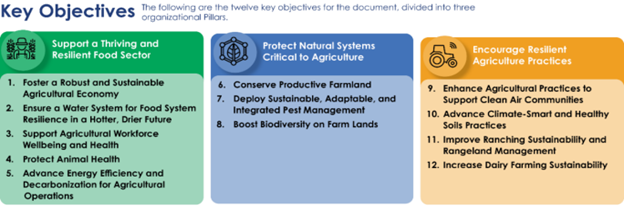
The Strategy is organized into three pillars that describe CDFA’s plan for climate resiliency. Within each pillar, the chapters detail agricultural topics important to the pillar’s objective.
In case you missed it, three of the manure methane reduction grant programs administered by CDFA OARS announced awards in December 2025, closing out the year with some exciting news. The awarded projects represent important progress in the dairy and livestock sector towards meeting the State’s methane reduction targets and expands the overall impact of these incentive programs. Including the newest awards, projects supported by the three programs to date will reduce an estimated 27.43 million metric tons of carbon dioxide equivalents over their minimum projected lifetimes.
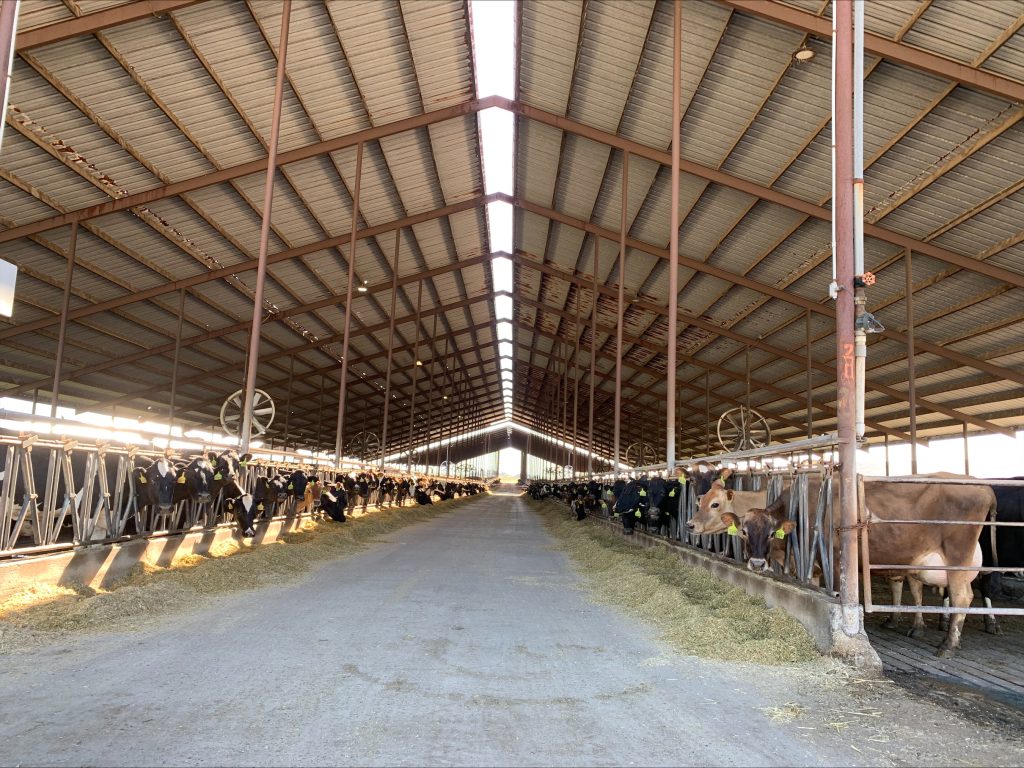
California dairy cows and the environment can benefit from improved manure management projects.
AMMP and DDRDP:
In the fall of 2025, the Alternative Manure Management Program (AMMP) and the Dairy Digester Research and Development Program (DDRDP) received $7 million in Greenhouse Gas Reduction Funds as part of an amendment to the Budget Act of 2025 – these funds were part of a previous appropriation split across two fiscal years. The arrival of the $7 million allowed the two programs to offer some additional awards to those that had applied in the most recent grant round but had not yet received an award due to insufficient funds, boosting the total number of projects captured by the 2024 AMMP and 2024 DDRDP solicitations.
In December 2025, the AMMP announced the addition of 5 new projects, receiving $3.69 million in grant funds, to the 25 projects originally awarded in April 2025. The DDRDP added 2 new projects, receiving $2.6 million, to its list of 5 originally awarded projects.
Dairy Plus Program:
The Dairy Plus Program is a collaborative effort between CDFA and the California Dairy Research Foundation, funded by the USDA Advancing Markets for Producers initiative. Just before the end of 2025, DPP announced awards for its second grant solicitation round. The program awarded 23 projects associated with newly awarded, in-progress, or previously completed AMMP or DDRDP projects a total of nearly $27 million in federal grant funding, matched by more than $28 million from private sources and state Greenhouse Gas Reduction Funds.
Despite a lengthy delay due to federal transitions, the awards were highly anticipated as these projects install advanced, larger scale manure management practices. These practices not only reduce greenhouse gas emissions but also help manage nitrogen and salt surplus, improving water quality and making great strides in dairy sustainability.
Stay up to date on methane reduction program news, including the next call for applications for the Dairy Plus Program expected in early 2026 – visit our webpages or follow us on social media!
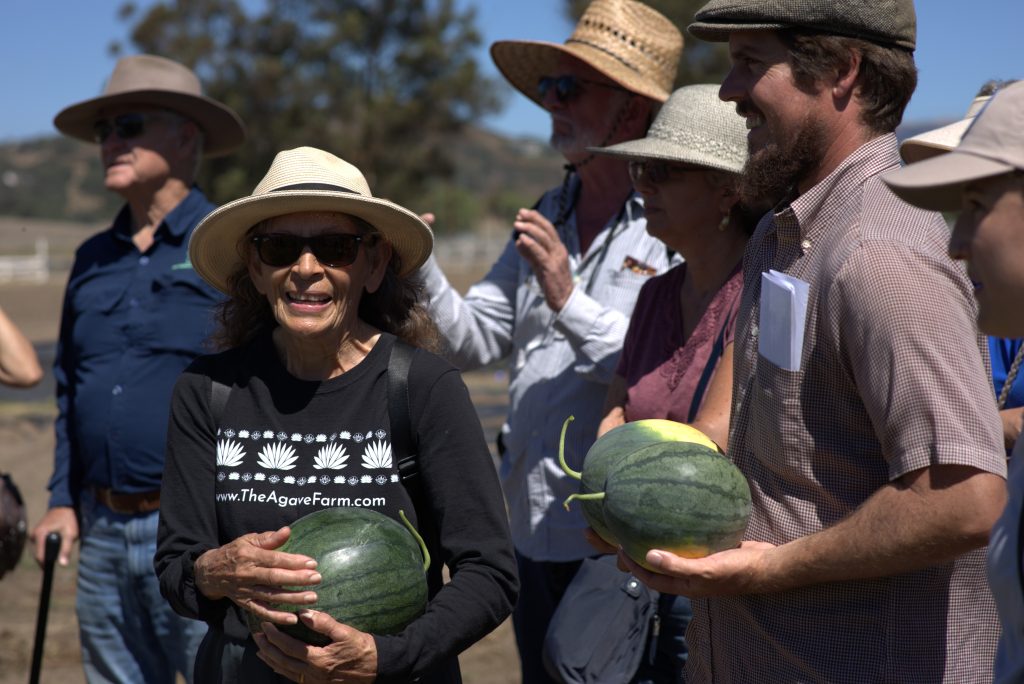
The UC Organic Agriculture Institute (OAI) hosted its first San Diego regional conference this past fall, bringing together over 100 attendees—including 50+ organic farmers—for farm visits, expert panels, and one-on-one consultations. San Diego County currently has the highest number of certified organic farms in California, and the large diversity of crops and knowledge was on display at the conference. Farm tours included crops ranging from avocados to guava to watermelons. The tour was filled with discussion on how to farm productively in the dry San Diego climate. Indoor programming included panels featuring technical assistance providers and sessions on the details of running a successful and sustainable organic business.
Organic agave grower Ofelia Lichtenheld (left) – a recipient of OARS Healthy Soils Program and Organic Transition Pilot Program – and Brandon Wickes (right) from Community Alliance with Family Farmers with their hand-picked watermelons from Golden Eagle Farm. Photo by Caroline Champlin.
Partial support for the conference came from an OARS grant to OAI – Advancing Organic Agriculture in California – and the conference featured technical assistance providers for multiple OARS programs including Healthy Soils Program, Pollinator Habitat Program, and the Organic Transition Pilot Program. Technical assistance is a service to advise and educate farmers and ranchers on a wide variety of issues- from on-farm practices to business management. OARS funds a variety of free technical assistance to ensure that growers of all sizes can access expert help that builds resilience and supports a sustainable and thriving future. Seeing the relationships that on-the-ground technical assistance providers have built with the regional farmers was a highlight of the conference.
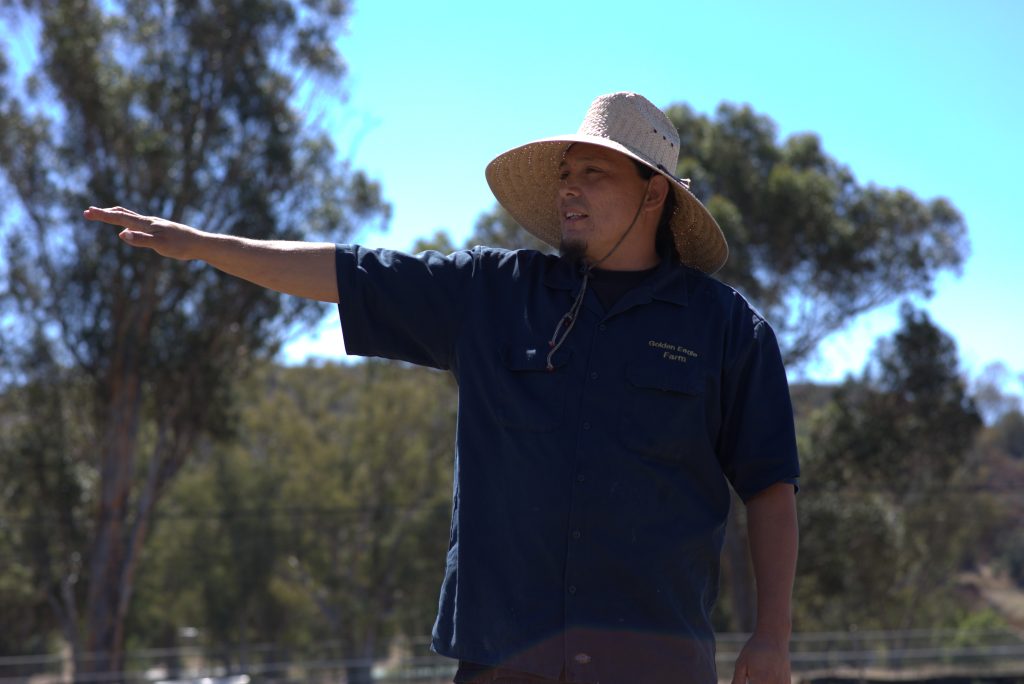
Rufus Jimenez, a member of the Mesa Grande Band of Mission Indians, serves as the supervisor of Golden Eagle Farm, an organic farm in San Diego County. Photo by Caroline Champlin.
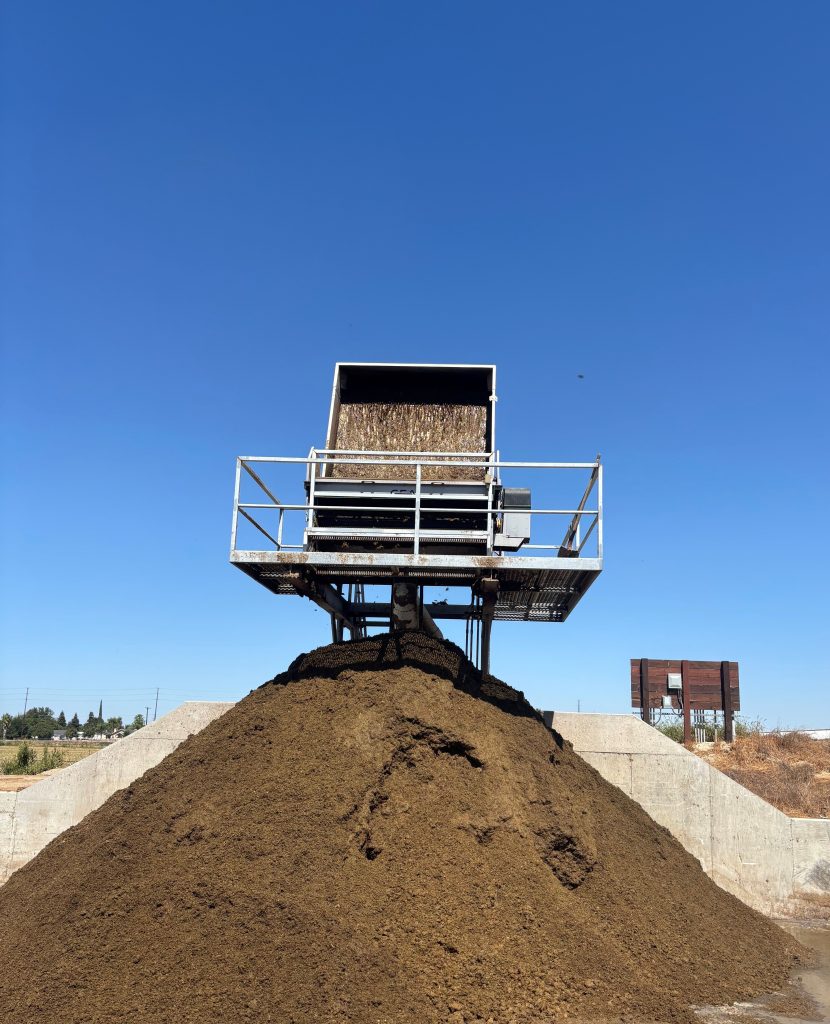
Our Alternative Manure Management Program (AMMP) provides financial assistance for the implementation of greenhouse gas emissions reducing, non-digester manure management practices on dairy and livestock operations. Tiberio Cardoso, whose family has been farming since 1981, is the Operations and Finance Manager for Manuel and Maria Cardoso & Sons Dairy in Merced County. With a 2022 AMMP grant award, he and his family added additional manure separation technologies to improve their dairy’s manure management system.
The dairy’s new solid-liquid manure separator.
Solid-liquid separation equipment such as the sloped screen mechanical separator installed on the dairy can keep manure in a drier form and out of non-oxygenated conditions, emitting significantly less methane than liquid slurry or manure stored in ponds and allowing the components to be more efficiently reused. The solids could then be used for bedding, keeping housed cows cleaner and drier, and reducing sediment buildup in the flush lanes. The solid separation resulted in cleaner lagoon waters that lead to less solids accumulation around irrigation valves, helping prevent crop damage in those areas. Separation also increased lagoon storage capacity, which is a crucial benefit in years that they receive excessive rainfall. One surprising benefit Cardoso noticed is that manure separated in this fashion proved easier to store and keep dry in the winter months, which may help to further reduce methane emissions.
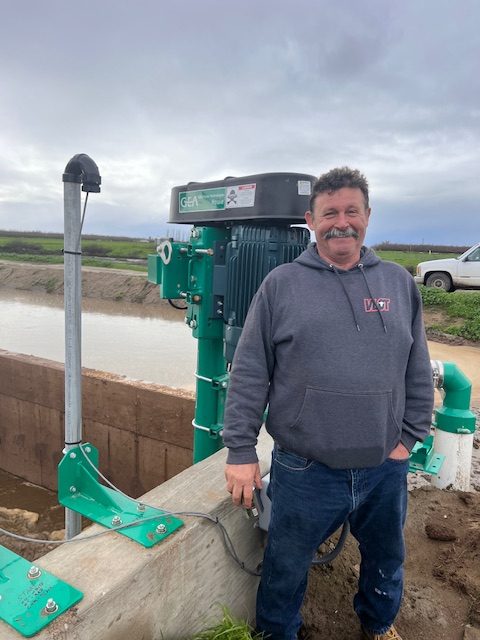
Tiberio Cardoso stands by the new collection pit that agitates and pumps flush water to the separator.
“Our number one priority is our animals and their comfort along with protecting our environment. Our project provides significant benefits to our operation [by] improving animal comfort with improved bedding and also helping us meet environmental regulations, which is a win-win situation. This allows us to remain sustainable in producing a food item that is a necessity in society.”
Cardoso notes that the AMMP funds made it possible to implement the climate smart practices they have wanted to incorporate but were not financially viable options for them. Beyond the greenhouse gas emissions reductions, they found financial savings too: “Separating the manure before it enters the ponds has saved us money that would have gone to pond cleanings; handling and moving drier manure has also reduced our hauling and spreading costs. Those cost savings will help keep us sustainable [in the] short- and long-term.”
World Soil Day 2025, observed on December 5, focused on the theme “Healthy Soils for Healthy Cities.” To mark the occasion, our office highlighted the work of urban Healthy Soils Program (HSP) awardee, “Huerta del Valle” (“Valley Garden”). With their flagship community garden in Ontario, a second site in Jurupa Valley, and an incubator farm opening soon, the organization is building a network of community gardens throughout the Inland Empire.
Huerta del Valley was founded by Maria Alonso after a doctor recommended she feed her children organically grown produce. Although she was unfamiliar with organic agriculture at the time, Maria drew on the agricultural knowledge she learned from her parents growing up. After doing her own research, she decided the best way to provide healthy food for her family was to grow it herself.
“Local organic food should be a right, not a luxury,” Maria says, “Growing food together has empowered our community, improved our environment, and helped us prepare for the risks to us posed by a changing climate.” She adds that many volunteers now rely on the garden to help feed their own families.
Maria began by cultivating a small plot in a school garden, where she quickly discovered strong interest from the surrounding community. In 2013, the Ontario City Council donated Huerta del Valle’s current site and rezoned the land for urban agricultural use, helping the organization implement a Kaiser Permanente grant through the Healthy Eating Active Living (HEAL) Zone Initiative.
The site was an untended vacant lot, and community members first worked together to remove litter and debris. To restore the heavily compacted soil, they planted fava beans as an initial soil-building crop. They then implemented the Indigenous “Three Sisters” planting system, in which corn provides a trellis for beans, beans fix nitrogen in the soil, and squash shades the ground with broad leaves. This system not only improves soil health but also produces the foundations of a nutritious diet. The garden also uses intercropping and seasonal crop rotations, growing a wide variety of vegetables that are sold at the on-site market. A nursery and production greenhouse allow Huerta del Valle to grow food year-round while improving produce quality and managing pests and diseases without chemical inputs.
In 2020, a Healthy Soils Program grant supported major soil improvements in the garden. One way they did this was by incorporating large amounts of municipal compost into the soil and covering it with woodchip mulch. The compost added nutrients and jumpstarted the soil’s organic matter, while the mulch conserved moisture, modulated soil temperatures, controlled weeds and contributed to long-term soil health. Since then, the Garden’s volunteers have produced their own compost from horse manure, wood chips, and food wastes that are collected from local stores and a school (they still do this!). They have also been irrigating for several years with compost tea.
The HSP grant also supported the establishment of hedgerows, which provide habitat for native pollinators and beneficial insects. Many of the hedgerow plantings, including raspberries and blackberries, also produce fruit for the community.
Together, all these practices have created living, healthy soil that supports abundant, nutritious produce with minimal pest and disease pressure —demonstrating how healthy soils can strengthen communities and cities alike.
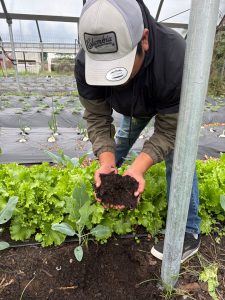
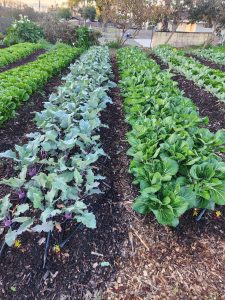
Shows the high quality of the soil – note the color, moisture and friability.A variety of produce flourishing due to the soil improvements.
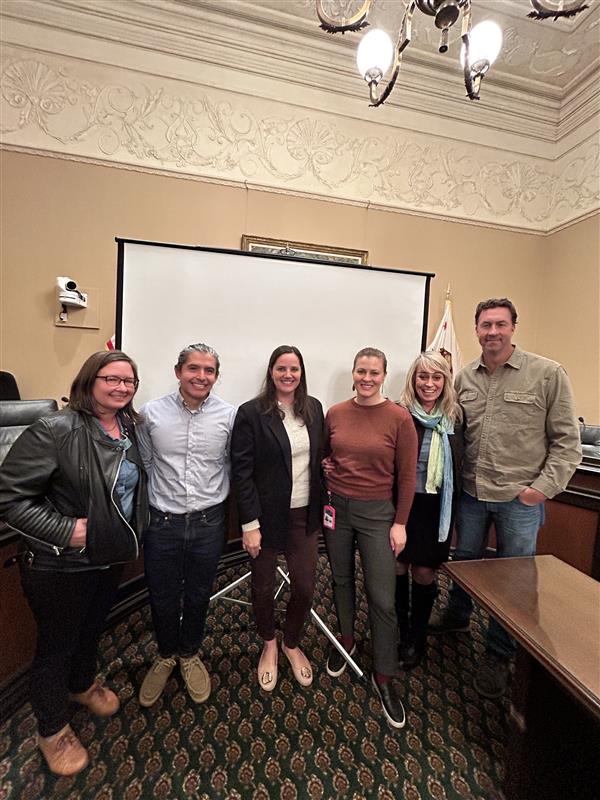
… and the Healthy Soils Program hosts its second Legislative Briefing
In addition to highlighting this project’s success, the HSP also marked World Soil Day with a legislative briefing in the Capitol, on “Supporting Fertility and Farm Profitability While Reducing Waste.” As fertilizer, input, and labor prices continue to rise, growers are looking for long-term strategies that protect both productivity and profitability. The use of biological materials from off-farm, such as compost, digestate, and mulch, is becoming increasingly important. Thanks to policies and programs like those created in support of SB 1383, these recycled amendments have become more available, creating new opportunities for farmers. We are grateful to the speakers who helped bring these conversations to life:
Justin Wylie, Wylie Farms Ranch Management
Dr. Patricia Lazicki, UC Cooperative Extension
Dr. Axel Herrera, UC Davis
Cara Morgan, CalRecycle
Their perspectives, from on-the-ground decision making, to university research, to statewide policy, highlighted how soil health, economic resilience, and waste reduction work hand-in-hand. They emphasized how recycled soil amendments provide a wide range of nutrients that are released slowly over time as the soil amendments are decomposed. Building soil organic matter using these amendments is a long-term strategy, requiring repeated and regular applications to improve plant nutrition, water retention, and overall soil health in the years that follow. While it can be challenging for farmers to invest in these practices during years of lower crop prices, the benefits are widely recognized.
Local access and affordability — along with direct and indirect support from CDFA and CalRecycle grants — often determine whether farmers can put these practices into action.
California is one of 36 global biodiversity hotspots – areas with exceptional concentrations of plant and animal species found nowhere else on the planet. At the same time, many California species are at risk of extinction due to threats from habitat loss and climate change. In October 2020, Governor Newsom issued Executive Order N-82-20 which establishes a state goal of conserving 30% of California’s lands and coastal waters by 2030 – known as 30×30. The 30×30 goal is intended to help accelerate conservation of our lands and coastal waters through voluntary, collaborative action with partners across the state to meet three objectives: conserve and restore biodiversity, expand access to nature, and mitigate and build resilience to climate change.
California’s strategy to achieve 30×30 is organized into ten Pathways. Each of these pathways identifies specific state actions that will help us achieve 30×30. As of June 2025, 26.1% of California’s lands and 21.9% of its coastal waters are under long-term conservation and care. This includes an additional 853,000 acres of conserved lands and 191,000 acres of conserved coastal waters counted just this year.
Many places that are not durably conserved or are not being managed with biodiversity as a primary goal are still essential to achieving a healthy and resilient network of conservation areas. This ties in with 30×30’s Pathway 9: Advance and Promote Complementary Conservation Measures. 30×30’s success relies on these complementary conservation measures to expand wildlife habitat, create corridors, buffer conserved areas, and much more. Our state’s working lands, including agriculture implement actions specified by this pathway. California’s farmers and ranchers are worldwide leaders and innovators in food production. They are also among the foremost stewards of California’s working lands—providing ecosystem services and supporting biodiversity. Our farmers and ranchers undertake many practices to enhance biodiversity – from planting pollinator species, growing cover crops for soil health, avoiding practices that disrupt nesting of bird species, providing winter habitat on rice fields and helping endangered species thrive to participating in large-scale habitat corridors, to name a few. California Annual Progress Report to 30×30 highlights our collective progress to 30×30. Several notable achievements involving our working lands are in the report.
This year’s annual 30×30 Summit had a breakout session on working lands “Where Nature Works: Production and Biodiversity Together”, highlighting the importance our working lands play in conserving biodiversity and building resilience to climate change. The session was run by Michael Delbar, Chief Executive Officer of the California Rangeland Trust. The California Rangeland Trust is the largest land trust in California. He highlighted a study conducted by UC Berkley scientists, which examined the California Rangeland Trust’s conservation easements to explore the environmental and monetary value of preserving California’s open spaces. The study showed that for every dollar invested it returned $1.35 to $3.47 and that the 56 Rangeland Trust conservation easements, protecting a total of 306,781 acres, provide between $364 million and $1.44 billion in ecosystem services annually.
Working under the guidance of Pathway 3: Increase Voluntary Conservation Easements, the California Rangeland Trust worked with the California Natural Resources Agency to identify conservation easements on private working lands managed for ecosystem health that contribute to the 30×30 target. This has led to approximately 131,000 acres of conservation easement lands added to CA Nature as 30×30 Conservation Areas.
California and the stewards of our working lands are making great progress to achieving 30×30. Check out 30×30 California to learn more.
I hope you enjoy this newsletter showcasing the accomplishments of our grantees and partners and giving you a peek at how we lead our programs to serve producers while contributing to the state’s sustainability goals. Additionally, I want to take this opportunity to summarize the funding status of OARS programs, so you know which opportunities are in the future.
OARS expects to receive $65M in funding for our Healthy Soils Block Grant Program (HSP) and $40M in funding for our State Water Efficiency Enhancement Block Grant Program (SWEEP) from Proposition 4 – Climate Bond and we tentatively plan to offer all of that funding as part of one funding opportunity in fall 2025. Through Prop 4, OARS also expects to receive $15M for a new Equipment Sharing Program (ESP) that will require extensive stakeholder consultation before opening for applications in 2026. The legislature has not appropriated the Prop 4 funding, and the state is still in the process of finalizing rules and guidelines for using the funding. The timeline of these two key external processes may affect OARS’ timeline.
All state funding appropriations have an “expiration date,” and it is always our goal to give grantees a generous grant term within that expiration date to allow for bumps in the road. To that end, we will keep pushing forward with refining framework for the HSP and SWEEP solicitations at our August 15thEnvironmental Farming Act Science Advisory Panel (EFASAP) meeting, followed by a written public comment period and simultaneous stakeholder workshops that will inform the final Request for Grant Applications. We look forward to your participation and help refining our block grant model.
Our Dairy Plus Program, which is a subaward from the California Dairy Research Foundation of a grant funded by the USDA Alternative Markets for Producers initiative (formerly the Partnership for Climate Smart Commodities program), is ongoing but undergoing federal review and revision. This program funds infrastructure on dairies that reduces greenhouse gases and improves nutrient management, and we have approximately $58M remaining in the budget for new grants to producers. We are hopeful that we will be able to announce the results of the 2024 solicitation and run a new solicitation soon, pending a final and functioning grant agreement. At this time, there is no additional funding for the Alternative Manure Management Program and Dairy Digester Research and Development Program.
Lastly, the Office of Pesticide Consultation and Analysis received a $1.5 million increase in spending authority and an increase in the amount of agricultural mill fee the office can use. Using reserve funding first, OPCA will use the spending authority to address increased research costs, meet the Program activities identified in the Sustainable Pest Management (SPM) Roadmap, and perform increased consultative work for the Department of Pesticide Regulation (DPR), as required by Assembly Bill (AB) 2113 (Chapter 60, Statutes of 2024). In the short term, the increase will also go towards funding our Biologically Integrated Farming System (BIFS) grant program at $1-3 million a year and support for the California IR-4 Project. As AB 2113 related work increases, OPCA will increase spending on research awards related to regulatory work and decrease BIFS Funding.
We will be in contact with you through our mailing list with all updates related to our grant programs. If you know organizations who are likely to be good applicants or partners for these programs, particularly those that serve socially disadvantaged and underserved producers, please encourage them to sign up for our mailing list and reach out to us directly for more information.
May the rest of your summer be full of delicious in-season California berries, stone fruit, and tomatoes. I know I’ve been doing my part to support that part of our agricultural economy.
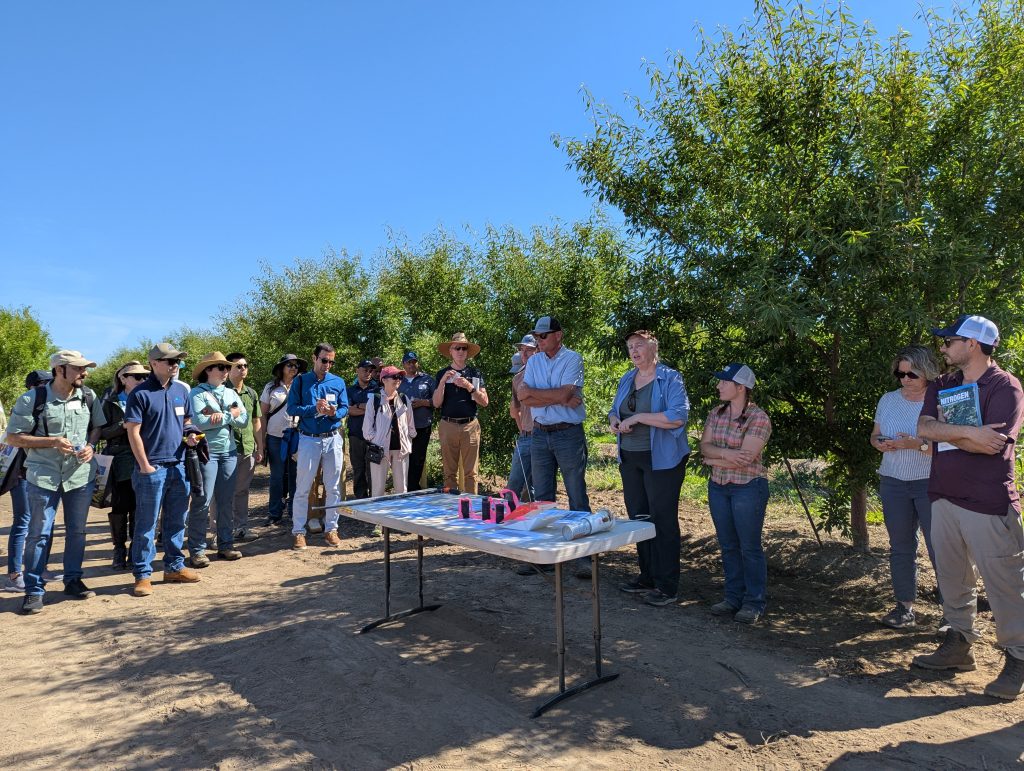
State and industry representatives visit Bowman Orchards.
Almonds are California’s #1 export crop for good reason. No place in the world has a climate better suited to consistent, high-quality almond production. Furthermore, the constricting labor market in the state has encouraged farmers to move towards almonds, with their relatively lower maintenance. With 1.5 million acres planted with almonds – out of no more than 9 million irrigated acres overall – it should be no surprise that California has also become the center of research into sustainable almond production. And it is heartening to know that this research has benefits for the management of other orchard crops, and for the efficacy of state programs.
It has increasingly made sense to combine research projects in the same orchards, describing the system in a more complete way than any single researcher can do. To this end, three collaborative projects stand out especially.
At Paramount Farms, near Lost Hills, a diverse team of researchers studied effects such as:
nitrate leaching
fertilizer off-gassing as the GHG nitrous oxide
fertilizer nitrogen (N) distribution within trees
remote sensing of N needs
water use
plant water stress
plant chlorophyll levels
irrigation techniques
nutrient cycles
measuring and predicting nut yields and qualities.
According to the researchers, this project defined the modern accepted guidelines for N management in Almond, including producers overseas. The work has changed industry practices and reduced fertilizer inputs and the impacts of excess N.
For more information about this project you can contact Patrick Brown, phbrown@ucdavis.edu.
At Bowman Farms, near Modesto, scientists have been focusing on long-term N management through testing and modeling of:
high-frequency (low-concentration) N fertilization through the irrigation system
N leaching into groundwater, especially as affected by distribution of irrigation water and N
soil permeability prediction systems
almond tree water use at different ages
groundwater recharge effects
According to the researchers, the Bowman long-term studies are longest-running to date for a single almond orchard.
For more information about this project you can contact Thomas Harter, thharter@ucdavis.edu.
At TriNut Farms in Stanislaus County, the emphasis has been on climate-smart practices, and particularly on combining (“stacking”) them, to identify synergies and tradeoffs. While assessing
whole-orchard recycling
biochar at planting
compost
cover crops,
Researchers are studying their effects on:
soil health
soil carbon
tree nutrition from the soil
biodiversity
orchard productivity
nutrient cycling
ground-truthing remote sensing of tree development with Ceres AI
According to the researchers, they are also monitoring commercial orchards across the Central Valley to see how these practices perform at scale.
For more information about this project you can contact: Sat Khalsa: sdskhalsa@ucdavis.edu.
The funding of these projects has come from various sources, including CDFA’s Fertilizer Research and Education Program, which is funded by an excise tax on fertilizer sales; federal Specialty Crop Block Grants, which are administered by CDFA; other federal sources; grower members of the Almond Board and Pistachio Research Board; and industry.
The completeness of the data gained from these orchards allows important insights. Models for predicting N management effects on the environment are being developed, including for use in state programs; growers are benefiting from more efficient fertilizer and water management; and other practices, such as Whole Orchard Recycling, compost application, and groundwater recharge, have been have been validated by new data, preparing them for more public support. The outcomes and findings of such projects can help form the decisions of growers who apply for HSP and SWEEP funding, as they design their future orchard management.
OARS staff will continue to visit these project sites and monitor results to design science-based improvements to our incentive grant programs.
The California Department of Food and Agriculture (CDFA), through its Office of Agricultural Resilience and Sustainability (OARS), is helping California farmers grow more sustainably through the Water Efficiency Technical Assistance (WETA) program. This initiative funds local organizations to deliver critical on-the-ground support in three main areas:
Conducting distribution uniformity (DU) testing for irrigation systems,
Facilitating pump efficiency tests to assess irrigation pump performance, and
Developing and delivering training focused on water and nutrient management.
One standout example of this work is happening in Monterey County, where the Resource Conservation District of Monterey County (RCD MC) applied for and received WETA funding in 2022. As part of their proposal, RCD MC made a strategic choice to create educational resources for Spanish-speaking farmers and ranchers—a group that comprises nearly a quarter of all agricultural producers in the county, according to the 2022 USDA Census of Agriculture. The goal: ensure more farmers understand how to optimize water and nutrient use—two critical elements of sustainable, cost-effective farming.
One key resource developed under this initiative is a series of Spanish language training videos created to share knowledge on optimal water and nutrient management techniques, promoting farmer-to-farmer learning. In this video, Celsa Ortega, the owner of Induchucuiti Farms and a graduate of the Agriculture and Land-Based Training Association (ALBA), discusses her use of low-pressure, uniform drip irrigation systems and underscores the importance of maintaining high distribution uniformity across a field. Celsa’s real-world experience and insights into effective water use reinforce how small improvements can lead to big savings in water, energy, and overall efficiency.
The video, along with other training materials and assistance supported by the WETA grant, serves as a powerful tool to help growers:
Identify inefficiencies in irrigation systems,
And take action to improve system performance.
Without WETA funding, these services—including DU and pump testing—would likely have required out-of-pocket expenses from farmers or gone unperformed entirely, leading to unnecessary water and energy waste. By offering this assistance at no cost to the grower, RCD of Monterey County is helping farms become more resilient, productive, and sustainable.
While providing no-cost distribution uniformity and pump tests are core parts of the WETA program, developing training materials —especially in accessible formats like video—is valuable since it can reach a wide audience and have a lasting impact beyond the end of the WETA grant term.
RCD MC’s initiative demonstrates how tailored, inclusive outreach can drive meaningful change on the ground. By speaking directly to the needs of Spanish-speaking farmers, they’re not just improving irrigation systems—they’re strengthening the future of agriculture in California.