

Our Alternative Manure Management Program (AMMP) provides financial assistance for the implementation of greenhouse gas emissions reducing, non-digester manure management practices on dairy and livestock operations. Tiberio Cardoso, whose family has been farming since 1981, is the Operations and Finance Manager for Manuel and Maria Cardoso & Sons Dairy in Merced County. With a 2022 AMMP grant award, he and his family added additional manure separation technologies to improve their dairy’s manure management system.
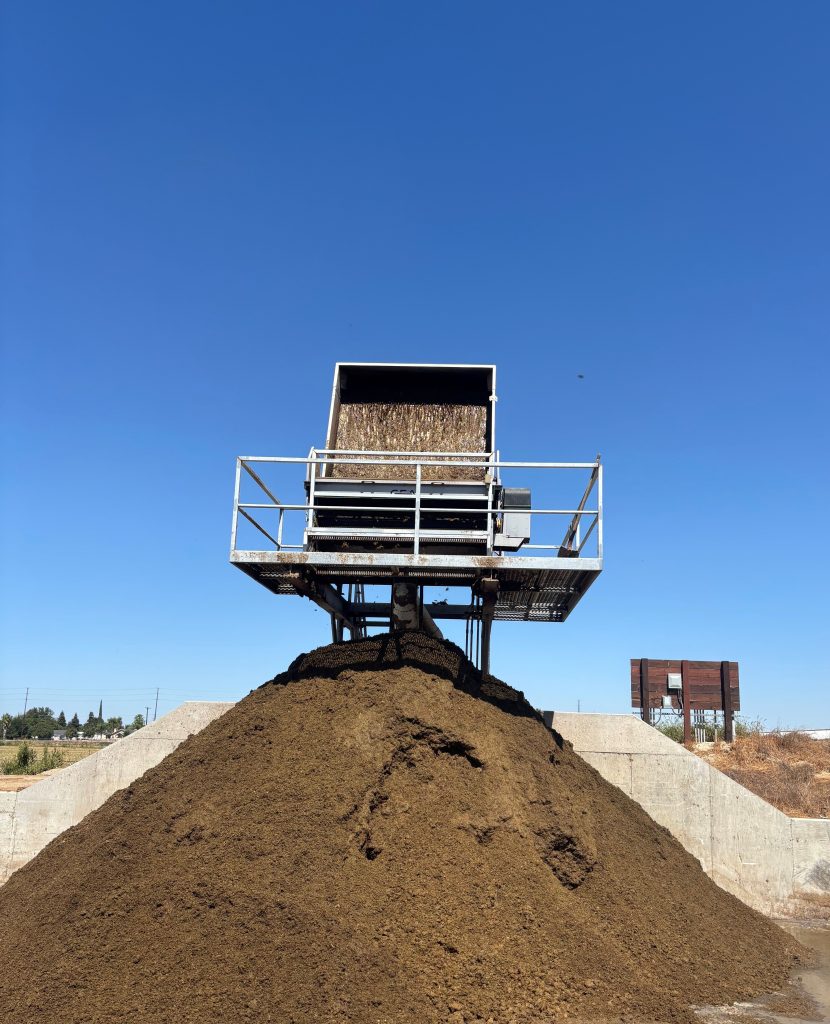
Solid-liquid separation equipment such as the sloped screen mechanical separator installed on the dairy can keep manure in a drier form and out of non-oxygenated conditions, emitting significantly less methane than liquid slurry or manure stored in ponds and allowing the components to be more efficiently reused. The solids could then be used for bedding, keeping housed cows cleaner and drier, and reducing sediment buildup in the flush lanes. The solid separation resulted in cleaner lagoon waters that lead to less solids accumulation around irrigation valves, helping prevent crop damage in those areas. Separation also increased lagoon storage capacity, which is a crucial benefit in years that they receive excessive rainfall. One surprising benefit Cardoso noticed is that manure separated in this fashion proved easier to store and keep dry in the winter months, which may help to further reduce methane emissions.
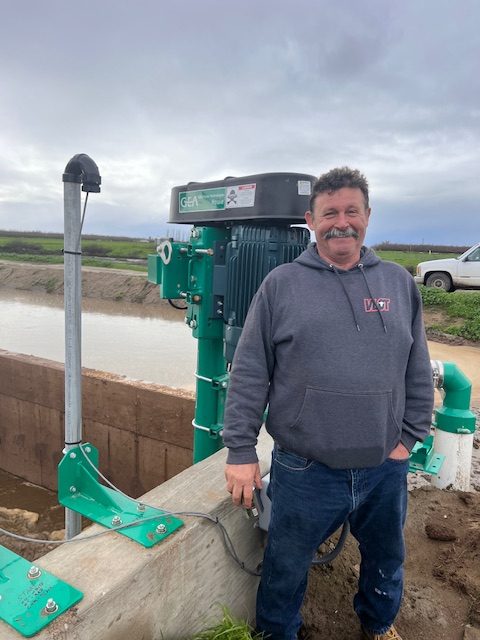
“Our number one priority is our animals and their comfort along with protecting our environment. Our project provides significant benefits to our operation [by] improving animal comfort with improved bedding and also helping us meet environmental regulations, which is a win-win situation. This allows us to remain sustainable in producing a food item that is a necessity in society.”
Cardoso notes that the AMMP funds made it possible to implement the climate smart practices they have wanted to incorporate but were not financially viable options for them. Beyond the greenhouse gas emissions reductions, they found financial savings too: “Separating the manure before it enters the ponds has saved us money that would have gone to pond cleanings; handling and moving drier manure has also reduced our hauling and spreading costs. Those cost savings will help keep us sustainable [in the] short- and long-term.”