

World Soil Day 2025, observed on December 5, focused on the theme “Healthy Soils for Healthy Cities.” To mark the occasion, our office highlighted the work of urban Healthy Soils Program (HSP) awardee, “Huerta del Valle” (“Valley Garden”). With their flagship community garden in Ontario, a second site in Jurupa Valley, and an incubator farm opening soon, the organization is building a network of community gardens throughout the Inland Empire.
Huerta del Valley was founded by Maria Alonso after a doctor recommended she feed her children organically grown produce. Although she was unfamiliar with organic agriculture at the time, Maria drew on the agricultural knowledge she learned from her parents growing up. After doing her own research, she decided the best way to provide healthy food for her family was to grow it herself.
“Local organic food should be a right, not a luxury,” Maria says, “Growing food together has empowered our community, improved our environment, and helped us prepare for the risks to us posed by a changing climate.” She adds that many volunteers now rely on the garden to help feed their own families.
Maria began by cultivating a small plot in a school garden, where she quickly discovered strong interest from the surrounding community. In 2013, the Ontario City Council donated Huerta del Valle’s current site and rezoned the land for urban agricultural use, helping the organization implement a Kaiser Permanente grant through the Healthy Eating Active Living (HEAL) Zone Initiative.
The site was an untended vacant lot, and community members first worked together to remove litter and debris. To restore the heavily compacted soil, they planted fava beans as an initial soil-building crop. They then implemented the Indigenous “Three Sisters” planting system, in which corn provides a trellis for beans, beans fix nitrogen in the soil, and squash shades the ground with broad leaves. This system not only improves soil health but also produces the foundations of a nutritious diet. The garden also uses intercropping and seasonal crop rotations, growing a wide variety of vegetables that are sold at the on-site market. A nursery and production greenhouse allow Huerta del Valle to grow food year-round while improving produce quality and managing pests and diseases without chemical inputs.
In 2020, a Healthy Soils Program grant supported major soil improvements in the garden. One way they did this was by incorporating large amounts of municipal compost into the soil and covering it with woodchip mulch. The compost added nutrients and jumpstarted the soil’s organic matter, while the mulch conserved moisture, modulated soil temperatures, controlled weeds and contributed to long-term soil health. Since then, the Garden’s volunteers have produced their own compost from horse manure, wood chips, and food wastes that are collected from local stores and a school (they still do this!). They have also been irrigating for several years with compost tea.
The HSP grant also supported the establishment of hedgerows, which provide habitat for native pollinators and beneficial insects. Many of the hedgerow plantings, including raspberries and blackberries, also produce fruit for the community.
Together, all these practices have created living, healthy soil that supports abundant, nutritious produce with minimal pest and disease pressure —demonstrating how healthy soils can strengthen communities and cities alike.
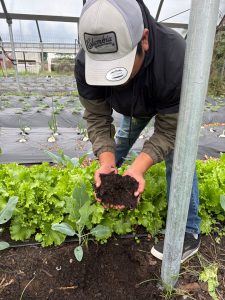
note the color, moisture and friability.
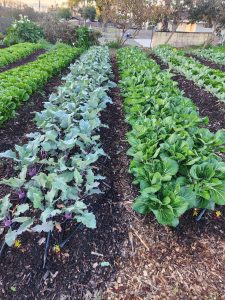
… and the Healthy Soils Program hosts its second Legislative Briefing
In addition to highlighting this project’s success, the HSP also marked World Soil Day with a legislative briefing in the Capitol, on “Supporting Fertility and Farm Profitability While Reducing Waste.” As fertilizer, input, and labor prices continue to rise, growers are looking for long-term strategies that protect both productivity and profitability. The use of biological materials from off-farm, such as compost, digestate, and mulch, is becoming increasingly important. Thanks to policies and programs like those created in support of SB 1383, these recycled amendments have become more available, creating new opportunities for farmers. We are grateful to the speakers who helped bring these conversations to life:
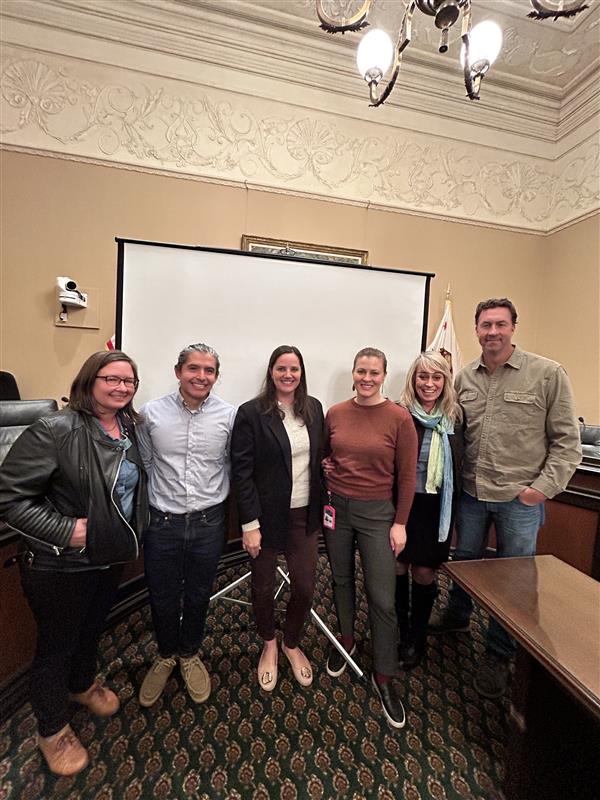
- Justin Wylie, Wylie Farms Ranch Management
- Dr. Patricia Lazicki, UC Cooperative Extension
- Dr. Axel Herrera, UC Davis
- Cara Morgan, CalRecycle
Their perspectives, from on-the-ground decision making, to university research, to statewide policy, highlighted how soil health, economic resilience, and waste reduction work hand-in-hand. They emphasized how recycled soil amendments provide a wide range of nutrients that are released slowly over time as the soil amendments are decomposed. Building soil organic matter using these amendments is a long-term strategy, requiring repeated and regular applications to improve plant nutrition, water retention, and overall soil health in the years that follow. While it can be challenging for farmers to invest in these practices during years of lower crop prices, the benefits are widely recognized.
Local access and affordability — along with direct and indirect support from CDFA and CalRecycle grants — often determine whether farmers can put these practices into action.