A Note from Our Director | January 2026

As we step into 2026, I want to take a moment to reflect on our progress in 2025 and share what lies ahead for OARS in the coming year. At OARS, we remain committed to building a sustainable and thriving future for California’s farmers and ranchers. Shifts in climate and the environment continue to challenge producers to adapt and innovate. In the last year, sharp changes in the costs of doing business, regulations and markets have layered additional challenges.  

The resilience of our state’s producers is impressive and I’ve enjoyed every opportunity I’ve had to visit farms and ranches and learn not only how producers are adapting to the present moment, but how they are preparing the ground for the next generation. It is our privilege in OARS to advanced science-driven solutions and strengthen partnerships to help producers navigate these challenges and plan for the future.  

Key Highlights: 

Looking ahead, 2026 marks an exciting new chapter. Thanks to the passage of Proposition 4, the $10 billion Climate Bond approved by voters in November 2024, CDFA received critical new funding to expand climate-smart agriculture: $40 million for the State Water Efficiency Enhancement Program (SWEEP), $65 million for soil health and carbon sequestration practices that we will use to support the Healthy Soils Program (HSP), and $15 million to launch a new Equipment Sharing Program (ESP). 

We are pleased to share that public comment is now open on the draft Application for Guidelines and Grant Award Procedures for both HSP and SWEEP.  Your feedback during this public comment period is essential as we refine these programs and prepare to launch the next round of climate-smart investments.  Visit our Climate Bond Funding for Climate Smart Agriculture webpage for more information.

I’m grateful for your continued dedication, and I look forward to the work we will do together to build a stronger, more resilient agricultural system for generations to come. 

With Gratitude,
Dr. Tawny Mata
Update on Cannabis Appellations Program 

OARS has been working on the preparation of a rulemaking to make amendments to the Cannabis Appellations of Origin program (CAP). The CAP was established through voter-initiative with the passage of Proposition 64 in 2016 and CDFA is responsible for establishing the rules for participation in the program and administration of the program. An appellation of origin legally defines products and production methods of specified geographic regions, protecting them from false or misleading labelling and marketing.  

CDFA’s CAP incorporates aspects and traits of various established appellation programs for agricultural products throughout the world, like wine, and applies them to the context of the California cannabis industry. The program will only be available to licensed outdoor cannabis cultivators. Cultivators must submit a petition in accordance with regulations to establish an appellation of origin. This program will promote regional cannabis products and local businesses, prevent the misrepresentation of a cannabis product’s origin, and support consumer confidence about a cannabis product’s origin and characteristics.     

CDFA released the latest rulemaking on January 2, 2026. A 45-day public comment period will run until midnight on February 17, 2026. The proposed changes reduce the number of cultivators per appellation of origin petition from 3 to 1 and provide clarity on the usage of names in conflict with an approved appellation of origin. To learn more about the program, the open rulemaking, and how to comment, please visit the program’s webpage at cdfa.ca.gov/oars/cap

As the rulemaking proceeds, we look forward to updating stakeholders and the public on the program’s opening, currently expected for summer 2026. For questions, please contact the program directly at CannabisAg@cdfa.ca.gov 

Catch Up: The Latest Dairy Methane Reduction Investments 

In case you missed it, three of the manure methane reduction grant programs administered by CDFA OARS announced awards in December 2025, closing out the year with some exciting news. The awarded projects represent important progress in the dairy and livestock sector towards meeting the State’s methane reduction targets and expands the overall impact of these incentive programs. Including the newest awards, projects supported by the three programs to date will reduce an estimated 27.43 million metric tons of carbon dioxide equivalents over their minimum projected lifetimes. 

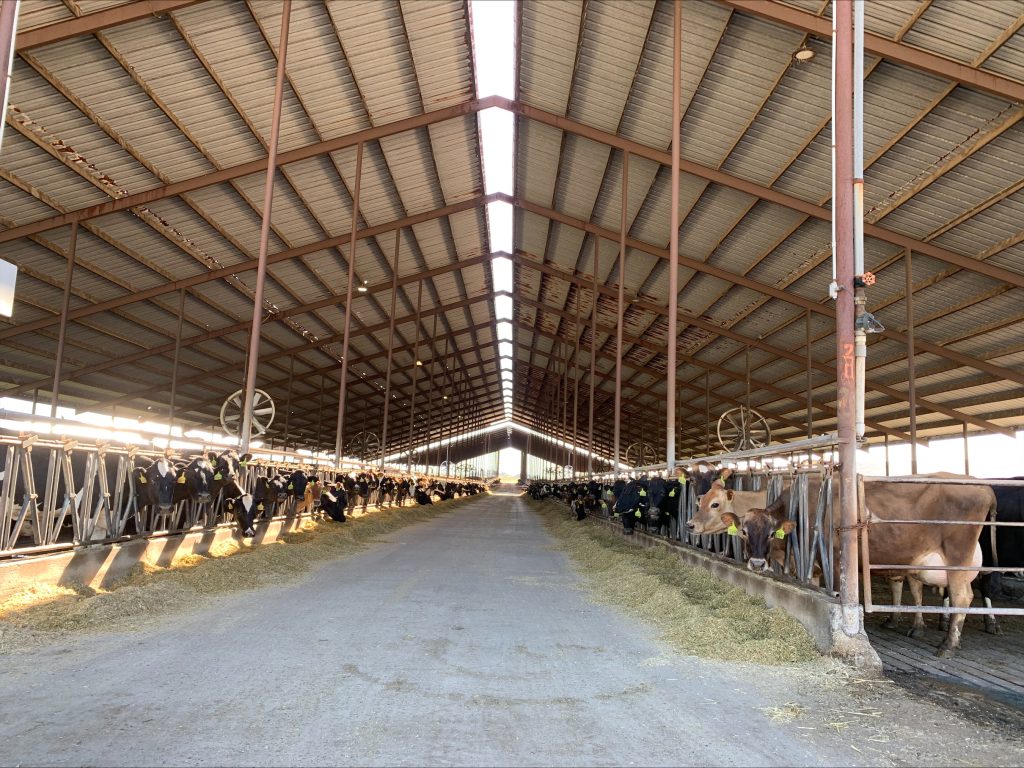
California dairy cows and the environment can benefit from improved manure management projects.

AMMP and DDRDP:  

In the fall of 2025, the Alternative Manure Management Program (AMMP) and the Dairy Digester Research and Development Program (DDRDP) received $7 million in Greenhouse Gas Reduction Funds as part of an amendment to the Budget Act of 2025 – these funds were part of a previous appropriation split across two fiscal years. The arrival of the $7 million allowed the two programs to offer some additional awards to those that had applied in the most recent grant round but had not yet received an award due to insufficient funds, boosting the total number of projects captured by the 2024 AMMP and 2024 DDRDP solicitations. 

In December 2025, the AMMP announced the addition of 5 new projects, receiving $3.69 million in grant funds, to the 25 projects originally awarded in April 2025. The DDRDP added 2 new projects, receiving $2.6 million, to its list of 5 originally awarded projects.  

Dairy Plus Program: 

The Dairy Plus Program is a collaborative effort between CDFA and the California Dairy Research Foundation, funded by the USDA Advancing Markets for Producers initiative. Just before the end of 2025, DPP announced awards for its second grant solicitation round. The program awarded 23 projects associated with newly awarded, in-progress, or previously completed AMMP or DDRDP projects a total of nearly $27 million in federal grant funding, matched by more than $28 million from private sources and state Greenhouse Gas Reduction Funds. 

Despite a lengthy delay due to federal transitions, the awards were highly anticipated as these projects install advanced, larger scale manure management practices. These practices not only reduce greenhouse gas emissions but also help manage nitrogen and salt surplus, improving water quality and making great strides in dairy sustainability. 

Stay up to date on methane reduction program news, including the next call for applications for the Dairy Plus Program expected in early 2026 – visit our webpages or follow us on social media! 

A Note from Our Director | August 2025

Dear Stakeholders, 

I hope you enjoy this newsletter showcasing the accomplishments of our grantees and partners and giving you a peek at how we lead our programs to serve producers while contributing to the state’s sustainability goals. Additionally, I want to take this opportunity to summarize the funding status of OARS programs, so you know which opportunities are in the future. 

OARS expects to receive $65M in funding for our Healthy Soils Block Grant Program (HSP) and $40M in funding for our State Water Efficiency Enhancement Block Grant Program (SWEEP) from Proposition 4 – Climate Bond and we tentatively plan to offer all of that funding as part of one funding opportunity in fall 2025. Through Prop 4, OARS also expects to receive $15M for a new Equipment Sharing Program (ESP) that will require extensive stakeholder consultation before opening for applications in 2026. The legislature has not appropriated the Prop 4 funding, and the state is still in the process of finalizing rules and guidelines for using the funding. The timeline of these two key external processes may affect OARS’ timeline.  

All state funding appropriations have an “expiration date,” and it is always our goal to give grantees a generous grant term within that expiration date to allow for bumps in the road. To that end, we will keep pushing forward with refining framework for the HSP and SWEEP solicitations at our August 15th Environmental Farming Act Science Advisory Panel (EFASAP) meeting, followed by a written public comment period and simultaneous stakeholder workshops that will inform the final Request for Grant Applications. We look forward to your participation and help refining our block grant model. 

Our Dairy Plus Program, which is a subaward from the California Dairy Research Foundation of a grant funded by the USDA Alternative Markets for Producers initiative (formerly the Partnership for Climate Smart Commodities program), is ongoing but undergoing federal review and revision. This program funds infrastructure on dairies that reduces greenhouse gases and improves nutrient management, and we have approximately $58M remaining in the budget for new grants to producers. We are hopeful that we will be able to announce the results of the 2024 solicitation and run a new solicitation soon, pending a final and functioning grant agreement. At this time, there is no additional funding for the Alternative Manure Management Program and Dairy Digester Research and Development Program. 

Lastly, the Office of Pesticide Consultation and Analysis received a $1.5 million increase in spending authority and an increase in the amount of agricultural mill fee the office can use. Using reserve funding first, OPCA will use the spending authority to address increased research costs, meet the Program activities identified in the Sustainable Pest Management (SPM) Roadmap, and perform increased consultative work for the Department of Pesticide Regulation (DPR), as required by Assembly Bill (AB) 2113 (Chapter 60, Statutes of 2024). In the short term, the increase will also go towards funding our Biologically Integrated Farming System (BIFS) grant program at $1-3 million a year and support for the California IR-4 Project. As AB 2113 related work increases, OPCA will increase spending on research awards related to regulatory work and decrease BIFS Funding. 

We will be in contact with you through our mailing list with all updates related to our grant programs. If you know organizations who are likely to be good applicants or partners for these programs, particularly those that serve socially disadvantaged and underserved producers, please encourage them to sign up for our mailing list and reach out to us directly for more information.  

May the rest of your summer be full of delicious in-season California berries, stone fruit, and tomatoes. I know I’ve been doing my part to support that part of our agricultural economy. 

Sincerely, 

Dr. Tawny Mata
OARS Director
CDFA Science Advisor

Introducing OARS: A New Name for a Stronger Agricultural Future

We are excited to announce that our office has a new name: The Office of Agricultural Resilience and Sustainability (OARS).  This new name better reflects our mission to strengthen the agricultural system while also addressing the challenges of the future. Along with the name change, we have introduced a new, unified logo that replaces our many siloed grant program logos, symbolizing our shared mission across all programs. Over the next few months, you will notice updates to our communications that incorporate the new name and logo. We encourage you to share this information with your colleagues, partners and stakeholders. You can find our official announcement and our new logo here, as well as our recently updated mission and vision statements.  

The decision to rebrand was rooted in the evolution of CDFA’s relationship to sustainable farming over the last 30 years.  Our original name, “The Office of Environmental Farming and Innovation (OEFI),” stemmed from the Canella Environmental Farming Act of 1995. The Canella Act laid the groundwork for our incentive programs and codified the Department’s commitment to advancing sustainability through science. Today, our programs not only support a healthy environment – marked by clean water, fresh air, and thriving biodiversity -but also the social and economic health of California’s farms and ranches. Looking forward, we also recognize the need to build resilience for the challenges ahead- from extreme weather to regulatory changes. We must develop research, demonstration and incentive grant programs to help agricultural stakeholders adapt and thrive.