CDFA and OARS continues its commitment to providing technical assistance to farmers and ranchers by streamlining technical assistance in California through the California Conservation Planning Partnership (C2P2) Memorandum of Agreement (MOA). Signed in 2022, this MOA brings together CDFA, the USDA Natural Resource Conservation Service (NRCS), the University of California Agriculture and Natural Resources (UC ANR), and the California Association of Resource Conservation Districts (CARCD) as official partners dedicated to providing services to California’s farmers and ranchers. The C2P2 partners have committed to coordinate their technical assistance services for farmers, ranchers, and foresters implementing conservation and climate-smart agriculture practices on their land.
Over the last year, the C2P2 partnership has made great strides in advancing their mission through assembling a steering committee, supporting partner initiatives and meetings, and this year has initiated breakout working groups to dive deeper into coordinating services to meet the needs of farmers and ranchers. If you are interested in learning more about C2P2 or would like the opportunity to connect with C2P2 partners, take our short C2P2 Interest Survey!
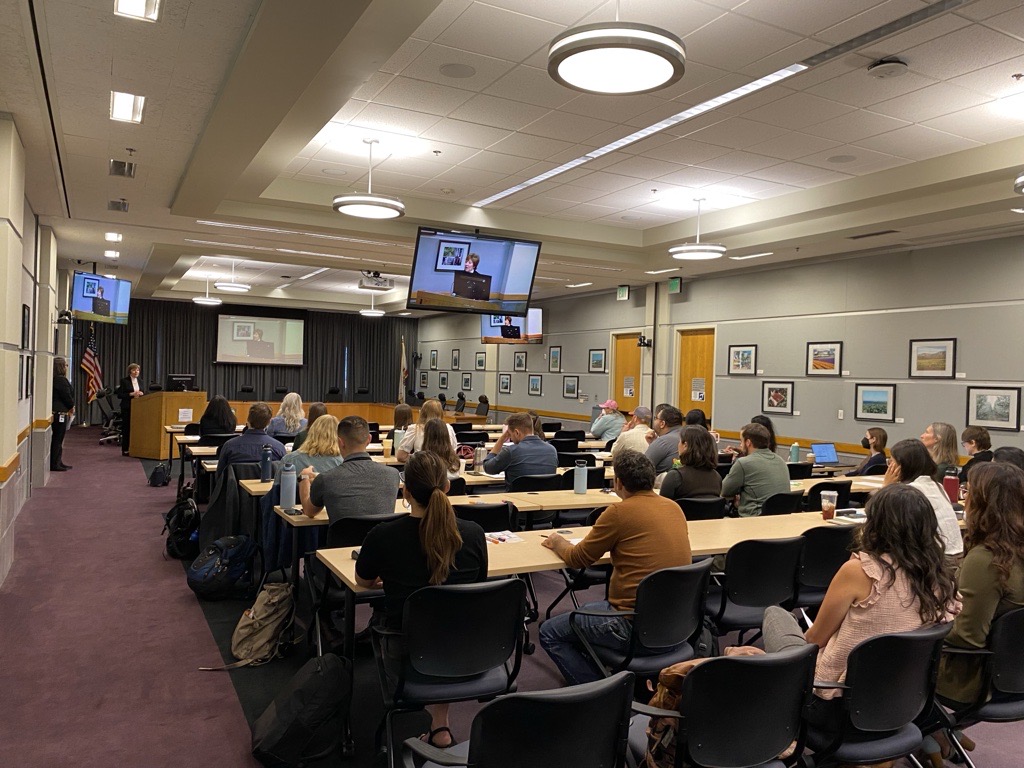
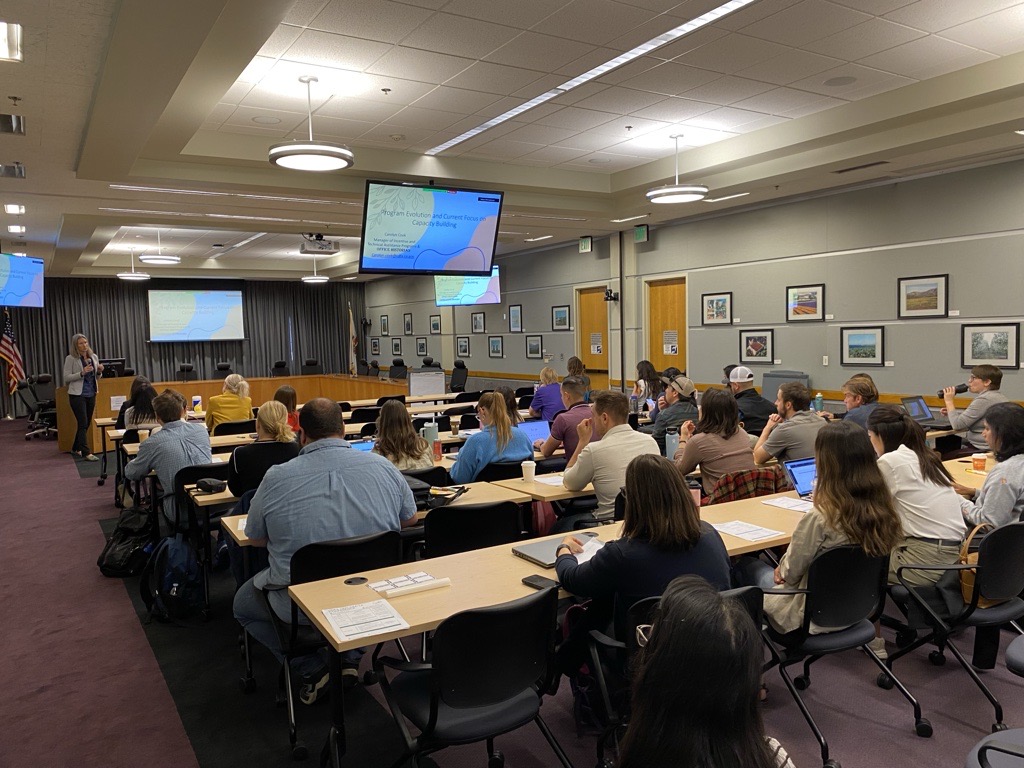
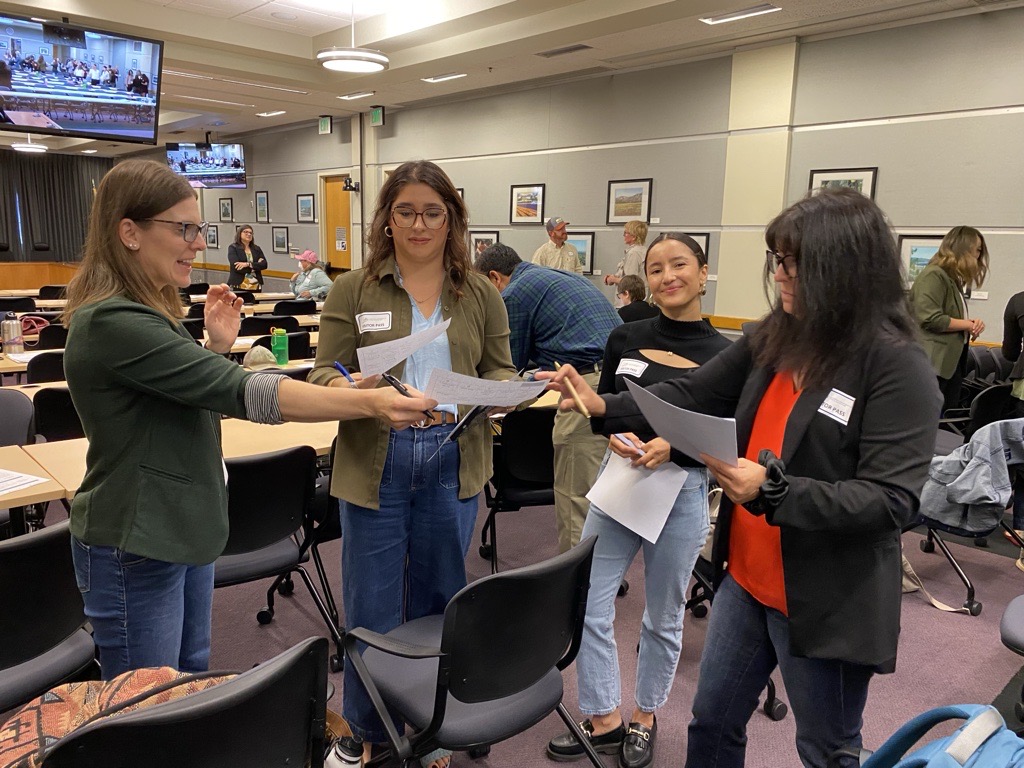
Dr. Sara Garcia, OARS Technical Assistance Coordinator, represents CDFA’s OARS team in a C2P2 Panel Discussion at the 2024 CARCD State Conference
The Healthy Soils Program (HSP) Block Grant Pilot is designed to promote widespread adoption of healthy soils practices. Healthier soils provide more nutrients, retain more water, are more resilient to extreme weather, and sequester more carbon. Through a competitive selection process, CDFA awarded 14 HSP Block Grants to recipient organizations in December 2023. These organizations have been working closely with growers on developing healthy soils project proposals and proper completion of practices. They have also been innovating new ways to provide technical assistance, in the field and beyond.
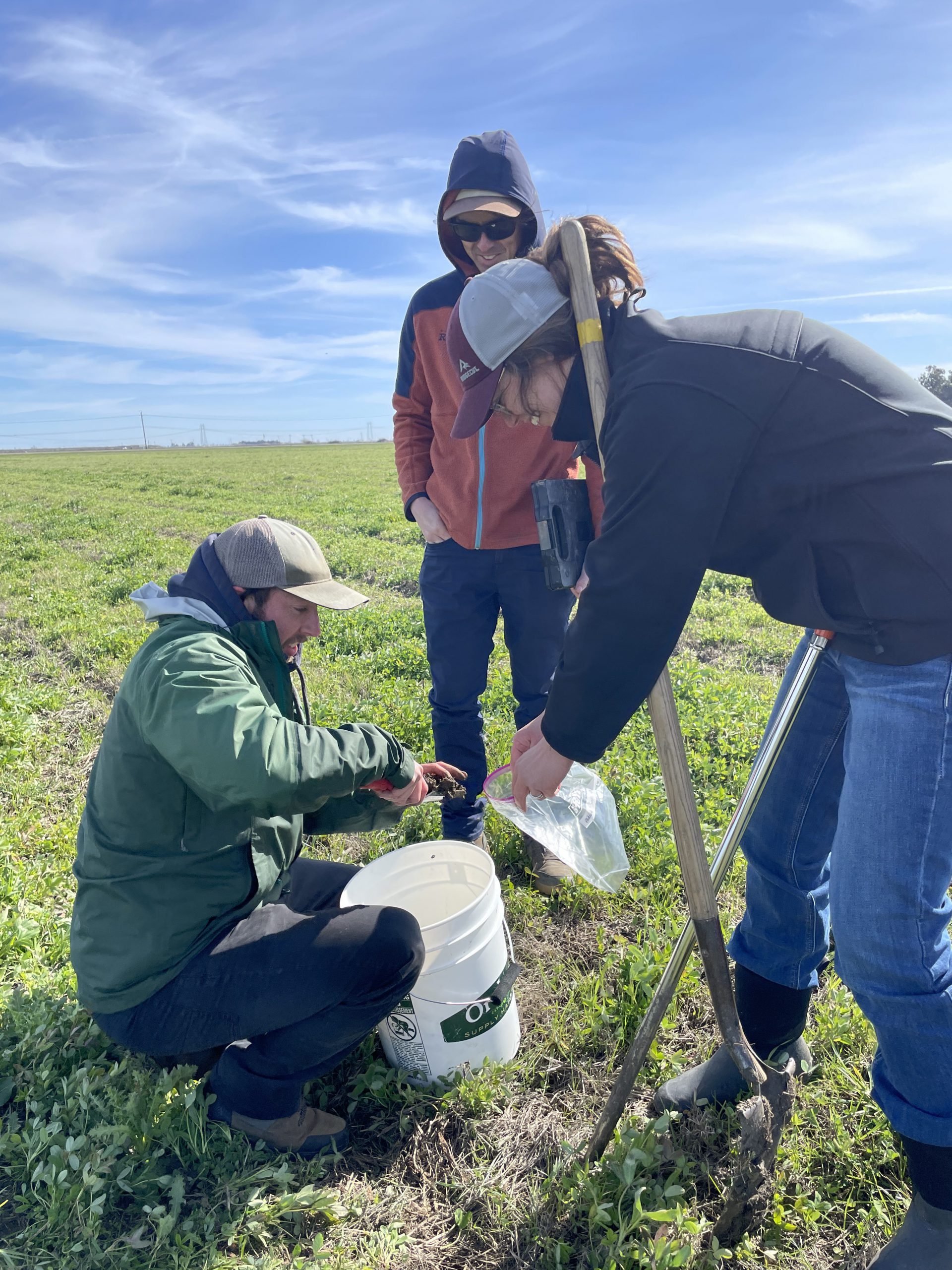
Soil sampling at Martin Family Farm. Matt Tooney – Project Manager and Conor Higgins – Mobile Irrigation Lab Manager, Yolo County Resource Conservation District, Katie Brazelton
Solano County Farm Bureau partnered with Solano and Contra Costa Resource Conservation Districts (RCDs) and has awarded 68 healthy soils projects to farmers. Together, the partners have been providing several technical assistance services, including language assistance, on-site soil sampling, plant ordering and distribution, and detailed practice implementation recommendations. The Healthy Soils Program requirement for soil sampling has served as a great opportunity to demonstrate to the growers how they can sample their soil and interpret results of soil health metrics. The team guides farmers through checklists of the practice and documentation requirements, as well as providing practice recommendations – for example, counseling on species for plantings and hedgerow maintenance planning. For farmers making plantings, they have combined orders and bought plants directly from wholesalers on behalf of the growers, making the prices per plant cheaper and taking the onus of quality control off of the farmers. And for Spanish- and Hmong-speaking farmers, they have been able to provide translation services, even coordinating compost purchase and delivery on behalf of the growers. Lastly, they share their knowledge and experience of other support opportunities, from federal to local agencies.
Soil sampling with the Harveys. Farmer Rita Harvey; Conor Higgins – Mobile Irrigation Lab Manager, Yolo County Resource Conservation District
Farm Bureau staff member Katie Brazelton has found that growers tend to feel more confident in tackling their HSP projects when they see a team of people ready to help them succeed, especially when those team members are farmers too (as the Farm Bureau is farmer-led): “My husband is a 4th generation farmer, so I approach the grant with that perspective in mind. I’m here to help you be successful so don’t hesitate to reach out to me. I don’t know all the answers, but I have a team of people that will help us, and I can always double check with CDFA when necessary.” Through this process, they are cultivating relationships between farmers, the Farm Bureau, the RCDs, and the UCCE that will last beyond the HSP grant term. These are resources that growers can add to their “toolbox” for their farming operations going forward.
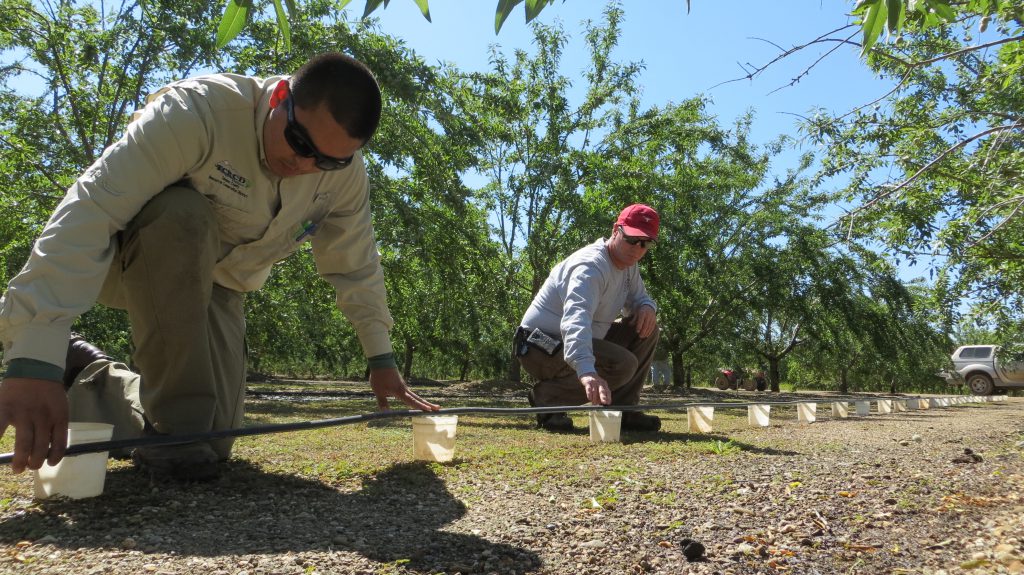
As the 2025 irrigation season is upon us in California, farmers can consider reaching out to a technical assistance provider funded by the OARS Water Efficiency Technical Assistance (WETA) program. WETA provides funds to technical assistance providers to complete irrigation system evaluations and pump efficiency tests, as well as provide training on water use efficiency and nutrient management practices.
An irrigation system evaluation is the inspection and testing of an irrigation system to inform if repairs are needed and to see if water is being distributed evenly throughout the field. When a producer implements the recommendations from an irrigation system evaluation, they often save water and money and improve their crop yields. Similarly, a pump efficiency test, performed by a pump technician, can help a producer identify when a pump needs to be serviced or replaced, which can result in energy efficiency improvements and cost savings. WETA-funded technical assistance providers can also help a producer fine-tune their irrigation system and water management practices.
OARS first received funding to provide WETA grants in 2021. Currently there are approximately 25 funded WETA technical assistance providers. Many of these grants will be expiring in 2026 so make the most of these services while they are available. To find out if there is a WETA service provider in your area and what types of assistance they are offering, please visit the program website at https://www.cdfa.ca.gov/oars/technical/weta.html
The California Department of Food and Agriculture’s (CDFA’s) Office of Pesticide Consultation and Analysis (OPCA) was formed in 1992 following the formation of CalEPA’s Department of Pesticide Regulation (DPR). Prior to this time CDFA was responsible for pesticide regulation in the state. OPCA’s primary role is to provide DPR with impact analyses of proposed pesticide regulations, specifically actions detailed in Food and Agriculture Code (FAC) Section 11454.2. The consultative arrangement was established primarily to ensure that the economic impacts on California’s agricultural industry would be evaluated before the adoption of new pesticide regulations. OPCA is funded through the pesticide mill assessment collected by DPR for CDFA.
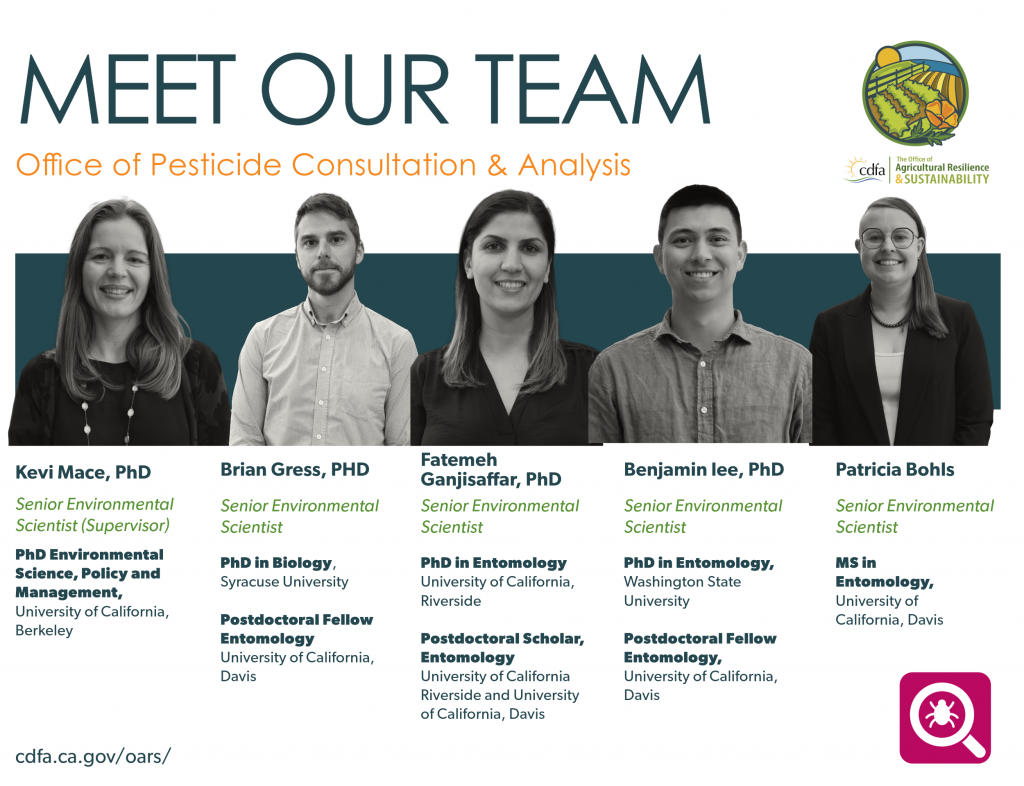
Currently, OPCA consists of five scientists with backgrounds mainly in agricultural entomology. We work closely with UC Cooperative Extension scientists and agricultural economists while doing analyses. Despite our office being in the back of the building, we welcome stakeholder communication; we will happily talk your ear off about analytical methods, data, and regulatory frameworks.
Our analyses are specifically focused on assessing the immediate impact of the proposed regulation on pest management costs and effectiveness. We use pesticide use reporting data to estimate future use based on historical trends and to predict how the loss of specific active ingredients might affect those use trends. This methodology was developed by Dr. Rachael Goodhue, the chair of Agricultural Resource Economics at UC Davis, OPCA, and a host of other collaborators and published in 2017 (https://pubs.acs.org/doi/10.1021/bk-2018-1283.ch020).
In the past five years, OPCA has completed reports related to the withdrawal of chlorpyrifos, multiple iterations of the neonicotinoid mitigation regulations, and multiple iterations for both sets of 1,3-Dichloropropene (non-occupational bystander and occupational bystander) safety regulations. Public reports, publications, and white papers are available on our website https://www.cdfa.ca.gov/oars/opca/publications.html.
In a world of rapidly changing pest threats, we are adapting too! Our “Proactive IPM Solutions” program is now “Adaptive IPM for Invasive Agricultural Pests”, moving beyond “proactive” to a more responsive, dynamic, and inclusive approach. Our program focuses on developing and implementing adaptable IPM strategies that enable swift action against emerging invasive pests in California, whether they are newly introduced, resurging, or expanding their range. We are dedicated to refining existing methods and exploring new solutions, especially where pesticide resistance poses a challenge.
We are excited to announce that our office has a new name: The Office of Agricultural Resilience and Sustainability (OARS). This new name better reflects our mission to strengthen the agricultural system while also addressing the challenges of the future. Along with the name change, we have introduced a new, unified logo that replaces our many siloed grant program logos, symbolizing our shared mission across all programs. Over the next few months, you will notice updates to our communications that incorporate the new name and logo. We encourage you to share this information with your colleagues, partners and stakeholders. You can find our official announcement and our new logo here, as well as our recently updated mission and vision statements.
The decision to rebrand was rooted in the evolution of CDFA’s relationship to sustainable farming over the last 30 years. Our original name, “The Office of Environmental Farming and Innovation (OEFI),” stemmed from the Canella Environmental Farming Act of 1995. The Canella Act laid the groundwork for our incentive programs and codified the Department’s commitment to advancing sustainability through science. Today, our programs not only support a healthy environment – marked by clean water, fresh air, and thriving biodiversity -but also the social and economic health of California’s farms and ranches. Looking forward, we also recognize the need to build resilience for the challenges ahead- from extreme weather to regulatory changes. We must develop research, demonstration and incentive grant programs to help agricultural stakeholders adapt and thrive.