OARS Staff Attend the 2025 Intertribal Agriculture Council Annual Conference

In December, Steph Jamis and Guihua Chen, scientists in the Office of Agricultural Resilience and Sustainability (OARS), attended the 2025 Intertribal Agriculture Council (IAC) Annual Conference in Las Vegas, Nevada. The Intertribal Agriculture Council is an organization that represents Tribes and individual tribal producers across the nation, supporting culturally appropriate outreach. Attending the conference gives OARS an opportunity to learn about the issues that tribal agricultural producers face and consider ways that our programs can be accessible and supportive of Tribal food systems. Steph and Guihua went prepared to share information about the OARS climate-smart agriculture programs and promote the upcoming block grant solicitations for the State Water Efficiency and Enhancement Program (SWEEP) and the Healthy Soils Program (HSP). 

OARS is actively identifying ways to increase the inclusion of Tribes in incentive programing. In 2024 CDFA’s Farm Equity Office published a recommendations report based upon a series of listening sessions with Tribes. One of the top recommendations was that CDFA develop tribal-specific grant application tracks within our programs. In the near future, the Healthy Soils Program team plans, through engagement and coordination with Tribes, to integrate Cultural Burning on tribal land as an HSP-incentivized practice. The IAC Annual Conference was a great place to make some initial connections related to this project.     

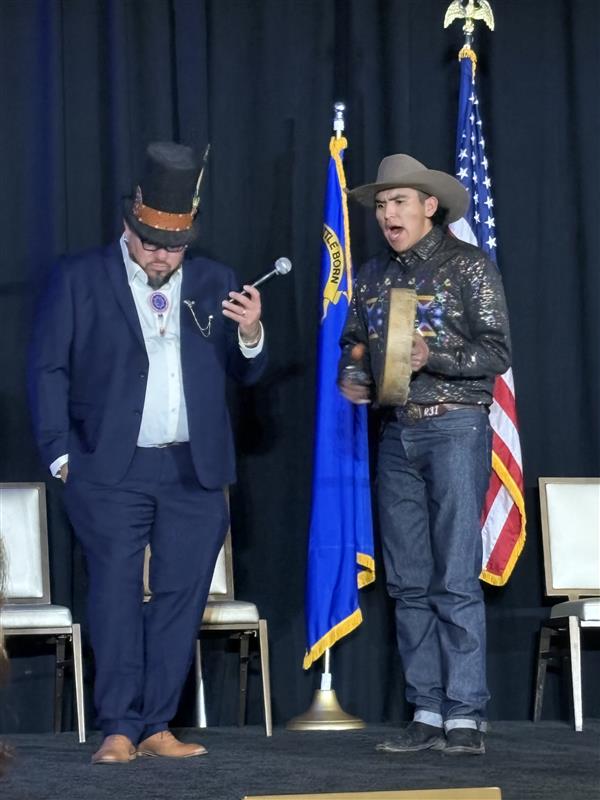
Conference attendees enjoyed presentations on a wide variety of topics  including food sovereignty and Tribal prosperity, farm to school programs, USDA financial assistance programs,  enhancing Tribal water and food systems, technical assistance delivery, soil health and practical applications, women in agriculture, Tribal Ecological Knowledge in NRCS Programs, prescribed burning as a tool for Tribal land and resource management, and many more. IAC hosted Tribal regional caucuses for Tribal members to meet and discuss regional issues. 

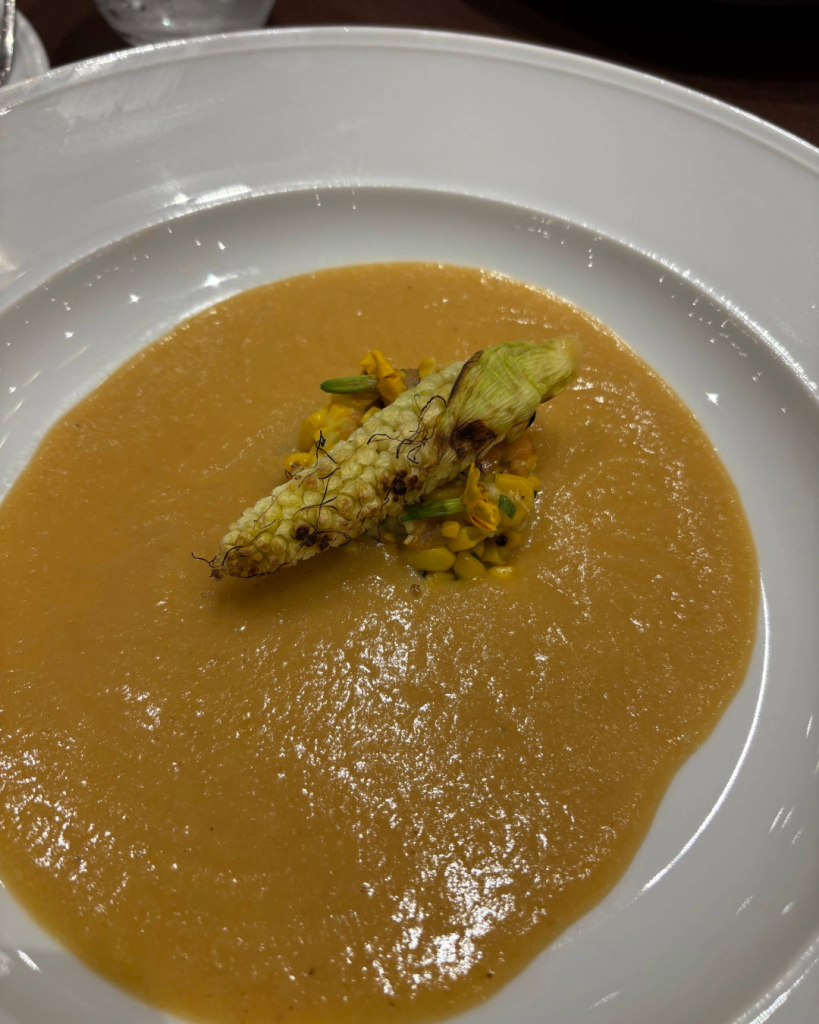
A highlight of the trip was the American Indian Foods luncheon, which featured a menu that showcased a variety of flavorful Indigenous ingredients. The menu was crafted by Chef Nephi Craig, the Founder and Director of Culinary Development at the Native American Culinary Association and Executive Chef at Café Gozhóó, in Arizona. Our team loved learning about the importance of Indigenous foods and returned from the Conference excited about future engagement with Tribes.  
UC Organic Ag Institute Brings Together Producers and Technical Assistance at First Regional Conference 

The UC Organic Agriculture Institute (OAI) hosted its first San Diego regional conference this past fall, bringing together over 100 attendees—including 50+ organic farmers—for farm visits, expert panels, and one-on-one consultations. San Diego County currently has the highest number of certified organic farms in California, and the large diversity of crops and knowledge was on display at the conference. Farm tours included crops ranging from avocados to guava to watermelons. The tour was filled with discussion on how to farm productively in the dry San Diego climate. Indoor programming included panels featuring technical assistance providers and sessions on the details of running a successful and sustainable organic business. 

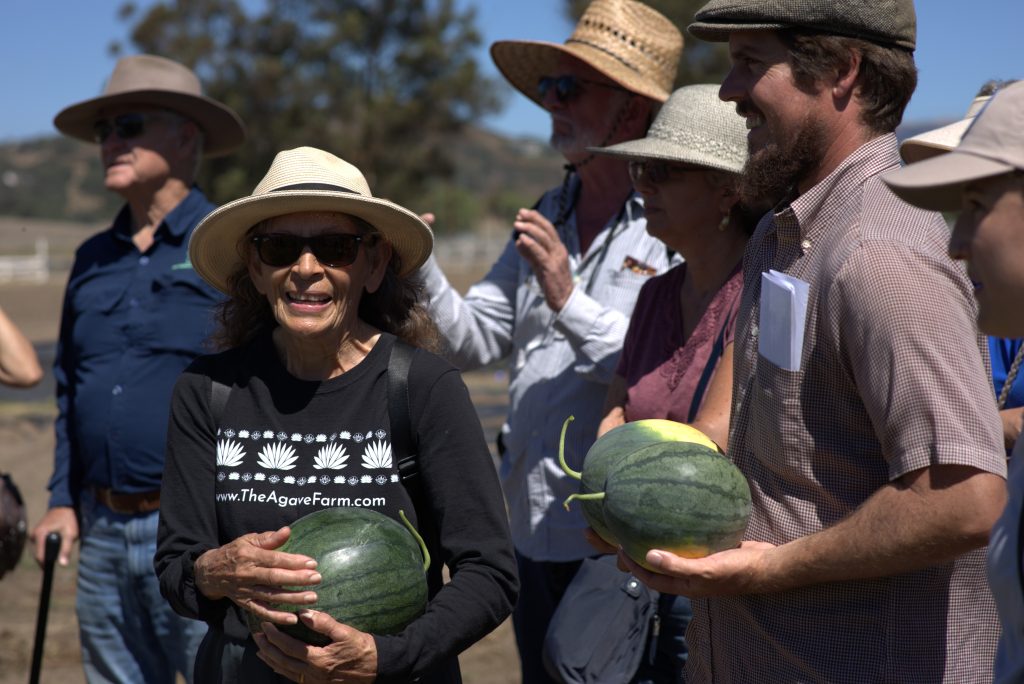
Organic agave grower Ofelia Lichtenheld (left) – a recipient of OARS Healthy Soils Program and Organic Transition Pilot Program –  and Brandon Wickes (right) from Community Alliance with Family Farmers with their hand-picked watermelons from Golden Eagle Farm. Photo by Caroline Champlin. 

Partial support for the conference came from an OARS grant to OAI – Advancing Organic Agriculture in California – and the conference featured technical assistance providers for multiple OARS programs including Healthy Soils Program, Pollinator Habitat Program, and the Organic Transition Pilot Program. Technical assistance is a service to advise and educate farmers and ranchers on a wide variety of issues- from on-farm practices to business management. OARS funds a variety of free technical assistance to ensure that growers of all sizes can access expert help that builds resilience and supports a sustainable and thriving future. Seeing the relationships that on-the-ground technical assistance providers have built with the regional farmers was a highlight of the conference.  

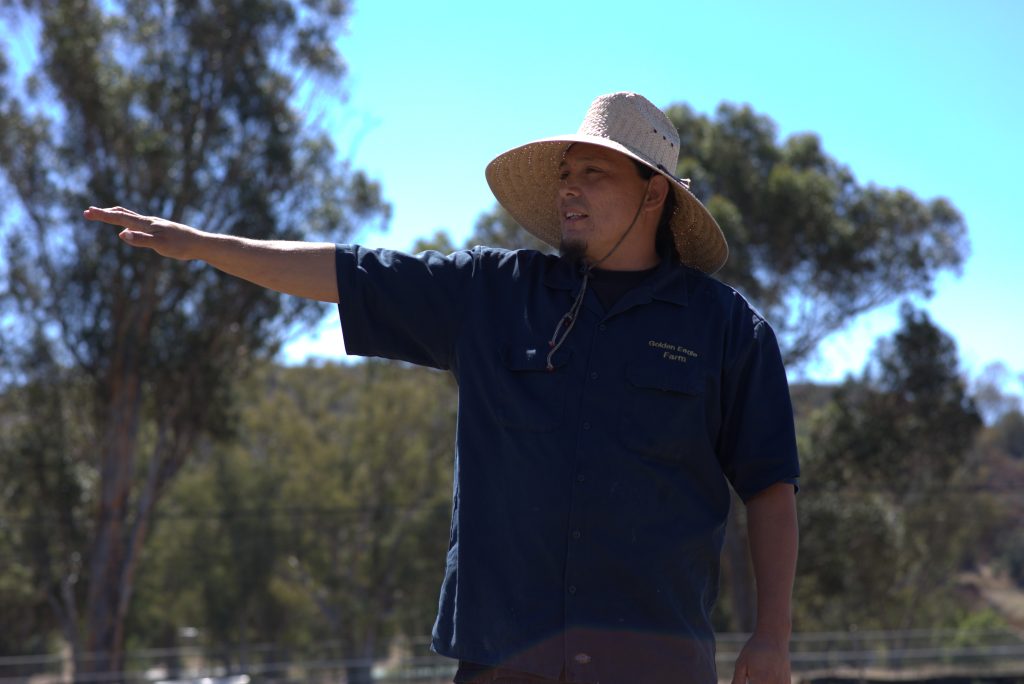
Rufus Jimenez, a member of the Mesa Grande Band of Mission Indians, serves as the supervisor of Golden Eagle Farm, an organic farm in San Diego County. Photo by Caroline Champlin.

For more information on the conference, visit https://ucanr.edu/blog/green-blog/article/san-diego-organic-ag-conference. Look for another regional conference from OAI in 2026! 

To keep up with technical assistance opportunities for OARS programs, follow us on social media or visit our webpage.  

Celebrating Biodiversity through our Progress to 30×30 

California is one of 36 global biodiversity hotspots – areas with exceptional concentrations of plant and animal species found nowhere else on the planet. At the same time, many California species are at risk of extinction due to threats from habitat loss and climate change. In October 2020, Governor Newsom issued Executive Order N-82-20 which establishes a state goal of conserving 30% of California’s lands and coastal waters by 2030 – known as 30×30. The 30×30 goal is intended to help accelerate conservation of our lands and coastal waters through voluntary, collaborative action with partners across the state to meet three objectives: conserve and restore biodiversity, expand access to nature, and mitigate and build resilience to climate change. 

California’s strategy to achieve 30×30 is organized into ten Pathways. Each of these pathways identifies specific state actions that will help us achieve 30×30. As of June 2025, 26.1% of California’s lands and 21.9% of its coastal waters are under long-term conservation and care. This includes an additional 853,000 acres of conserved lands and 191,000 acres of conserved coastal waters counted just this year. 

Many places that are not durably conserved or are not being managed with biodiversity as a primary goal are still essential to achieving a healthy and resilient network of conservation areas. This ties in with 30×30’s Pathway 9: Advance and Promote Complementary Conservation Measures. 30×30’s success relies on these complementary conservation measures to expand wildlife habitat, create corridors, buffer conserved areas, and much more. Our state’s working lands, including agriculture implement actions specified by this pathway. California’s farmers and ranchers are worldwide leaders and innovators in food production. They are also among the foremost stewards of California’s working lands—providing ecosystem services and supporting biodiversity. Our farmers and ranchers undertake many practices to enhance biodiversity – from planting pollinator species, growing cover crops for soil health, avoiding practices that disrupt nesting of bird species, providing winter habitat on rice fields and helping endangered species thrive to participating in large-scale habitat corridors, to name a few. California Annual Progress Report to 30×30 highlights our collective progress to 30×30. Several notable achievements involving our working lands are in the report.  

This year’s annual 30×30 Summit had a breakout session on working lands “Where Nature Works: Production and Biodiversity Together”, highlighting the importance our working lands play in conserving biodiversity and building resilience to climate change. The session was run by Michael Delbar, Chief Executive Officer of the California Rangeland Trust. The California Rangeland Trust is the largest land trust in California. He highlighted a study conducted by UC Berkley scientists, which examined the California Rangeland Trust’s conservation easements to explore the environmental and monetary value of preserving California’s open spaces. The study showed that for every dollar invested it returned $1.35 to $3.47 and that the 56 Rangeland Trust conservation easements, protecting a total of 306,781 acres, provide between $364 million and $1.44 billion in ecosystem services annually.  

Working under the guidance of Pathway 3: Increase Voluntary Conservation Easements, the California Rangeland Trust worked with the California Natural Resources Agency to identify conservation easements on private working lands managed for ecosystem health that contribute to the 30×30 target. This has led to approximately 131,000 acres of conservation easement lands added to CA Nature as 30×30 Conservation Areas. 

California and the stewards of our working lands are making great progress to achieving 30×30.  Check out 30×30 California to learn more.