CARB report shows California’s natural and working lands absorbed nearly twice the carbon lost to wildfires

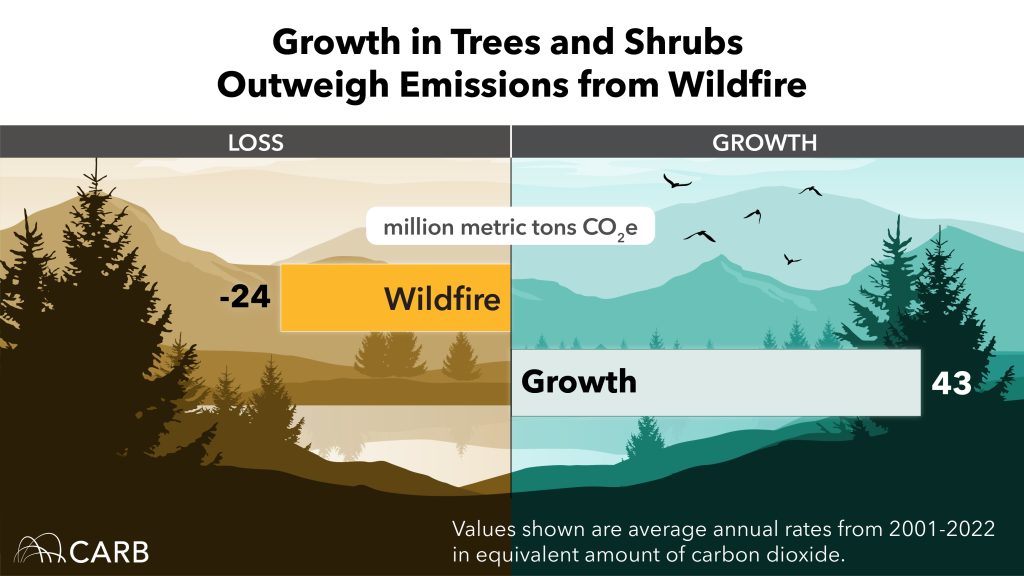
The California Air Resources Board (CARB) released the second edition of California’s Natural and Working Lands Carbon Inventory this week, showing that even with catastrophic wildfires occurring more recently, the state’s natural and working lands have absorbed more carbon than they released since 2001, helping counterbalance emissions from those fires.

The report takes a comprehensive look at how our forests and farms help fight climate change. To reach California’s 2045 carbon neutrality goals, we must scale approaches such as prescribed fire, Climate Smart Agriculture, and ecosystem restoration.

Highlights for Agriculture:

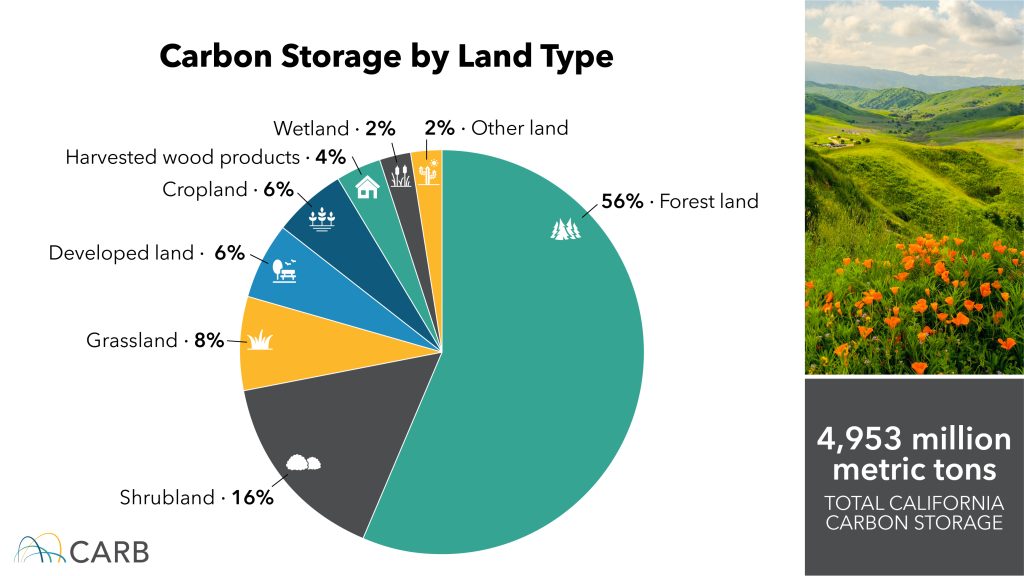
  • In 2022, croplands stored 278 MMT of carbon, equivalent to 5.6% of the carbon stored in California’s natural and working lands. Roughly three quarters of this was contained in the soil.
  • Between 2001 and 2022, total cropland carbon stocks (biomass + soil carbon) increased by 15 MMT, driven primarily by increases in perennial orchard biomass carbon stocks.
  • From 2014 to 2022, biomass carbon increased across most perennial crop types, largely reflecting expansion in orchard area. Almonds contributed the largest increase, followed by pistachios, walnuts, and citrus. Vineyards in contrast showed a decline in biomass carbon associated with loss in vineyard area.
  • Since 2001, gains in perennial biomass carbon have been concentrated in the San Joaquin and Sacramento valleys, with other regions showing small net change overall.

“California’s natural and working lands are proving to be powerful allies in our effort to address climate change,” said CARB Chair Lauren Sanchez. “Even in the face of devastating wildfires, California’s ecosystems continue to grow and absorb carbon dioxide, helping us move toward carbon neutrality. This inventory shows the incredible power of nature and is yet another example of how California continues to stand up for science with innovative programs and policies.”
The inventory is developed to identify how lands can help California achieve carbon neutrality by measuring annual gains and losses year over year. It complements the state’s annual greenhouse gas emissions (GHG) inventory which counts emissions and reductions from about 80 percent of California’s sources of human-caused climate emissions. 

The inventory shows that California lands store nearly five billion metric tons of carbon with over 70% of all carbon in forests and shrublands. The inventory accounts for all organic carbon stored in living and dead biomass, near-surface soils, and wood products harvested from within the state.

While the report shows that nature has helped counterbalance wildfire emissions since 2001, California’s lands have more recently lost more carbon than they absorbed because of record-breaking wildfires driven by climate change. 

This demonstrates how climate change and other human-induced factors continue to impact the carbon balance of our ecosystems and the importance of California’s efforts to reach carbon neutrality to avoid even worse impacts in the future. It also shows the important role of prescribed fires, which help reduce overgrown vegetation and keep ecosystems healthy, helping prevent destructive wildfires and protect communities.

The inventory underscores the massive amount of carbon in California’s vegetation and soils and the importance of achieving state’s Nature-Based Solutions Climate Targets.

This work is further supported by Governor Newsom’s commitment to conserve 30% of the state’s lands and coastal waters by 2030 (known as 30×30) to help protect natural systems and combat biodiversity loss.
See the full announcement on CARB’s site.

Hilmar Cluster: Making a Real Difference 

Through the implementation of anaerobic digesters, CalBioGas Hilmar LLC (Hilmar Cluster), working with Hilmar dairy farmers, are leading the way toward a more sustainable future for their surrounding community.  Cluster projects consist of a hub facility for centralized operations, including the collection of biogas from multiple dairy digesters. The hub handles the cleaning, conditioning, upgrading, and pipeline injection, making it feasible and efficient for farmers to adopt this sustainable technology on their property.

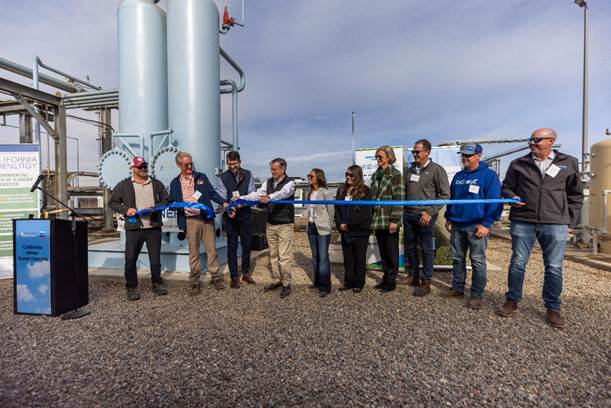
Grants administered by the Dairy Digester Research and Development Program (DDRDP) under the Office of Agricultural Resilience and Sustainability (OARS) significantly contributed to the development of the Hilmar cluster (Picture 1).

Picture 1- Hilmar Cluster Ribbon Cutting Ceremony at the Central processing Facility Site on November 19, 2025

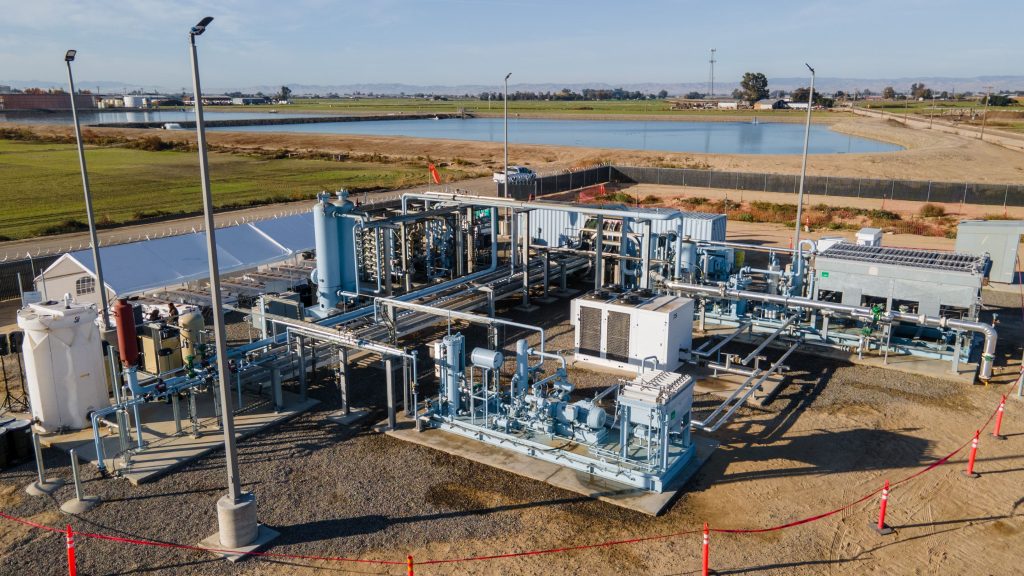
In 2019, the Hilmar Cluster was awarded more than $6.0 million total in grant funding for five projects: Ahlem Farms Dairy Biogas, Charles Ahlem Ranch Dairy Biogas, Clauss & Sunwest Dairy Biogas, James Ahlem Dairy Biogas & Nyman Brothers Dairy Biogas through DDRDP for the development of the cluster (Picture 2). Given the capital-intensive nature of these projects, DDRDP grants have played a pivotal role in getting more projects built on California dairy farms.

Picture 2- Digester and Conditioning Plant (Hilmar, CA)

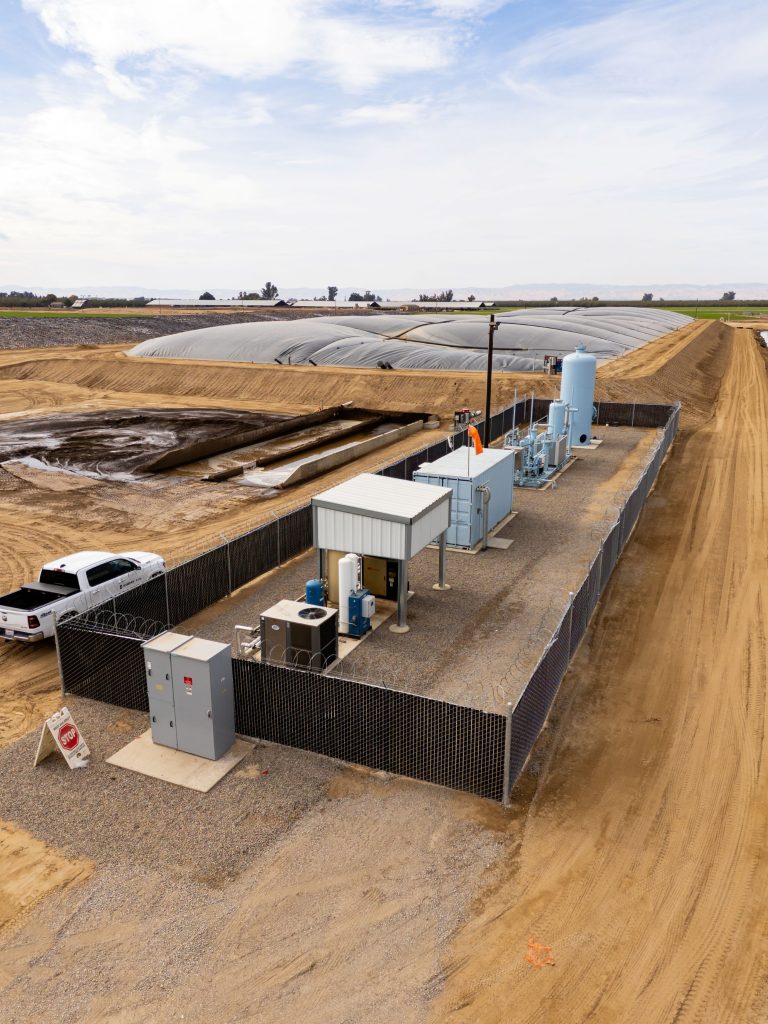
Comprised of eight (8) family farms (5 funded through DDRDP) and a strategic relationship with California Bioenergy (CalBio) and Chevron USA, the Hilmar cluster is simultaneously producing a new source of clean fuel in the form of renewable natural gas (RNG) while also reducing methane emissions. The dairy industry has continuously answered the call to do their part in progressing California’s climate goals with the Hilmar cluster being another prime example of farmers being catalysts for a cleaner future that will benefit the environment for generations to come.  In the Hilmar cluster, each project is equipped with a covered lagoon that is double lined on the bottom with high density polyethylene plastic to ensure no leakage into the water table, thereby protecting and maintaining the water quality. As the manure flows into this lagoon, microorganisms will break down the manure to create biogas (primarily composed of methane, carbon dioxide (CO2), and hydrogen sulfide gases). The biogas is then captured, cleaned (with the hydrogen sulfide removed), and compressed before being sent via pipeline to a centralized processing facility to which all Hilmar projects are connected (Picture 3).

Picture 3- Hilmar Cluster processing
Picture 3- Hilmar Cluster processing facility and Interconnect Location

After the removal of carbon dioxide, the biogas (now biomethane) is injected directly into the nearby PG&E utility line and marketed as an alternative renewable fuel for trucks and buses. By doing this, the projects qualify for Low Carbon Fuel Standard (LCFS) credits issued by the California Air Resources Board (CARB). These credits can be monetized to provide the dairies with a new revenue stream.

Since the commissioning of all the Hilmar cluster projects in December of 2024, the projects have produced approximately 250,000 MMBtu of ultra-negative carbon intensity RNG, which is equivalent to 1.8 million gallons of diesel. In addition, the Hilmar projects have also accounted for reductions of over 95,000 metric tons of CO2 equivalent to date, which is equivalent to removing nearly 4,245 diesel trucks from the road each year.  After 10 years the five DDRDP-funded projects are estimated to reduce 595,093 metric tons of CO2 equivalent.

In addition to the local environmental benefits, the Hilmar cluster has also partnered with the Hilmar Unified School District to provide six scholarships of $3,500 ($21,000) continuing education scholarships each year for two years for Hilmar High School seniors, a total of $42,000. With 63.8% of Hilmar students being socioeconomically disadvantaged[1], the support from the Hilmar cluster has been a positive boost for the community’s youth in pursuing further opportunities and success.

The Hilmar cluster demonstrates how climate-smart agriculture can drive both environmental progress and community uplift. By converting dairy manure into renewable natural gas, the projects cut methane emissions and support California’s clean energy goals. Its benefits extend beyond the farm, helping to strengthen the local economy and invest in the long-term well-being of Hilmar’s residents.

“The Hilmar Cluster is helping reduce greenhouse gas emissions in the Hilmar area while producing renewable natural gas (RNG) for the trucking industry—supporting cleaner transportation and improved air quality across California. This project is one of many that demonstrates the dairy industry’s strong commitment to adopting sustainable practices and driving environmental progress,” said Charles Ahlem, Partner Hilmar Jersey’s LLC.

California Climate Investments and GHG Reductions

The Hilmar Cluster represents a major step forward in climate-smart agriculture. Five projects in the Hilmar cluster are supported by grant funding from California’s Dairy Digester Research and Development Program (DDRDP), administered by CDFA and funded through California Climate Investments (CCI).

“AMMP and DDRDP are part of California Climate Investments, a statewide initiative that invests billions from Cap-and-Trade dollars into reducing greenhouse gas emissions, boosting the economy, and enhancing public health and the environment—especially in disadvantaged communities.”


[1] California Department of Education, 2024, California School Dashboard – Hilmar High School Report, Hilmar High Summary | California School Dashboard (CA Dept of Education)