Produce Safety Rule Grower Training Offered Remotely During Pandemic

Implementation of the Food Safety Modernization Act’s Produce Safety Rule (PSR) continues to roll out in California. Since January 26, 2018, produce farms designated as “large” (those with annual sales greater than $500,000) have been required to comply with the new federal regulations under the PSR. The next to be required to comply were farms with $250,000 or more in annual sales and starting in January of this year farms with $25,000 to $250,000 in annual sales also were required to comply.

One of the initial PSR requirements is that every produce farm must have an individual employed who has completed a Produce Safety Rule Grower Training, or equivalent course, approved by the U.S. Food and Drug Administration (FDA). FDA normally requires these courses to be attended in person, but for a limited time, a remote course has been approved as shelter-in-place orders continue throughout the country. If your farm has yet to have an employee complete this course, now is the perfect time to enroll. 

Two remote courses are scheduled for May, with one on May 14 and the other on May 28. Both are being offered through the Western Institute for Food Safety and Security (WIFSS) located at UC Davis. Each course includes 7 hours of instruction via Zoom. Attendees must have web-cam and audio capabilities and will be required to have both operating during the full course of the training from 8:00 a.m. to 5:00 p.m. to verify presence and participation. Zoom does not require special software. Attendees are also required to have a printed manual and one will be mailed to you prior to the course

Course instructors are David Goldenberg of WIFSS, Michele Jay-Russell of the Western Center for Food Safety and Donna Clements of the Produce Safety Alliance. Individuals who participate in these courses will gain a basic understanding of the following: microorganisms and where they may be found on the farm; how to identify microbial risks and the practices that reduce risks; how to write a farm food safety plan and requirements of the Produce Safety Rule and how to meet them.

Visit the WIFSS website to register.  May 7 is the registration deadline for the May 14 course.  May 21 is the registration deadline for the May 28 course. The cost is $60. After attending the course, participants will be eligible to receive a certificate from the Association of Food and Drug Officials that verifies they have completed the training course.
Produce Safety Program Supervisor Discusses Produce Safety Rule Impact on California Farmers in Radio Interview

CDFA Produce Safety Program Regulates the FDA Food Modernization Act

California Department of Food and Agriculture (CDFA) Produce Safety Program (PSP) Supervisor Shelley Phillips was recently interviewed by “Farmer Fred” Hoffman on KSTE radio’s “Farm Hour” program to discuss the impact of the federal Food Safety Modernization Act (FSMA) Produce Safety Rule (PSR) on California farmers.

CDFA created the PSP to “Educate then Regulate” California farmers about the PSR under the authority of the U.S. Food & Drug Administration (FDA), in partnership with the California Department of Public Health (CDPH). FSMA was passed in 2011 to help prevent foodborne illness outbreaks. PSR implementation and enforcement is occurring in stages between 2019 and 2021.

“It’s a way for the FDA to be proactive about food safety rather than being reactive when we have outbreaks or other issues surrounding food safety,” Phillips says about the PSR during the interview.

Items Phillips discusses during the 10-minute interview include:

  • Which farms are required to verify PSR compliance and which farms are PSR exempt
  • What proactive measures farmers are required to follow under the PSR
  • The current stage of PSR implementation and inspections
  • How “small” farmers (average annual sales of $250,000–$500,000 during the previous three-year period) should fill out and submit a recent questionnaire that the CDFA mailed, in order to be prepared for the next stage of PSR inspections
  • What farmers should expect during all stages of a PSP inspection, from initial contact to a follow-up inspection report
  • The educational resources available on www.cdfa.ca.gov/producesafety to help farmers understand and prepare for PSR compliance, including scheduling an On-Farm Readiness Review

“The inspector is there to assist the farmer, so any questions that the farmer may have is fair game,” Phillips says at the interview’s conclusion. 

Click here to hear the full interview.

PRODUCE SAFETY RULE UPDATE – CDFA MAILS QUESTIONNAIRES TO SMALLER PRODUCE FARMS

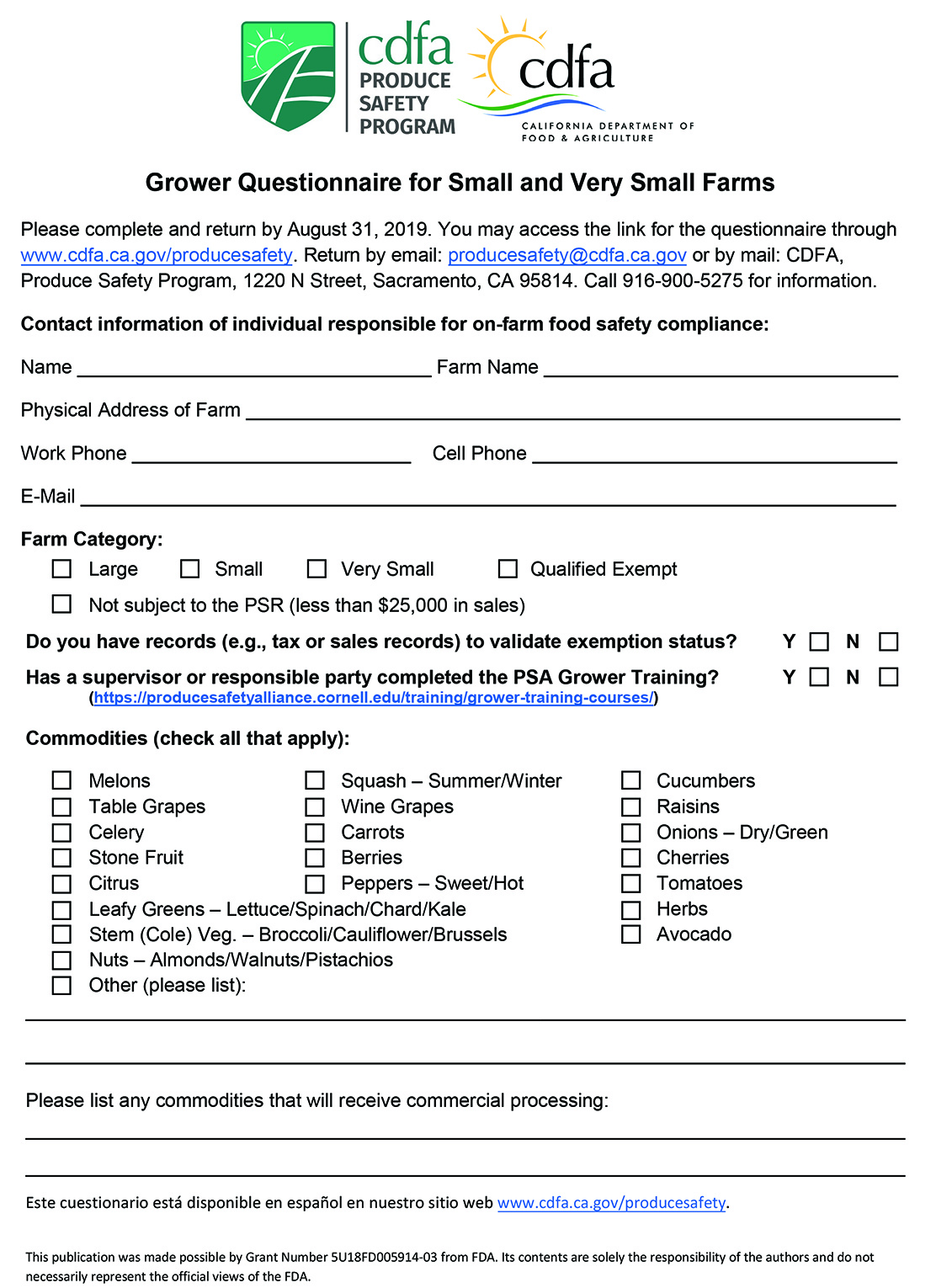
Small and Very Small Produce Farmer Questionnaire

SACRAMENTO, July 25, 2019 – The California Department of Food and Agriculture (CDFA) is announcing that starting next week, 8,000 “small” and “very small” produce farms throughout California are being mailed educational letters about their roles in upholding the Produce Safety Rule (PSR) of the federal Food Safety Modernization Act (FSMA), passed in 2011 to help prevent foodborne illness outbreaks. Accompanying the letters are questionnaires to be returned to the CDFA by August 31 in order to verify commodities grown, determine whether annual sales qualify farms for a PSR exemption, and to help prioritize future inspections. The current stage of inspections to verify PSR compliance has been taking place since April for “large” farms.

“California has many more produce farms than any other state in the nation,” said CDFA Secretary Karen Ross. “Approximately 20,000 farms in the Golden State will now be subject to new food safety regulations under the Produce Safety Rule.”

PSR regulations include ensuring produce is properly handled by workers, that farm equipment is sanitary, that produce is grown with safe soil inputs, and that measures are in place to prevent contamination of produce by wildlife or domesticated animals. These regulations are similar to food safety plans that many farmers have been implementing for years, and that most grocery stores and restaurants already require. However, the Produce Safety Rule now makes food safety on farms federal law.

To help implement the PSR, CDFA created the Produce Safety Program (PSP) to educate farmers and then conduct on-farm inspections on behalf of the U.S. Food and Drug Administration (FDA). PSP farmer education resources include a website, a Facebook page and an e-newsletter. Website features include the ability to schedule an On-Farm Readiness Review, and to register for a Produce Safety Rule Grower Training Course. This course is mandatory for at least one employee of every produce farm covered under the new regulations and is the best way for farmers to learn about required food safety practices.

In the current PSR stage:

  • Inspections are underway for “large” produce farms with average annual sales of $500,000 or greater during the previous three-year period.
  • “Small” farms with average annual sales of $250,000–$500,000 during the previous three-year period are now expected to be in PSR compliance, with inspections set to begin in January 2020.
  • “Very small” farms with average annual sales of $25,000–$250,000 during the previous three-year period must be in general compliance by January 2020, with inspections set to begin in January 2021.

Any farm that does not comply with the Produce Safety Rule may face economic, regulatory and legal consequences. Minor violations will be handled through on-site education, in line with an “Educate Then Regulate” commitment. However, if there is significant and imminent threat to public health, a PSP inspector will inform the FDA and the California Department of Public Health, which may perform accelerated on-farm follow-up inspections or administrative detention orders up to and including seizure of the product that could cause people to get sick.
 
Visit www.cdfa.ca.gov/producesafety

Produce Safety Program Prepares to Inspect “Large Farms” in Spring 2019

If you farm produce in California, you may have received a letter this week from the California Department of Food and Agriculture (CDFA). The letter, mailed to thousands of produce farms across the state, contains important information about on-farm food safety inspections that will begin this Spring.

The inspections are part of a new law enacted in 2011 when then President Obama signed the Food Safety Modernization Act, or FSMA. Since then, the U.S. Food and Drug Administration (FDA) has been working out the details of how the new law will be implemented and working with state departments of agriculture who will assist in performing on-farm inspections. In the next few months, these inspections will finally become reality for “large farms” across the U.S.

To start the process, CDFA utilized the Cal Ag Permits system, maintained by the California Agricultural Commissioners and Sealers Association and used by each county to issue pesticide application permits. Through this system, CDFA identified 20,000 produce farms in California they believe are covered under the Produce Safety Rule that is part of FSMA.

California has more produce farms by far than any other state in the nation and the job of inspecting them is huge.

Of the 20,000 produce farms in California, 12,000 have average annual sales of $500,000 or more and are considered “large farms” under the Produce Safety Rule. Only these large farms will be subject to inspections at first and these are the farms who will be receiving CDFA’s letter.

Inspections will be conducted through the Produce Safety Program, a new unit within CDFA’s Inspection Services Division. However, this unit will only be able to inspect a very small percentage of farms in any given year. Along with this week’s letters, a survey form was provided with questions that will help determine how farms will be prioritized for inspections.

It’s very important that farmers complete the questionnaire as completely and accurately as possible because the information will be used to prioritize inspections. Certain information, either known or unknown, about a farm will be weighed when determining which farms will be inspected first. Farm profiles with greater numerical totals may be given a higher priority for inspections and unknown data points are generally allocated the greatest numerical value.

The survey questionnaire can be found on the Produce Safety Program website here. We hope you will take advantage of the information provided on our website, e-newsletter or Facebook page which is designed to help farmers comply with the Produce Safety Rule.  We encourage you to check back for future updates.

On-Farm Readiness Reviews: An Opportunity for Everyone to Learn

Do you think you’re ready for official Produce Safety Rule inspections when they begin in 2019? There’s one way to find out – schedule an On-Farm Readiness Review through CDFA’s Produce Safety Rule Program.

CFDA is committed to educating produce farmers on how to comply with new regulations under the Food Safety Modernization Act before it begins to regulate them.  So, the new unit charged with conducting on-farm inspections on behalf of the U.S. Food and Drug Administration is offering California produce farmers and commodity groups the opportunity to learn what to expect during a Produce Safety Rule inspection. When you schedule an On-Farm Readiness Review (OFRR), CDFA’s new team of inspectors will visit your farm and walk you through the process of what will happen during a real inspection.

These OFRRs are useful in two ways – first, they are helping farmers learn what inspectors will be asking and looking for when farms are inspected under the Produce Safety Rule. Secondly, they are allowing new inspectors to get out onto farms to learn about California produce operations and the food safety practices being implemented.

Rich Ferreira of Lincoln, CA heard about OFRRs through California Certified Organic Farmers, which certifies his organic citrus, and was easily able to schedule a time for CDFA’s Produce Safety Program inspectors to come out to his farm.  He had taken the required Grower Training course, but found the OFRR experience much more valuable.

“I attended the required grower training course, but the OFRR provided more specific information,” he said noting that the inspectors who came out to his farm as part of the OFRR were able to help “connect the dots” between the written requirements and what will actually be expected of him under these new regulations.

OFRRs can be scheduled by contacting CDFA’s Produce Safety Program by phone or email. Please note that the Produce Safety Alliance-approved Grower Training is required in order to schedule an OFRR and it’s preferable to schedule an OFRR during harvest periods. When you reach out to CDFA to schedule an OFRR, be prepared to provide the following information:

  • Farm name and location.
  • A contact person, phone numbers and email addresses.
  • The produce items grown, harvested, packed or cooled.
  • Harvest timing.

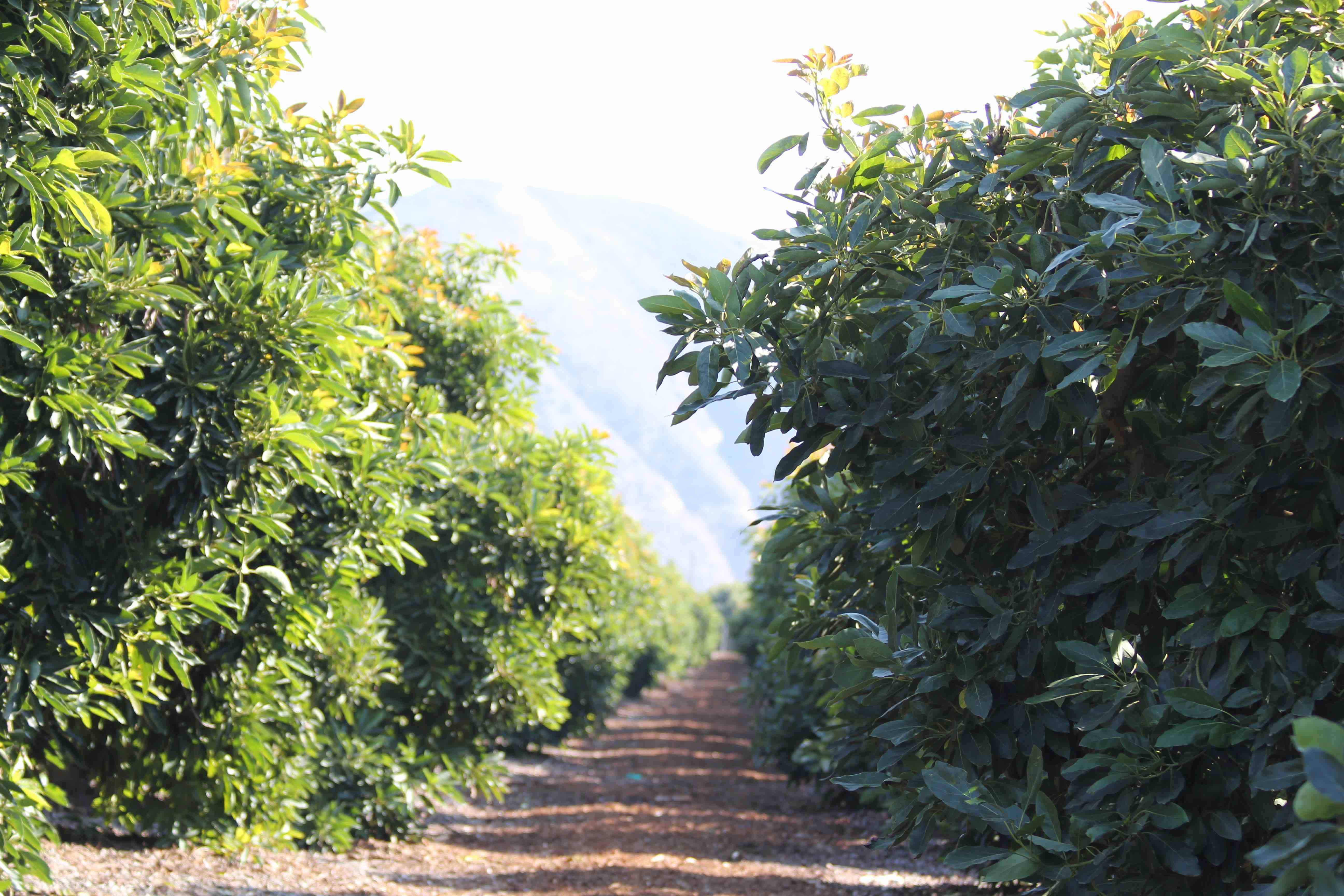
Produce Safety Program officials have conducted several OFRRs so far for crops such as avocados, citrus, walnuts and leafy greens.  OFRRs can be scheduled for individual farms, but it is more efficient for a group of farmers to schedule one together. Some commodity groups have worked with CDFA to hold OFRRs for several growers of the same commodity.

The California Avocado Commission has organized a couple of regional OFRRs for their growers in Ventura and Santa Barbara counties and plan to do more.

“The Commission’s objective is to help California avocado growers understand what will be required of them and to give inspectors a better understanding of avocado production practices,” said Ken Melban, vice president of industry affairs for the California Avocado Commission. “We are very interested in knowing full well what is involved under the new regulations and want to see first-hand what will happen during an actual inspection. These OFRRs are really the best way to do that and we have found them to be tremendously educational for all parties.”

With official Produce Safety Rule inspections set to begin in the Spring of 2019, CDFA is encouraging California produce farmers to learn as much as they can about the Produce Safety Program before then. We highly recommend scheduling an OFRR. More information on how to schedule can be found on our website here.