University of California’s 2026 Advanced School on Microirrigation

Supporting International Information Exchange for Crop Production

OARS’ Environmental Scientist, Dr. Bagher Yousefi, recently joined the cohort for the 2026 Advanced School on Microirrigation for Crop Production. Dr. Daniele Zaccaria, professor of agricultural water management for Cooperative Extension at University of California, Davis, organized a 5-day classroom and field course. 

A multidisciplinary team of UC ANR academics and international water scientists developed the Advanced School on Microirrigation for Crop Production. A multidisciplinary team designed the course to address one of the most pressing challenges in California agriculture: improving water management and efficiency while maintaining crop productivity and economic viability. This program translates current research into practical, field‑based knowledge that supports resource conservation, agricultural resilience, and informed decision‑making among water‑management professionals. 

“California has long been a global leader in agricultural innovation, and we believe that advancing irrigation requires continuous learning and strong international partnerships,” said Dr. Daniele Zaccaria, Professor and Agricultural Water Management Specialist in Cooperative Extension at the University of California, Davis. “Through the Advanced Microirrigation School, we are creating opportunities for researchers, growers, irrigation professionals, and water managers to learn from one another, share practical solutions, and accelerate the adoption of technologies and management practices that improve water productivity, strengthen agricultural resilience, and support sustainable food production in California and around the world.” 

Microirrigation, a climate-smart agriculture practice, continues to expand in California. According to Department of Water Resources’ Survey of Irrigation Methods, in 2021 53% of crops were irrigated using low-volume methods (i.e. surface drip, sub-surface drip, micro/mini-sprinklers). That compares to 15% in 1991, 33% in 2001, and 50% in 2016. Microirrigation is one of the most popular irrigation efficiency strategies funded through OARS’ State Water Efficiency and Enhancement Program (SWEEP). When microirrigation systems are designed, properly operated, and adequately maintained they allow producers to improve irrigation water use efficiency and experience other benefits, such as precise fertilizer applications and nutrient use efficiency.  

For Dr. Yousefi, who holds a PhD in Irrigation and Drainage Engineering, the course offered an opportunity to network with irrigation experts and practitioners in California and learn more about microirrigation applications in California’s diverse growing regions. He participated in a three‑day theoretical course at UC Davis followed by a two‑day field trip across several agricultural regions in California. As a new employee, this training was essential for expanding his understanding of California agriculture and the advanced irrigation technologies that producers are implementing on farms. 

The course covered a full range of topics, beginning with fundamental design and operational principles, and progressing to advanced crop water management concepts. Key topics included soil–water–crop relationships, weather and energy considerations, irrigation scheduling, filtration and fertigation systems, microirrigation automation, monitoring technologies, and crop‑specific irrigation strategies. Experienced professionals with extensive expertise in their respective areas taught each module. This provided an excellent opportunity to review core concepts and to learn about the latest instruments, strategies, and management techniques used in modern microirrigation systems.  

During the field trip, Bagher observed modernized irrigation water delivery systems and gained practical exposure to orchard and vegetable operations, including walnuts, almonds, pistachio, grapes, and other specialty crops. These visits highlighted real California irrigation challenges and demonstrated how different technologies are applied in active production systems. He engaged with several California‑based experts and learned more about the integration of emerging technologies in on‑farm water management. Additionally, because the training was an international event, he was also able to build professional connections with participants from other countries and exchange technical knowledge. 

Following this advanced training, Bagher identified several opportunities to enhance the SWEEP program tools and metrics. For example, subsurface irrigation and microjet sprinklers currently display similar efficiency values in the SWEEP Project Assessment Tool, despite differing field performance. He also noted that automation can significantly improve water‑use efficiency, but this benefit is not fully reflected in the program’s current modeling. These insights may support future updates to SWEEP to better capture water- and energy‑saving potential. 
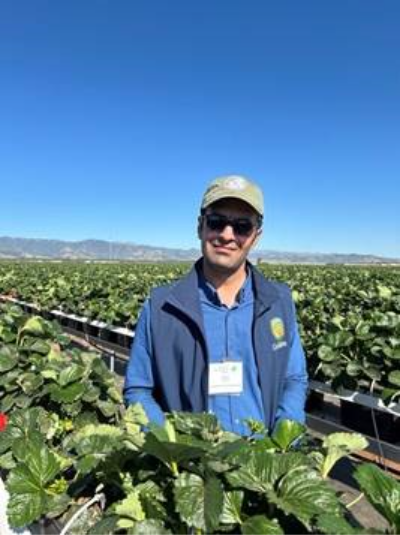
 Bagher Yousefi observing microirrigation in tabletop grown strawberries. 

 Bagher Yousefi observing microirrigation in tabletop grown strawberries. 

“One of the most valuable aspects of this course was seeing how microirrigation technologies are adapted to address specific production challenges across California. For example, during a tabletop strawberry field visit, I observed how advanced microirrigation and monitoring systems are being used to improve water use efficiency and productivity and support high-value crop production. The experience reinforced a mindset that is essential in agriculture and water management: when challenges arise, we must find solutions or create them.” Bagher reflected, “This experience helped me connect modern microirrigation practices with real opportunities to improve and expand water savings through the SWEEP program.”  

OARS congratulates the organizers on the successful launch of the Advanced Microirrigation School for Crop Production in California. One hundred and seven agricultural professionals joined the program in-person and an additional 18 participated online.  

Building on the success of the 2026 Advanced Microirrigation School, the UC Cooperative Extension team is expanding its international educational and collaborative efforts. In partnership with the Chilean Water Innovation Technology Consortium and other international organizations, the University of California will co-organize an Advanced Microirrigation School in Chile in late 2027. The program will bring together irrigation professionals, researchers, engineers, consultants, growers, and water managers from California, Chile, Argentina, Brazil, Uruguay, Peru, Bolivia, and Costa Rica to exchange knowledge and practical experience on the latest advances in microirrigation system design, operation, management, performance evaluation, and emerging technologies. 

As California continues to face increasing water resource challenges, programs such as these will play an important role in developing the technical expertise, partnerships, and innovative approaches needed to support a more efficient, resilient, and sustainable agricultural future. 
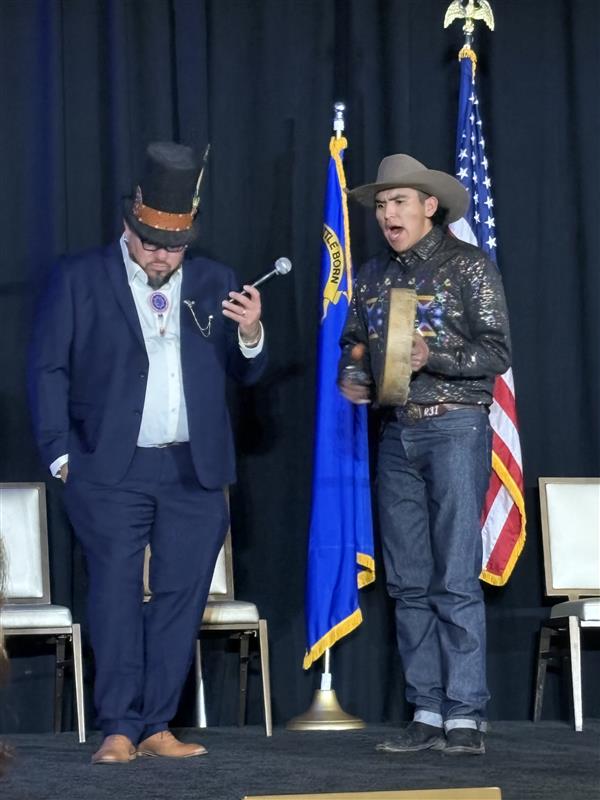
OARS Staff Attend the 2025 Intertribal Agriculture Council Annual Conference

In December, Steph Jamis and Guihua Chen, scientists in the Office of Agricultural Resilience and Sustainability (OARS), attended the 2025 Intertribal Agriculture Council (IAC) Annual Conference in Las Vegas, Nevada. The Intertribal Agriculture Council is an organization that represents Tribes and individual tribal producers across the nation, supporting culturally appropriate outreach. Attending the conference gives OARS an opportunity to learn about the issues that tribal agricultural producers face and consider ways that our programs can be accessible and supportive of Tribal food systems. Steph and Guihua went prepared to share information about the OARS climate-smart agriculture programs and promote the upcoming block grant solicitations for the State Water Efficiency and Enhancement Program (SWEEP) and the Healthy Soils Program (HSP). 

OARS is actively identifying ways to increase the inclusion of Tribes in incentive programing. In 2024 CDFA’s Farm Equity Office published a recommendations report based upon a series of listening sessions with Tribes. One of the top recommendations was that CDFA develop tribal-specific grant application tracks within our programs. In the near future, the Healthy Soils Program team plans, through engagement and coordination with Tribes, to integrate Cultural Burning on tribal land as an HSP-incentivized practice. The IAC Annual Conference was a great place to make some initial connections related to this project.     

Conference attendees enjoyed presentations on a wide variety of topics  including food sovereignty and Tribal prosperity, farm to school programs, USDA financial assistance programs,  enhancing Tribal water and food systems, technical assistance delivery, soil health and practical applications, women in agriculture, Tribal Ecological Knowledge in NRCS Programs, prescribed burning as a tool for Tribal land and resource management, and many more. IAC hosted Tribal regional caucuses for Tribal members to meet and discuss regional issues. 

A highlight of the trip was the American Indian Foods luncheon, which featured a menu that showcased a variety of flavorful Indigenous ingredients. The menu was crafted by Chef Nephi Craig, the Founder and Director of Culinary Development at the Native American Culinary Association and Executive Chef at Café Gozhóó, in Arizona. Our team loved learning about the importance of Indigenous foods and returned from the Conference excited about future engagement with Tribes.  

A Note from Our Director | August 2025

Dear Stakeholders, 

I hope you enjoy this newsletter showcasing the accomplishments of our grantees and partners and giving you a peek at how we lead our programs to serve producers while contributing to the state’s sustainability goals. Additionally, I want to take this opportunity to summarize the funding status of OARS programs, so you know which opportunities are in the future. 

OARS expects to receive $65M in funding for our Healthy Soils Block Grant Program (HSP) and $40M in funding for our State Water Efficiency Enhancement Block Grant Program (SWEEP) from Proposition 4 – Climate Bond and we tentatively plan to offer all of that funding as part of one funding opportunity in fall 2025. Through Prop 4, OARS also expects to receive $15M for a new Equipment Sharing Program (ESP) that will require extensive stakeholder consultation before opening for applications in 2026. The legislature has not appropriated the Prop 4 funding, and the state is still in the process of finalizing rules and guidelines for using the funding. The timeline of these two key external processes may affect OARS’ timeline.  

All state funding appropriations have an “expiration date,” and it is always our goal to give grantees a generous grant term within that expiration date to allow for bumps in the road. To that end, we will keep pushing forward with refining framework for the HSP and SWEEP solicitations at our August 15th Environmental Farming Act Science Advisory Panel (EFASAP) meeting, followed by a written public comment period and simultaneous stakeholder workshops that will inform the final Request for Grant Applications. We look forward to your participation and help refining our block grant model. 

Our Dairy Plus Program, which is a subaward from the California Dairy Research Foundation of a grant funded by the USDA Alternative Markets for Producers initiative (formerly the Partnership for Climate Smart Commodities program), is ongoing but undergoing federal review and revision. This program funds infrastructure on dairies that reduces greenhouse gases and improves nutrient management, and we have approximately $58M remaining in the budget for new grants to producers. We are hopeful that we will be able to announce the results of the 2024 solicitation and run a new solicitation soon, pending a final and functioning grant agreement. At this time, there is no additional funding for the Alternative Manure Management Program and Dairy Digester Research and Development Program. 

Lastly, the Office of Pesticide Consultation and Analysis received a $1.5 million increase in spending authority and an increase in the amount of agricultural mill fee the office can use. Using reserve funding first, OPCA will use the spending authority to address increased research costs, meet the Program activities identified in the Sustainable Pest Management (SPM) Roadmap, and perform increased consultative work for the Department of Pesticide Regulation (DPR), as required by Assembly Bill (AB) 2113 (Chapter 60, Statutes of 2024). In the short term, the increase will also go towards funding our Biologically Integrated Farming System (BIFS) grant program at $1-3 million a year and support for the California IR-4 Project. As AB 2113 related work increases, OPCA will increase spending on research awards related to regulatory work and decrease BIFS Funding. 

We will be in contact with you through our mailing list with all updates related to our grant programs. If you know organizations who are likely to be good applicants or partners for these programs, particularly those that serve socially disadvantaged and underserved producers, please encourage them to sign up for our mailing list and reach out to us directly for more information.  

May the rest of your summer be full of delicious in-season California berries, stone fruit, and tomatoes. I know I’ve been doing my part to support that part of our agricultural economy. 

Sincerely, 

Dr. Tawny Mata
OARS Director
CDFA Science Advisor

Supporting Spanish-Speaking Farmers in Monterey County with Training on Water Use Efficiency

The California Department of Food and Agriculture (CDFA), through its Office of Agricultural Resilience and Sustainability (OARS), is helping California farmers grow more sustainably through the Water Efficiency Technical Assistance (WETA) program. This initiative funds local organizations to deliver critical on-the-ground support in three main areas: 

Conducting distribution uniformity (DU) testing for irrigation systems, 

  • Facilitating pump efficiency tests to assess irrigation pump performance, and 
  • Developing and delivering training focused on water and nutrient management. 

One standout example of this work is happening in Monterey County, where the Resource Conservation District of Monterey County (RCD MC) applied for and received WETA funding in 2022. As part of their proposal, RCD MC made a strategic choice to create educational resources for Spanish-speaking farmers and ranchers—a group that comprises nearly a quarter of all agricultural producers in the county, according to the 2022 USDA Census of Agriculture. The goal: ensure more farmers understand how to optimize water and nutrient use—two critical elements of sustainable, cost-effective farming. 

One key resource developed under this initiative is a series of Spanish language training videos created to share knowledge on optimal water and nutrient management  techniques, promoting farmer-to-farmer learning. In this video, Celsa Ortega, the owner of Induchucuiti Farms and a graduate of the Agriculture and Land-Based Training Association (ALBA), discusses her use of low-pressure, uniform drip irrigation systems and underscores the importance of maintaining high distribution uniformity across a field. Celsa’s real-world experience and insights into effective water use reinforce how small improvements can lead to big savings in water, energy, and overall efficiency. 

The video, along with other training materials and assistance supported by the WETA grant, serves as a powerful tool to help growers: 

  • Identify inefficiencies in irrigation systems, 
  • And take action to improve system performance. 

Without WETA funding, these services—including DU and pump testing—would likely have required out-of-pocket expenses from farmers or gone unperformed entirely, leading to unnecessary water and energy waste. By offering this assistance at no cost to the grower, RCD of Monterey County is helping farms become more resilient, productive, and sustainable. 

While providing no-cost distribution uniformity and pump tests are core parts of the WETA program, developing training materials —especially in accessible formats like video—is valuable since it can reach a wide audience and have a lasting impact beyond the end of the WETA grant term. 

RCD MC’s initiative demonstrates how tailored, inclusive outreach can drive meaningful change on the ground. By speaking directly to the needs of Spanish-speaking farmers, they’re not just improving irrigation systems—they’re strengthening the future of agriculture in California. 

On the Ground in Solano County: Celebrating Local Leadership and Innovation in Climate-Smart Agriculture 


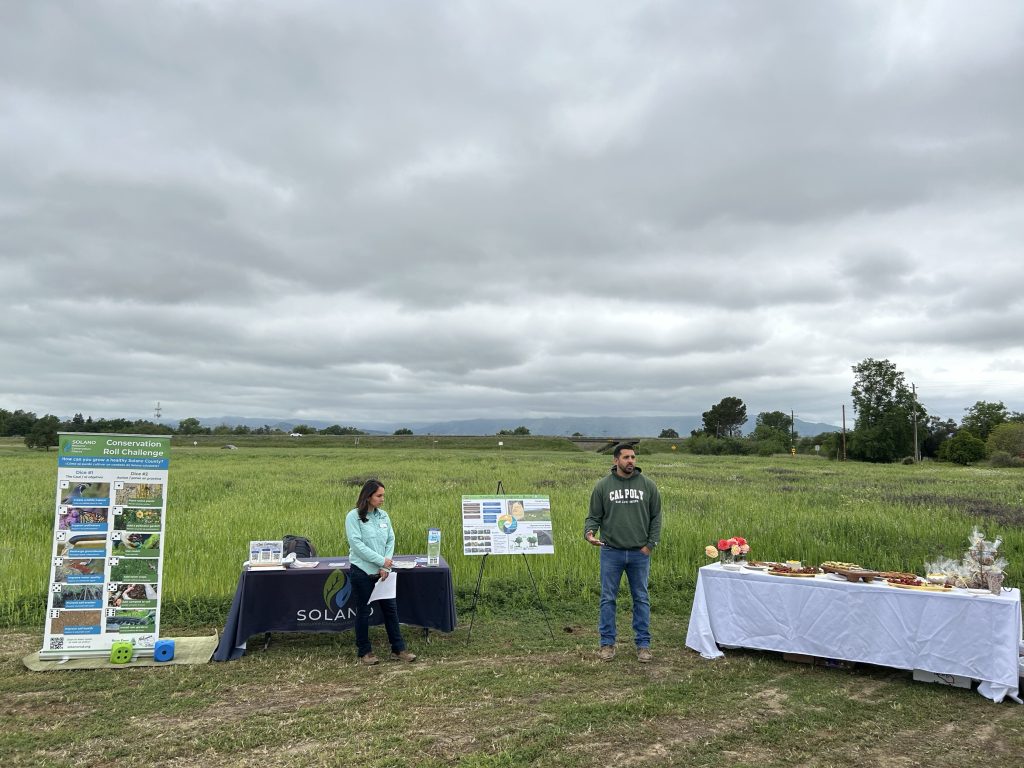
On Thursday, April 17, the Office of Agricultural Resilience and Sustainability (OARS) joined the Solano County Farm Bureau for a farm tour through Yolo and Solano County. This wasn’t just any field visit—this tour highlighted the power of local decision-making in advancing climate-smart agriculture. 

Thanks to funding from the California Department of Food and Agriculture (CDFA), the Solano County Farm Bureau was a recipient of a both Healthy Soils and SWEEP Block Grant. With this grant, they were able to facilitate their own application process—empowering the local community to identify, prioritize, and implement projects that are specifically tailored to the region’s unique agricultural and environmental needs. This localized approach allows for more customized support, streamlined communication, and hands-on technical assistance that resonates with producers and partners on the ground. 

Seeing Water Efficiency and Healthy Soils in Action 

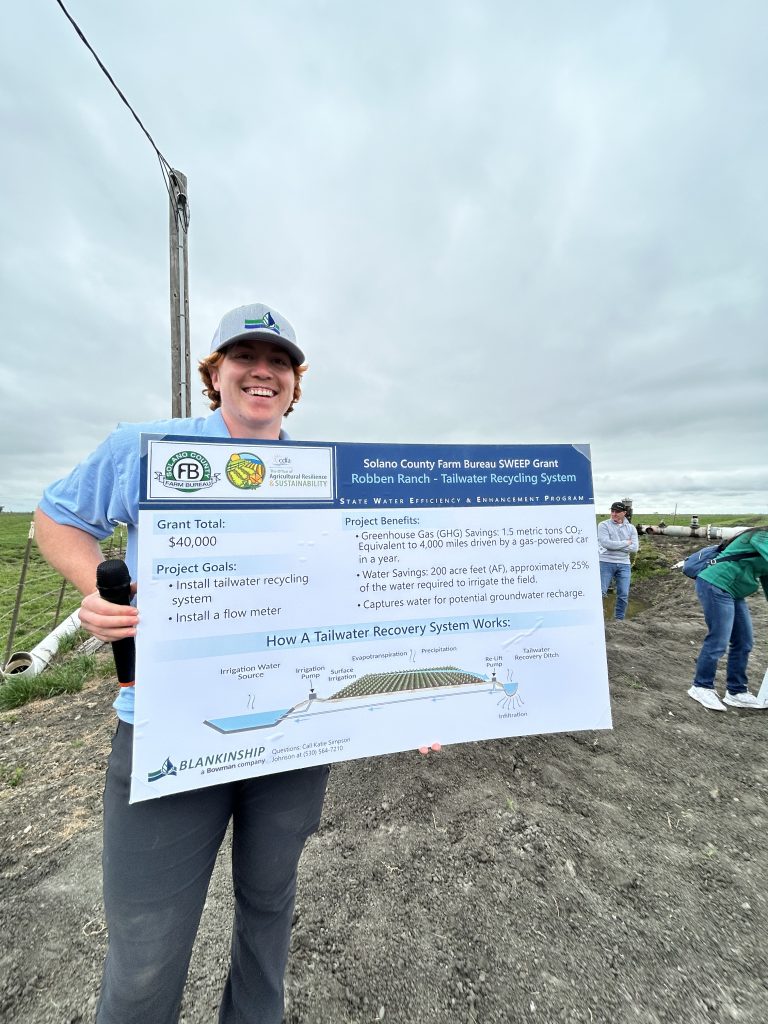
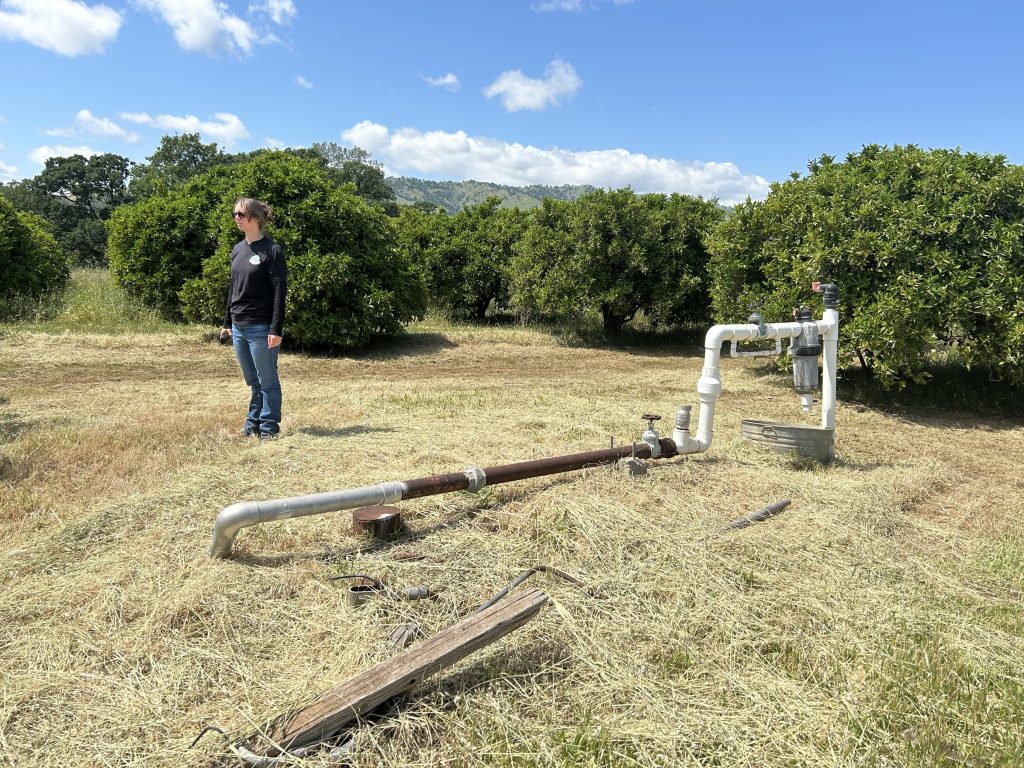
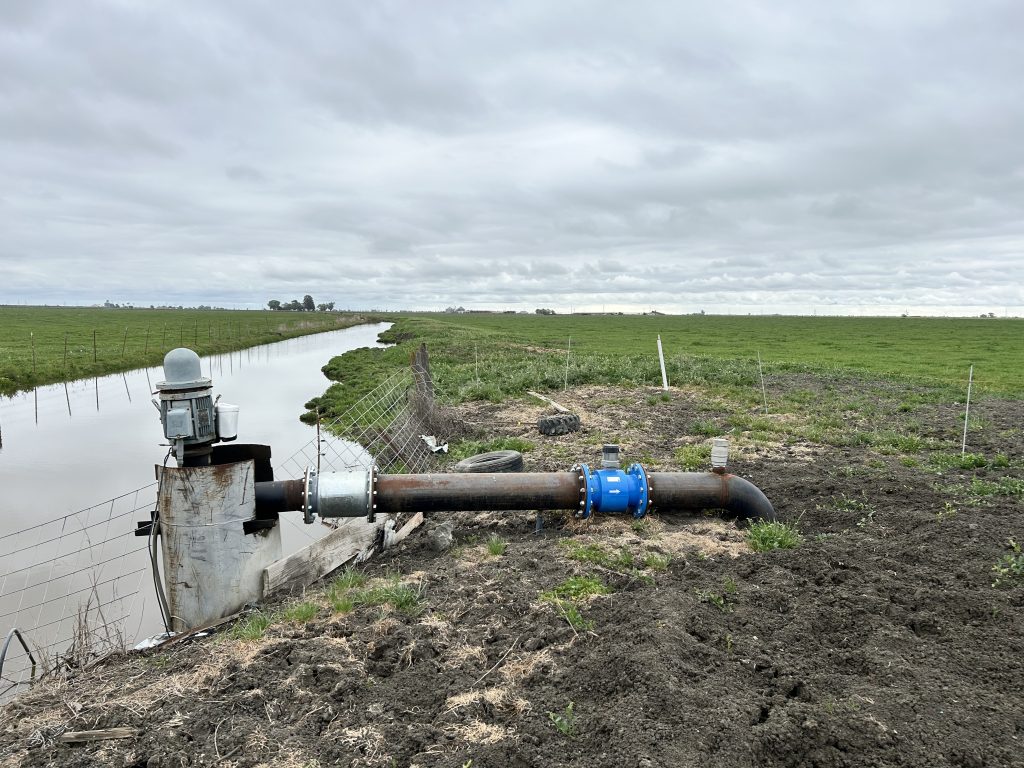
Our tour kicked off at Robben Ranch, where we witnessed a State Water Efficiency and Enhancement Program (SWEEP) project in action. With a $40,000 grant, the ranch installed a tailwater recycling system and flow meter to improve irrigation efficiency and reduce water waste. Farm Manager Aaron Black and Solano County Farm Bureau’s, technical assistance provider Katie Simpson-Johnson of Blankinship & Associates shared how their collaboration helped bring this project to life—from application to implementation—ensuring the system would have long-term benefits for both the farm and the environment. 
 
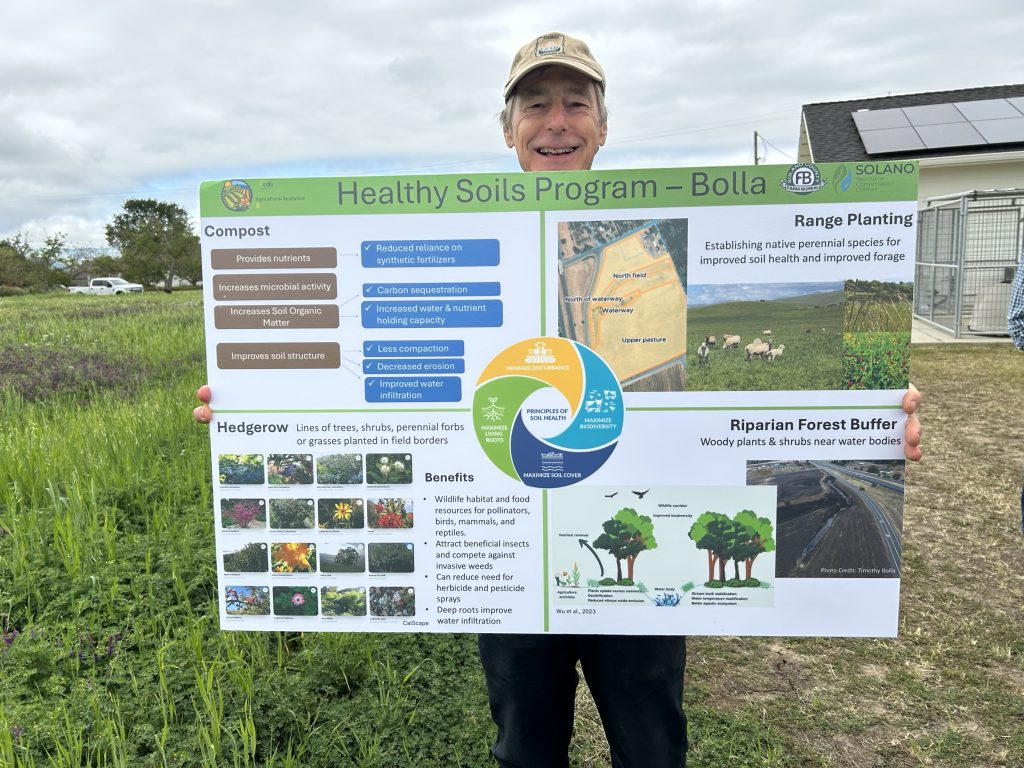
Next, we visited Tim Bolla, of Bolla Farms, a recipient of the Healthy Soils Program (HSP), who is implementing several practices – compost application, hedgerow establishment, riparian forest buffer planting, and range planting. With support from the Solano Resource Conservation District, Tim’s project is enhancing soil health, increasing biodiversity, and sequestering carbon—key goals of the Healthy Soils initiative. 

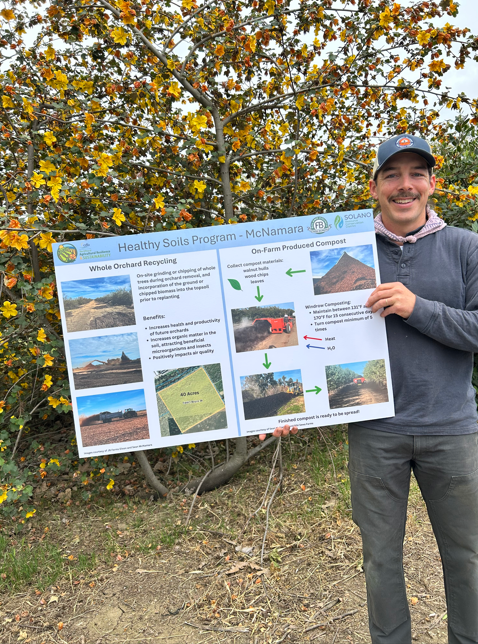
We then met Sean McNamara, of Sierra Orchards, an organic farmer leading the way in sustainable innovation. Sean is repurposing walnut shells to create his own compost, participating in Whole Orchard Recycling, and has also benefited from past SWEEP funding to enhance water use efficiency by installing drip irrigation. His multi-faceted approach to farming underscores how different programs can work together to create synergies that drive long-term resilience. 

Our final stop was at Sparks Ranch, where Karina Sparks is leveraging SWEEP funding and technical assistance to replace an outdated irrigation pump and install a network of soil moisture probes and pressure sensors. These upgrades are expected to reduce energy and water use, while improving crop management and productivity. 

Why it Matters 

Throughout the day, we heard directly from growers, grant administrators, and technical assistance providers about why these funding opportunities matter—not just for farm viability, but for environmental and ecological sustainability. The projects we visited are improving soil health, conserving water, reducing energy use, boosting biodiversity, and increasing resilience to climate extremes. 

What stood out most was the value of local leadership. By enabling organizations like the Solano County Farm Bureau to manage their own grant application solicitations, producers can design projects that reflect local conditions, foster trust, and deliver more personalized support. 

OARS is proud to work alongside these partners to advance California’s climate smart agriculture goals. We’re grateful for the growers and organizations who hosted us, and we look forward to supporting more projects that keep our agricultural lands thriving for generations to come. 

For a full list of Healthy Soils Block Grant Recipients click here.  

For a full list of SWEEP Block Grant Recipients click here.  

Kautz Family Farms’ Success with SWEEP Grant

Kautz Family Farms, a 147-acre winegrape operation in Lodi, received a 2019 State Water Efficiency and Enhancement Program (SWEEP) grant award of $84,000. The SWEEP grant, part of California’s effort to promote sustainable farming practices, supports growers in adopting energy-efficient technologies and water conservation practices that reduce their environmental impact. 

The Kautz’s SWEEP grant supported the installation of a 50-horsepower surface water pump and variable frequency drive, allowing the farm to use surface water instead of groundwater. This reduces water extraction from the critically over-drafted groundwater basin and requires less energy than their groundwater pump. The farm also installed a flow meter, soil moisture sensors, and a remote telemetry unit on the new pump. These irrigation water management tools help the farm managers remotely measure and monitor water use and make better decisions about the timing and frequency of irrigation. 

Recently, local technical assistance organization, Atlas Consulting, reached out to Kautz Family Farm to follow up on the outcomes of their SWEEP project. Atlas Consulting is one of twelve SWEEP technical assistance providers (TAPs) currently funded through OARS’ Climate Smart Agriculture Technical Assistance program. SWEEP TAPs work with producers to develop plans for irrigation projects, help them apply for funding and guide them through the implementation of their grant-funded projects. TAPs also play a very important role supporting communication between OARS and awardees, verifying the completeness of projects, and following up on the outcomes. TAPs are the boots-on-the-ground local resource for producers engaging in SWEEP. 

Through their deeper look at the outcomes of Kautz Family Farm SWEEP project, Atlas Consulting estimates that the farm has reduced energy costs by 19% and saved approximately 45% of water compared to pre-project. In addition to providing technical support, Atlas Consulting also created this video spotlight to celebrate the outcomes of Kautz Family Farm’s SWEEP project.  

Water Efficiency Technical Assistance (WETA) Program Supports Producers with No-Cost Irrigation System Evaluations and Pump Efficiency Tests

As the 2025 irrigation season is upon us in California, farmers can consider reaching out to a technical assistance provider funded by the OARS Water Efficiency Technical Assistance (WETA) program. WETA provides funds to technical assistance providers to complete irrigation system evaluations and pump efficiency tests, as well as provide training on water use efficiency and nutrient management practices.  

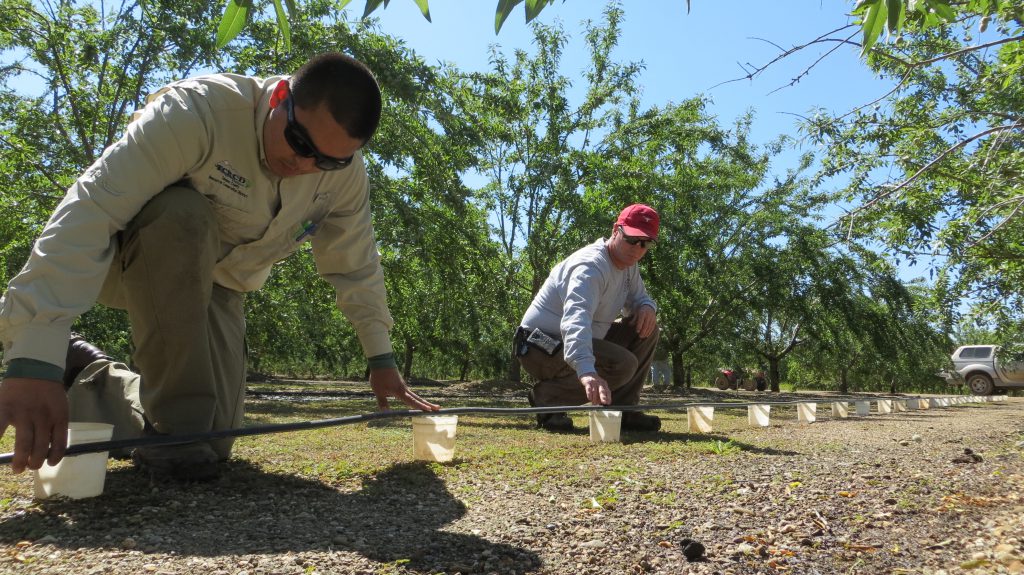
WETA technical assistance provider, Tehama RCD conducing an in-field irrigation evaluation. 

An irrigation system evaluation is the inspection and testing of an irrigation system to inform if repairs are needed and to see if water is being distributed evenly throughout the field. When a producer implements the recommendations from an irrigation system evaluation, they often save water and money and improve their crop yields. Similarly, a pump efficiency test, performed by a pump technician, can help a producer identify when a pump needs to be serviced or replaced, which can result in energy efficiency improvements and cost savings. WETA-funded technical assistance providers can also help a producer fine-tune their irrigation system and water management practices.   

OARS first received funding to provide WETA grants in 2021. Currently there are approximately 25 funded WETA technical assistance providers. Many of these grants will be expiring in 2026 so make the most of these services while they are available. To find out if there is a WETA service provider in your area and what types of assistance they are offering, please visit the program website at https://www.cdfa.ca.gov/oars/technical/weta.html