


Note: This is part of a Research and Outreach Update series that highlights projects funded by the California Department of Food and Agriculture’s (CDFA) Fertilizer Research and Education Program (FREP) annual grant program.
Project Title: Facilitating Grower Adoption of Cover Crop Nitrogen Scavenging to Minimize Residual Nitrogen Loss and Comply with the Irrigated Lands Water Quality Protection Program (Ag Order 4.0) on the Central Coast of California
Project Leader: Sacha Lozano, Resource Conservation District of Santa Cruz County
Project Cooperators and Supporters: Kasey Butler, Resource Conservation District of Monterey County; Elliot Grant, Sustainable Conservation; Dr. Eric Brennan, United States Department of Agriculture Agricultural Research Service
Project Status: Third year
Project Locations: Santa Cruz and Monterey counties
Overview:
This project uses outreach, education, and technical assistance to facilitate grower adoption of winter cover cropping for nitrogen (N) scavenging on California’s Central Coast. Cover cropping is one of several soil management practices that can help recover and recycle N through ‘N scavenging,’ or the use of a cover crop to take up the excess N derived from fertilizer, as well as soil organic matter and crop residue mineralization from the previous crop. The aim of the project is to help growers adopt cover crops to improve N management by demonstrating research-based methods to easily and confidently estimate cover crop biomass, carbon-to-nitrogen (C:N) ratio, and associated N uptake. This work also assists growers with Irrigation and Nitrogen Management Plan (INMP) reporting to meet regulatory targets outlined by the Central Coast Regional Water Quality Control Board in Ag Order 4.0.
FREP staff routinely visit funded projects during grant implementation to meet with project leaders, view research plots, observe outreach events, and review grant progress. In February 2026, FREP’s Karen Adler toured the fields of seven participating producers who were growing winter cover crops and discussed the project’s successes and challenges with project organizers Sacha Lozano and Elliot Grant. More information on the background and earlier accomplishments of the project can be found in this Research Update from last year.
Accomplishments:
- To date, 48 farming operations have enrolled in the project. In the winter of 2024-25, 34 participating growers planted a Merced Rye or Pacheco Triticale cereal cover crop. For the second winter cohort of 2025-26 participants, 20 growers continued to participate alongside 14 new growers, who grew mostly Merced Rye or Pacheco Triticale, with some growers adding a second legume species (Lana vetch) to boost N fertility. Within this 2025-26 group of 34, about 5% grow conventionally, while the rest are organic growers. The crops grown are roughly 40% berries and 60% vegetable crops.
- In the first two years of the project, the team also hosted seven outreach events targeting varying attendees, including Spanish- and English-speaking small- and large-scale growers, crop consultants, researchers and other technical assistance providers. The events included a webinar, resource fair, field tour, in-field cover crop field demonstration, and educational events to showcase and discuss cover crops and their N scavenging.
Touring Project Field Sites:
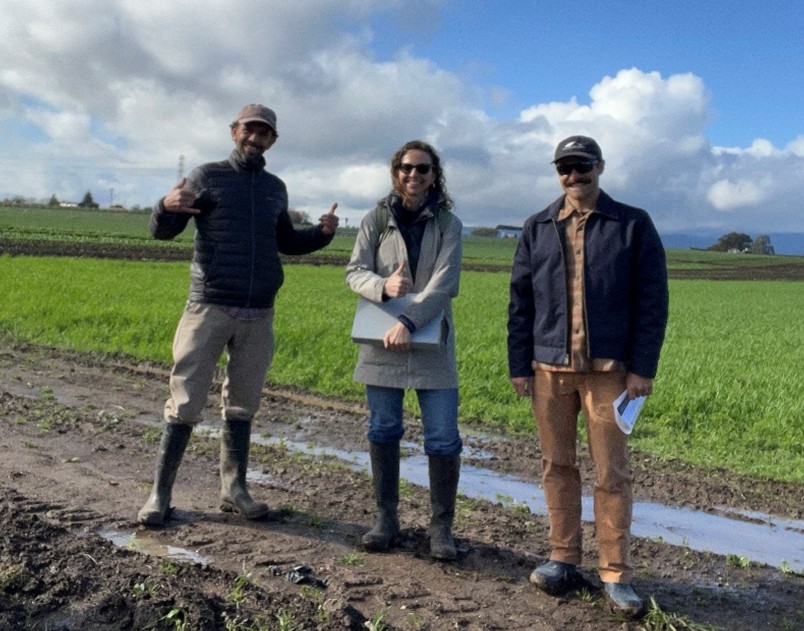
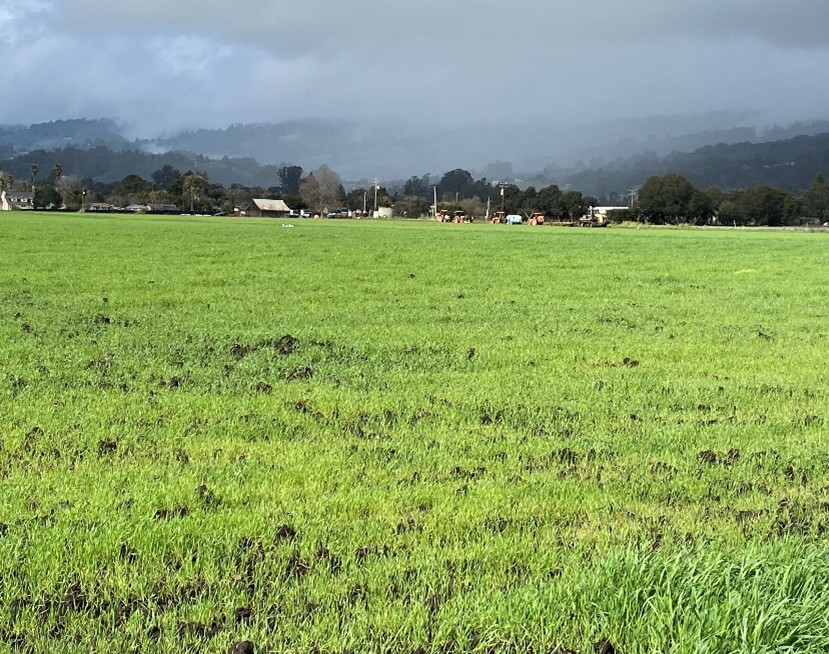
Left: Principal investigator Sacha Lozano (left) and project cooperator Elliot Grant (right) with FREP staff Karen Adler (center) in front of one of the participating growers’ fields (pictures courtesy of Elliot Grant). Right: Merced Rye used as a cover crop on a 9-acre ranch by a grower participating in the project for the second year. In this field, the goal is to grow the maximum amount of biomass before the Merced Rye goes to seed. The cover crop will be terminated by ripping/discing and left fallow until strawberries are planted in the fall.
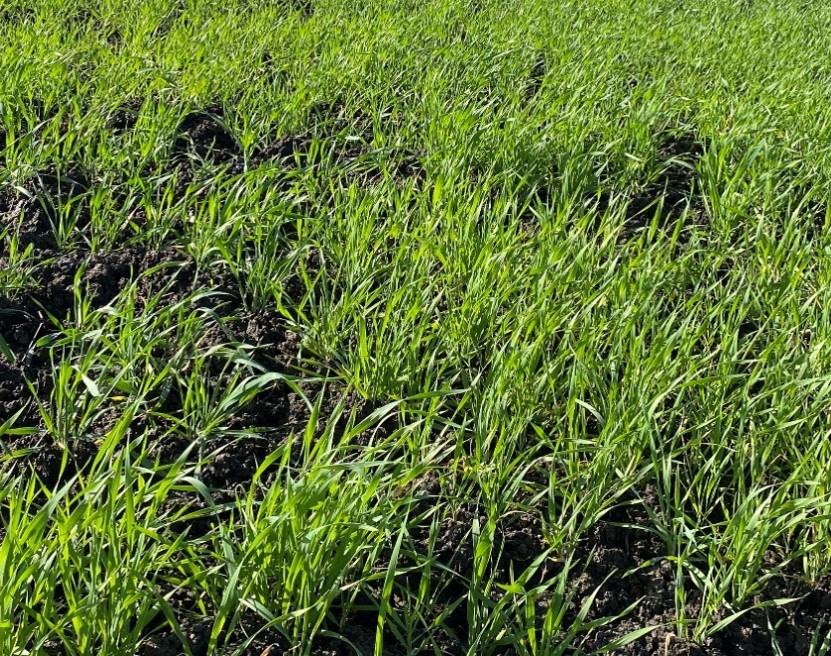
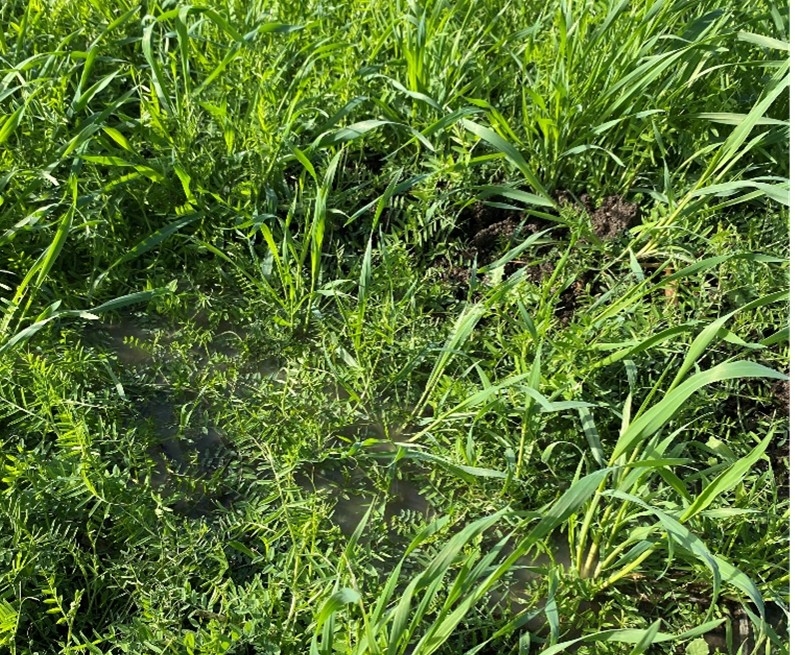
Left: Merced rye planted as a cover crop. At this stage, it can be difficult to distinguish the crop from Pacheco triticale, which is also commonly planted. Right: Cover crop mix with Merced rye and Lana vetch. Note how the vetch tends to cover the bare ground around the cereal.
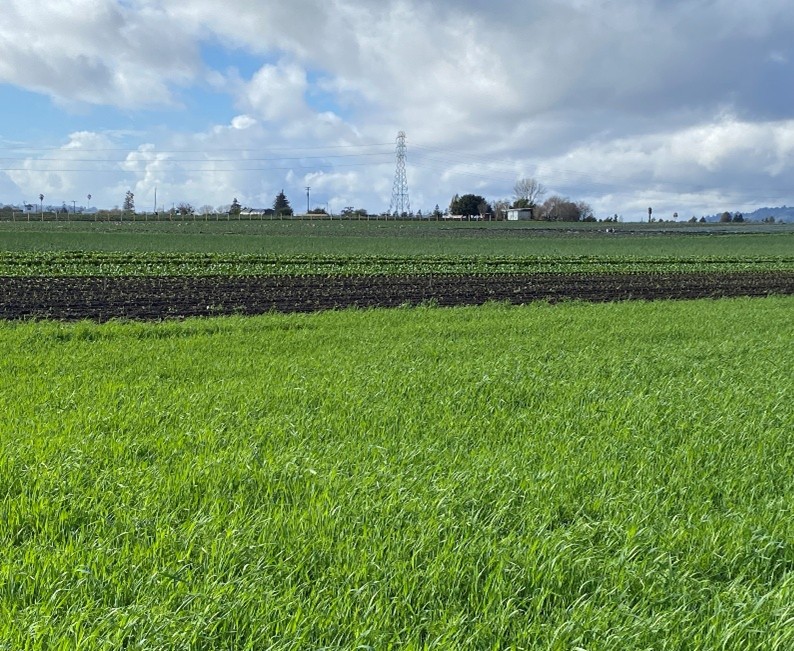
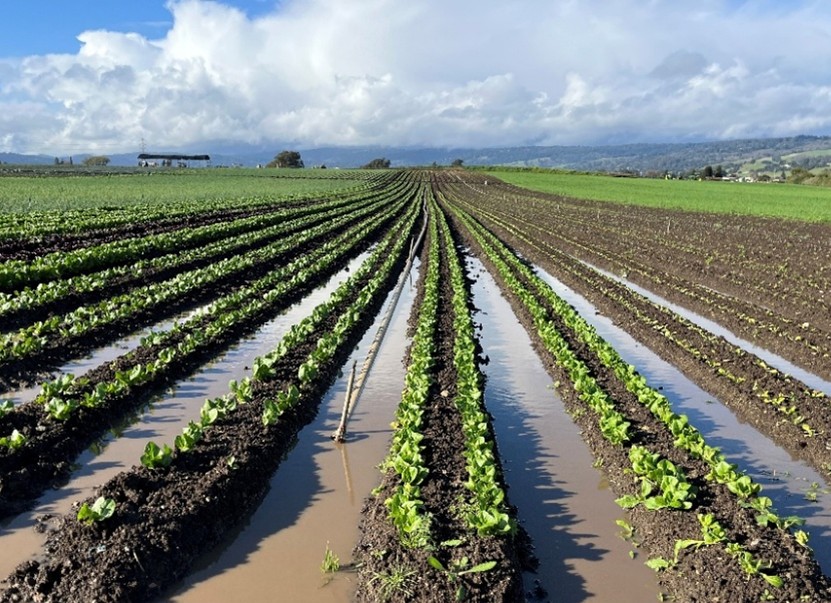
Left: Cover-cropped plots next to cultivated strips of land at an 87-acre ranch leased and shared by seven farming operations. The project is currently working with four of the operations to cover crop about 11 acres of the site. Most of the acreage observed was either cover cropped or planted with crops. Right: Rows of lettuce that have been recently irrigated are grown next to a winter cover crop.
Project Challenges and Impact:
The project faced a unique challenge when the discounts and credits outlined in Ag Order 4.0 were remanded in September 2023 due to N fertilizer application and discharge numeric limit inconsistencies with the statewide precedential requirements shortly after project funding was determined. Despite the uncertainty around the implementation of the cover crop credit, the project team continues to focus on teaching growers how to meet the requirements to claim the credit, with a few significant modifications. First, given the fact that there is research underway to show the benefits of including a legume in the cover crop mix in some systems without increasing the risk of nitrate leaching, in the 2025-26 season, some of the participating growers added the legume Lana Vetch to their cover crop mix to further boost soil fertility for early spring vegetable crop plantings. The vetch seed was provided through a different funding source.
In addition, the project team continues to adapt outreach and educational materials to guide the quantification of N recovered by winter cover crops. During the first year, the project team produced a draft step-by-step guide for growers to quantify and report the amount of N scavenged using the biomass and C:N ratio estimates to calculate the amount of N uptake that can be credited toward the N budget of their subsequent crop. The handout includes information on how to plant, sample, measure shoot length, and determine the Feekes stage of the cereal crop to estimate the C:N ratio. However, after additional interpretation of his findings, collaborating scientist Dr. Brennan recommended shifting away from using Feekes stage observations as a method for estimating C:N ratio and instead focusing on ‘Days After Planting’ as a more accurate proxy. As a result, during the second year, the draft was revised to incorporate these new findings.
The project team also started to develop a phone-based calculator tool for growers to quantify the amount of scavenged N based on field measurements and the number of days after cover crop planting. Both the guidance document and the calculator are still being considered by Dr. Brennan, who is awaiting further clarification on using ‘Days After Planting’ to estimate C:N ratios pending peer review of his research and feedback from the Second Agricultural Expert Panel convened by the State Water Board. The project remains dynamic, and the organizers continue to incorporate new regulatory and scientific information, updating their outreach approach and resources as new information becomes available.
To learn more about this project and other current and completed FREP projects please visit: https://www.cdfa.ca.gov/is/ffldrs/frep/Research.html.